
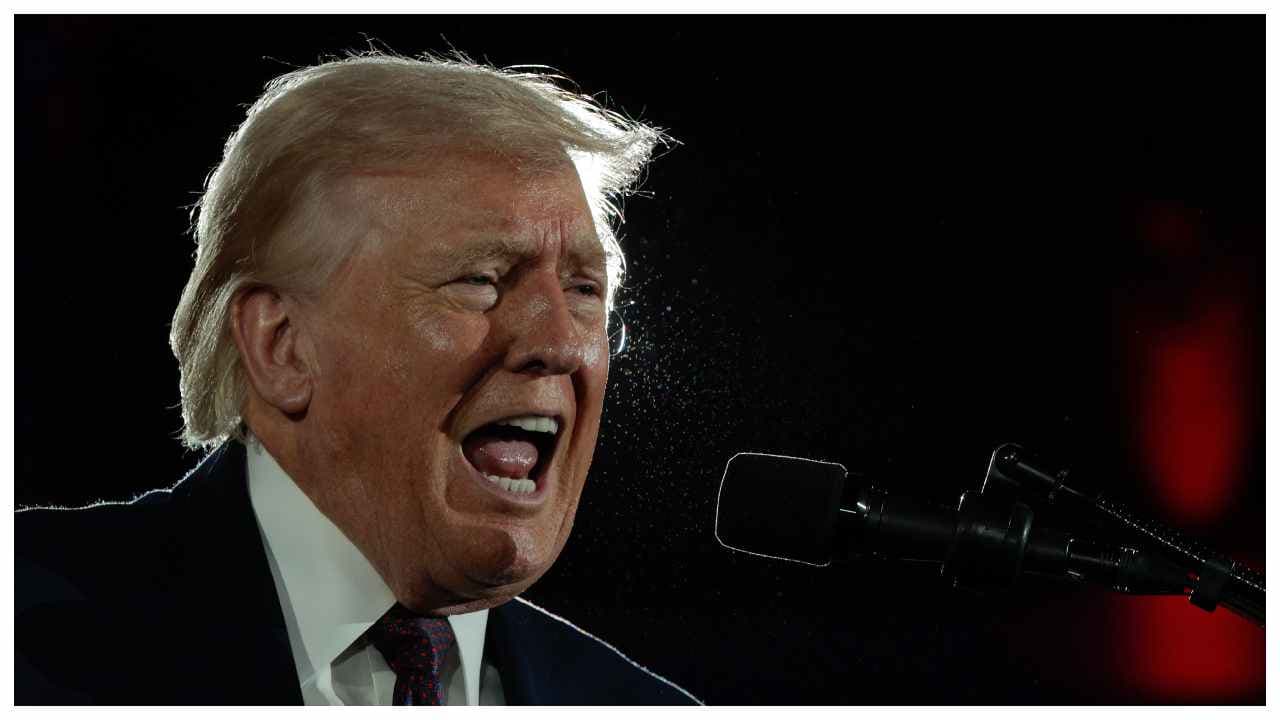
US President Donald Trump has repeatedly claimed the Iran war is ending, making at least twelve such statements. His optimistic remarks, such as "we've basically won" and "talks are going very well," contrast sharply with the ongoing conflict. Factors like military stalemate, diplomatic deadlock, and shifting objectives have prolonged the war.
US President Donald Trump has, on multiple occasions, declared that the ongoing Iran war is close to ending. However, despite at least a dozen such claims, the conflict continues with no clear resolution in sight.
A closer look at his statements reveals a pattern of optimism, shifting narratives, and contradictions — even as ground realities suggest a prolonged standoff.
12 Times Trump Said the Iran War Would End
Here is a structured timeline of 12 key remarks where Trump suggested the war was nearing its conclusion:
1. “We’ve basically won”
Trump early in the conflict said, “We’ve basically won. It’s under control.”
2. “It’s very complete”
In another statement, he described US operations as “very complete,” implying the war had effectively achieved its objectives.
3. “It could end anytime I want”
Trump asserted, “I can end it anytime I want,” suggesting the timeline depended solely on his decision-making.
4. “We are very close to a deal”
He repeatedly hinted at diplomacy, saying, “We are very close to a deal with Iran.”
5. “Talks are going very well”
At one point, Trump claimed, “Talks are going very well,” even as Iran denied negotiations.
6. “Iran wants peace”
Trump said, “Iran wants peace,” projecting willingness from Tehran that officials there publicly rejected.
7. “War will be over soon”
He reassured audiences that the “war will be over soon,” without specifying a timeline.
8. “We are ahead of schedule”
In a later update, Trump claimed US forces were “ahead of schedule,” suggesting a faster-than-expected resolution.
9. “It’s almost finished”
He described the conflict as “almost finished,” even as fighting intensified in key regions.
10. “Victory has been achieved”
Trump declared, “Victory has been achieved,” framing the situation as a strategic success.
11. “Negotiations are underway”
He said “negotiations are underway,” a claim repeatedly dismissed by Iranian leadership.
12. “It’s sort of finished, but not finished”
In one of his most recent remarks, Trump admitted, “It’s sort of finished, but it’s not finished,” reflecting the ambiguity surrounding the war’s status.
Also Read: From Fuel Rationing to Remote Work: How Nations Are Battling the Global Fuel Crisis
Claims of Talks — But Tehran Pushes Back
A major part of Trump’s messaging has revolved around diplomacy. He has repeatedly suggested that backchannel talks with Iran are progressing and that an agreement is imminent.
However, officials in Iran have denied these claims, calling US conditions unrealistic and rejecting the idea that meaningful negotiations are currently underway.
This contradiction underscores a fundamental disconnect: while Washington signals progress, Tehran continues to resist.
Why the War Hasn’t Ended Yet
Despite repeated declarations of victory, several key factors explain why the conflict continues:
1. No Decisive Military Outcome
While US strikes have weakened parts of Iran’s military infrastructure, the conflict has expanded into a broader regional confrontation. Iran has responded with missile and drone attacks, preventing a clear-cut victory.
2. Strait of Hormuz Disruptions
Tensions around the Strait of Hormuz have escalated the crisis. Disruptions in this key oil route have triggered a global energy shock, raising the stakes and complicating ceasefire efforts.
3. Shifting US Objectives
Trump’s goals have appeared inconsistent — ranging from limiting Iran’s nuclear ambitions to suggesting regime change. At times, he has demanded “unconditional surrender,” while at others he has pushed for negotiations.
4. Risk of Escalation
Strategic discussions, including targeting key Iranian oil infrastructure, have raised fears of further escalation. Analysts warn such moves could prolong the conflict rather than end it.
5. Diplomatic Deadlock
Despite reports of mediation efforts involving regional players, there is no breakthrough. Both sides remain far apart on core demands, leaving negotiations stalled.
Also Read: Iran to 'cut off legs' of aggressors; Chechen units ready for US
A Pattern of Optimism vs Ground Reality
Experts say Trump’s repeated statements reflect a pattern of optimistic messaging, often disconnected from battlefield developments.
His narrative has shifted frequently — from declaring victory to emphasizing negotiations — creating confusion about the actual status of the war.
Critics argue that such messaging may be aimed at shaping public perception rather than reflecting real progress.
Global Impact of the Prolonged Conflict
The ongoing war has had far-reaching consequences:
• Oil prices have surged due to supply disruptions
• The Middle East faces growing instability
• Global markets are reacting to uncertainty
• Thousands have been killed, with many more displaced
The crisis has also forced countries worldwide to adopt emergency measures, including fuel rationing and reduced consumption strategies.
Can the War End Soon?
While Trump continues to express confidence, experts remain cautious. Some believe a diplomatic breakthrough could still be possible, particularly if tensions around the Strait of Hormuz ease.
Others warn the conflict risks turning into a prolonged geopolitical standoff with no clear end.
Also Read: US CENTCOM releases video of strikes on Iranian naval, air assets
The Bottom Line
Donald Trump has said the Iran war is close to ending at least 12 times. Yet, the conflict continues, shaped by military uncertainty, diplomatic deadlock, and rising global stakes.
The repeated claims highlight a widening gap between political messaging and on-ground reality — leaving the world watching for what comes next.
