Elon Musk and Sam Altman faced each other in court as Musk accused OpenAI of abandoning its original nonprofit mission. Musk warned that AI could become dangerous if left unchecked, saying it could even 'kill us all'. OpenAI denied the claims, arguing Musk only sued after starting rival xAI. Trial could reshape OpenAI's future, affect leadership.
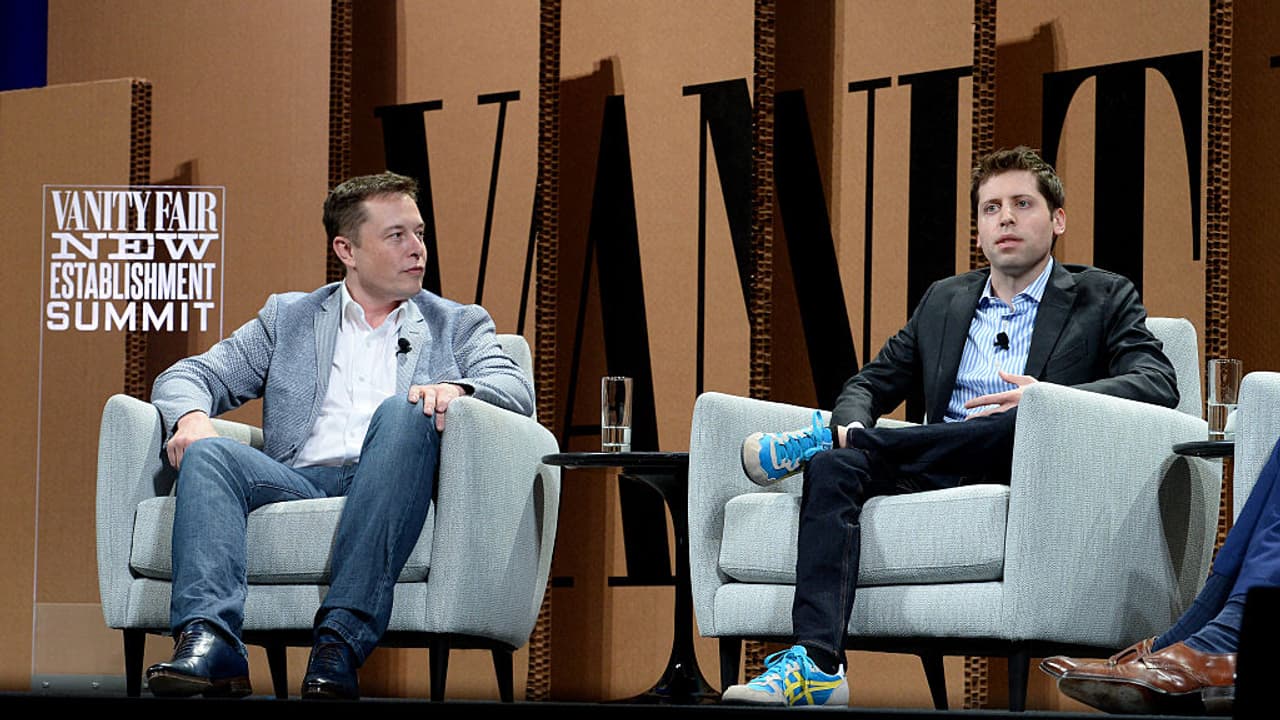
A dramatic legal battle between two of the world's biggest technology figures has begun in California. Elon Musk and Sam Altman appeared in federal court together for the first time on Tuesday as they fight over the future of OpenAI. The case is about much more than money. It is about what OpenAI was created to do, how it changed over the years, and whether that change broke the promises made when the company was founded.
Musk says OpenAI has moved far away from its original goal of building artificial intelligence for the benefit of humanity. OpenAI strongly denies this. The trial could have a huge impact on one of the world's most powerful AI companies.
Related Articles

Elon Musk's stark warning about artificial intelligence
While giving evidence, Musk once again shared his deep concerns about artificial intelligence. He told the court that AI could become either humanity's greatest invention or its greatest threat.
"It could kill us all," Musk said.
He compared two possible futures. One was the hopeful world shown in Star Trek, where technology helps humanity thrive. The other was the dark future of Terminator, where machines turn against humans.
"We don't want a Terminator outcome," Musk told the court. "We want a Star Trek outcome."
It was a classic Musk moment, mixing science fiction with serious warnings.
Why Musk says OpenAI was created
Musk explained that his worries about AI are not new.
He said they go back to a conversation with Google co-founder Larry Page in 2015. According to Musk, Page was very optimistic about advanced AI, but Musk felt the dangers were being ignored.
Musk told the court that this conversation pushed him to act. He and Sam Altman, along with several others, founded OpenAI later that year as a nonprofit organisation.
Their goal was simple: to develop powerful AI safely and make sure it benefited everyone, not just one company. Musk said OpenAI was meant to be an alternative to Google, with openness and safety at its core.
The meaning behind Musk's 'speciesist' comment
One of the most talked-about moments came when Musk recalled a heated discussion with Larry Page. "The reason OpenAI exists is that Larry Page called me a speciesist," Musk said.
A speciesist is someone who values human life above other forms of intelligence. Musk took that as a badge of honour. He has long argued that AI should serve humans, not replace them.
That belief remains central to his case.
How OpenAI changed
OpenAI started as a nonprofit, but building advanced AI quickly became extremely expensive. Huge amounts of money were needed for computer chips, data centres and top researchers.
To raise those funds, OpenAI created a for-profit arm. Musk says he accepted this move, but only under strict conditions. He told the court he was comfortable with a small business arm, as long as the nonprofit stayed in control.
In his view, that balance later disappeared.
Microsoft's huge investment
The turning point, Musk says, came when Microsoft invested billions in OpenAI. Microsoft poured around $10 billion into the company in 2023, deepening a partnership that had already been growing for years.
Musk argues that this shifted OpenAI's focus away from the public good and towards profits.
He believes Microsoft's influence became too strong. His lawyer compared the situation to a museum selling off its most valuable paintings and locking them away from the public.
What Musk wants from the lawsuit
Musk is seeking billions of dollars. His lawyers say this money should be returned to OpenAI's nonprofit arm. He also wants major changes to the company's leadership and structure. That could include the removal of Sam Altman.
If Musk wins, OpenAI's future could look very different.
OpenAI hits back
OpenAI rejects Musk's claims completely. Its lawyers say the company never promised to remain a nonprofit forever. They also say there was never any promise that all OpenAI technology would always be made public.
According to OpenAI, Musk understood the business plans years ago.
The company argues that he only became unhappy after OpenAI succeeded without him.
The xAI factor
A key part of OpenAI's defence is timing. Musk did not file his lawsuit until 2024, after he had launched his own AI company, xAI.
OpenAI says that is no coincidence.
Its lawyers argue that Musk is trying to slow down a powerful rival. They say this is less about principle and more about competition.
OpenAI's claims against Musk
OpenAI also made some sharp accusations. The company says Musk promised to contribute up to $1 billion when OpenAI was founded.
According to OpenAI, he ultimately provided only about $38 million over five years. Lawyers also claimed Musk once wanted either himself or Tesla to control OpenAI.
When that did not happen, they say, he walked away.
The split between Musk and Altman
Musk left OpenAI in 2018 after disagreements over the company's direction. At the time, OpenAI was still years away from global fame.
That fame arrived in 2022 when ChatGPT was launched. The chatbot became an overnight success and turned OpenAI into one of the most valuable private companies in the world.
Musk, who had once helped launch the organisation, was now on the outside.
A rivalry turns public
The relationship between Musk and Altman has become increasingly hostile. Their disagreements have played out on social media, in interviews and now in court.
Last year, Musk and a group of investors reportedly offered nearly $100 billion to buy OpenAI's assets.
OpenAI rejected the offer.
Altman then jokingly offered to buy Musk's social media platform X for a fraction of that amount.
Musk replied with a single word: "Swindler."
That exchange showed just how bitter things had become.
Inside the courtroom
The atmosphere in court was reportedly tense. Musk sat with his legal team near the judge. Altman and OpenAI president Greg Brockman sat nearby in the public gallery.
Altman watched quietly for much of the hearing. He left shortly before Musk took the witness stand. Musk spoke calmly, occasionally taking sips of water as he answered questions.
Judge steps in over social media
Before testimony began, OpenAI complained about Musk's recent posts online. The company said some of his comments could influence the trial.
Judge Yvonne Gonzalez Rogers agreed that both sides needed to be careful.
She instructed Musk, Altman and their teams to avoid making inflammatory public statements during the case.
Both men agreed.
Given their history, that may be easier said than done.
The crucial Elon Musk Vs Sam Altman case
This is not just a personal feud. The outcome could reshape OpenAI and influence the wider AI industry. OpenAI is reportedly considering a future stock market listing.
A ruling against the company could complicate those plans. It could also force changes to its structure, governance and leadership.
That would send shockwaves across Silicon Valley.
The bigger question: who controls AI?
At its heart, this trial is about control. Should powerful AI be developed by nonprofit organisations focused on the public good?
Or is commercial investment necessary to build systems that require enormous resources?
That question matters far beyond OpenAI.
It will help shape the future of artificial intelligence.
Elon Musk's wider concerns
Elon Musk has long warned about AI. He believes machines may one day surpass human intelligence. He says that moment is approaching quickly.
His brain-chip company, Neuralink, is partly aimed at helping humans keep pace. Musk argues that connecting the human brain directly with computers could create a safer future.
He calls this "AI-human symbiosis".
Whether that happens remains to be seen.
What's next?
Musk will return to the witness stand on Wednesday. OpenAI's lawyers will begin cross-examining him. That is likely to be one of the most closely watched moments of the trial.
Both sides have strong arguments. Both have enormous stakes.
And both are fighting over the future of one of the most important companies in the world.
A battle bigger than two men
This case is about more than Elon Musk and Sam Altman. It is about trust, money, power and the future of artificial intelligence.
OpenAI helped launch the modern AI boom.
Now the company that promised to build AI for everyone must defend how it changed.
Musk says he is protecting OpenAI's founding mission. OpenAI says Musk is simply trying to damage a competitor.
A jury will now help decide who is right.
Whatever the outcome, the result will shape the next chapter of the AI revolution.
(With inputs from agencies)