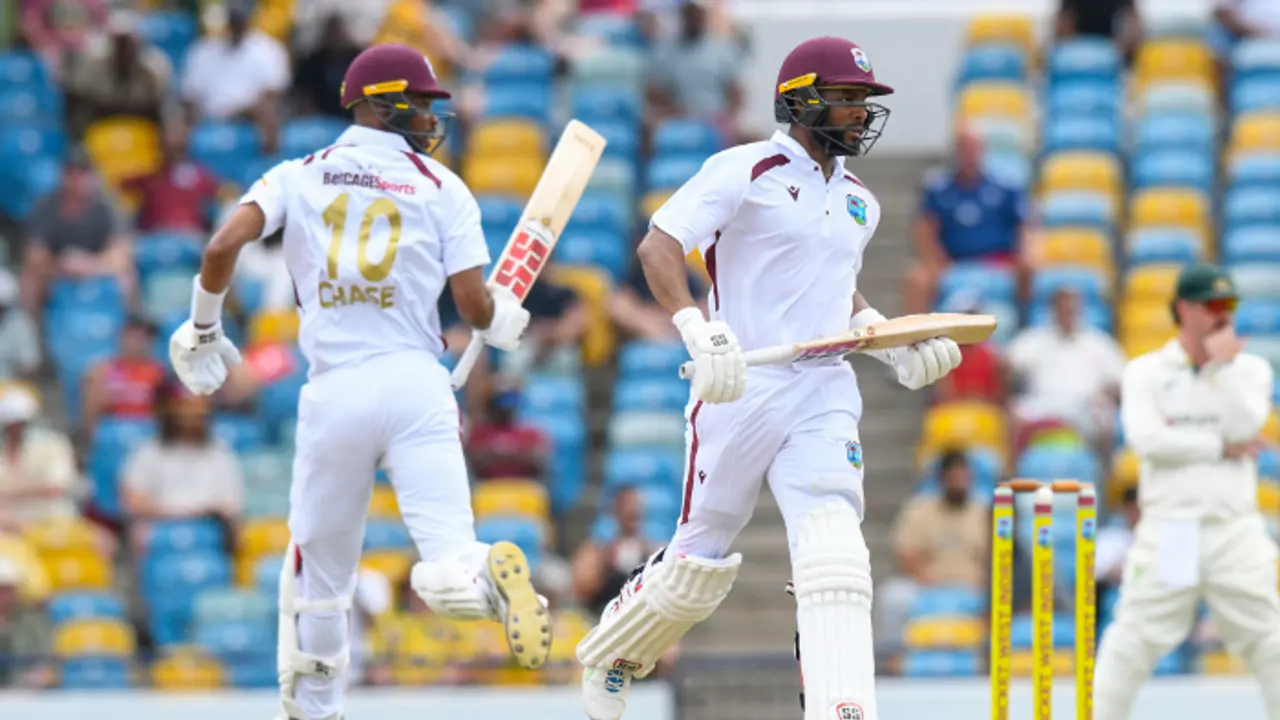
The first Test between West Indies and Australia was marred by controversial DRS calls, sparking debate over umpiring accountability. WI captain Roston Chase criticised the decisions and called for penalties for umpires, like those on players.
The recently concluded first Test between the West Indies and Australia at Kensington Oval in Barbados was in the spotlight not only for the gripping contest but also for a series of controversial DRS calls that ignited debates over umpiring accountability.
The series opener was clinched by Pat Cummins-led Australia with a 159-run victory over the hosts West Indies, led by Roston Chase, in Barbados. The visitors were bundled out for 310 in the second innings, thanks to Alex Carey’s firepower knock of 65 off 75 balls and vital fifties by Travis Head (61) and Beau Webster (63), and set a 301-run target for the hosts to chase.
Chasing a 301-run target, West Indies were bundled out for 141 in 33.4 overs on Day 3 of the first Test. Tailender Shamar Joseph was the top scorer for the hosts as he played an aggressive innings of 44 off 22 balls, including four boundaries and as many sixes, while Justin Greaves remained unbeaten on 38 off 53 balls.
Related Articles

4 DRS calls went against the West Indies
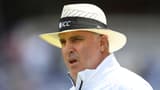
The opening Test of the Frank Worrell Trophy 2025 caught the attention of the cricketing world for the controversial DRS calls by the TV umpire, Adrian Holdstock, who has been criticized for his wrong decisions, which had an impact on the outcome of the match. The hosts West Indies, were the victims of the umpiring blunders, with four going against them.
From fine Snicko spikes to disputed low catches, the Caribbean side, led by Roston Chase, repeatedly found themselves on the wrong end of marginal decisions by the third umpire, despite technology seemingly suggesting otherwise. Shai Hope and Roston Chase were among the key batters who were given under contentious circumstances.
The West Indies skipper was given out for LBW, but Ultredge clearly showed a spike of the ball had faintly edged the bat, yet he was ruled out. Hope was given out after Alex Carey took a clean, one-handed diving catch behind the stumps. However, there was visible doubt whether the ball had touched the ground before entering Carey’s gloves, yet the TV umpire Holdstock upheld the on-field umpire’s decision.
The recently concluded first Test between the West Indies and Australia became the centre of controversy because of the wrong DRS calls that favoured the visitors the most. TV Umpire Adrian Holdstock faced heat over his wrong decisions on social media, where he was criticized for inconsistent interpretations of the technology.
The first innings of the West Indies' batting itself put them on the back foot due to two of the four controversial DRS decisions going against them early on.
Roston Chase wants a penalty to be imposed on umpires
After the first Test defeat to Australia, West Indies skipper Roston Chase expressed his disappointment over the umpiring decisions against his team, while mentioning how players face harsh penalties if they are found to have breached the Code of Conduct, and asked for similar treatment for the umpires.
“They (umpires) just have a wrong decision or questionable decision, and life just goes on. You're talking about guys' careers. One bad decision could make or break a guy's career.” Chase spoke at the press conference
“I just think that it should be an even playground in terms of when players step out of line, they're penalised.
“I think that there should be some penalty put in place when you have blatant decisions going against you," he added.
Should the ICC bring in penalties for umpires for wrong DRS calls?
The umpiring decisions, despite technology in place for the Decision Review System (DRS) calls, have continued to be debated and controversial for their inconsistent interpretations, raising serious questions about whether the International Cricket Council (ICC) should introduce penalties on the umpires when clear errors impact the match.
Before the Decision Review System (DRS) was introduced in cricket, there were numerous instances where teams had no option against on-field umpiring decisions, often leading to contentious outcomes of the match.
The DRS was brought in to minimize such errors, but the recent controversies, like those in the recently concluded first Test between West Indies and Australia, emphasize that even with the advanced technology, poor interpretation by the TV umpire can influence the outcome of the match, prompting calls for greater accountability from the match officials.
Umpiring mistakes cannot be let off easily
In the pre-DRS era, one of the major controversies regarding umpiring decisions was in the 2008 Sydney Test between Australia and India, where many incorrect dismissals and dubious calls by ICC umpires Steve Bucknor and Mark Benson against Indian batters sparked outrage and strained bilateral ties between the two nations, and prompted widespread demand for an improved decision-making mechanism.
Currently, the International Cricket Council does not impose any penalty on the umpires for their incorrect decisions, but the sport’s governing body monitors the performances of the umpires who are on the panel, and consistently poor decisions result in their removal from the ICC umpire panel.
However, this internal monitoring process lacks transparency and immediacy, along with public reprimands or penalties, which creates a perception of immunity. Since the umpires play a crucial role in determining the outcome of the match, the ICC must bring out a structured system of accountability, including penalties or temporary suspensions, for repeated errors, even aided by technology like DRS.