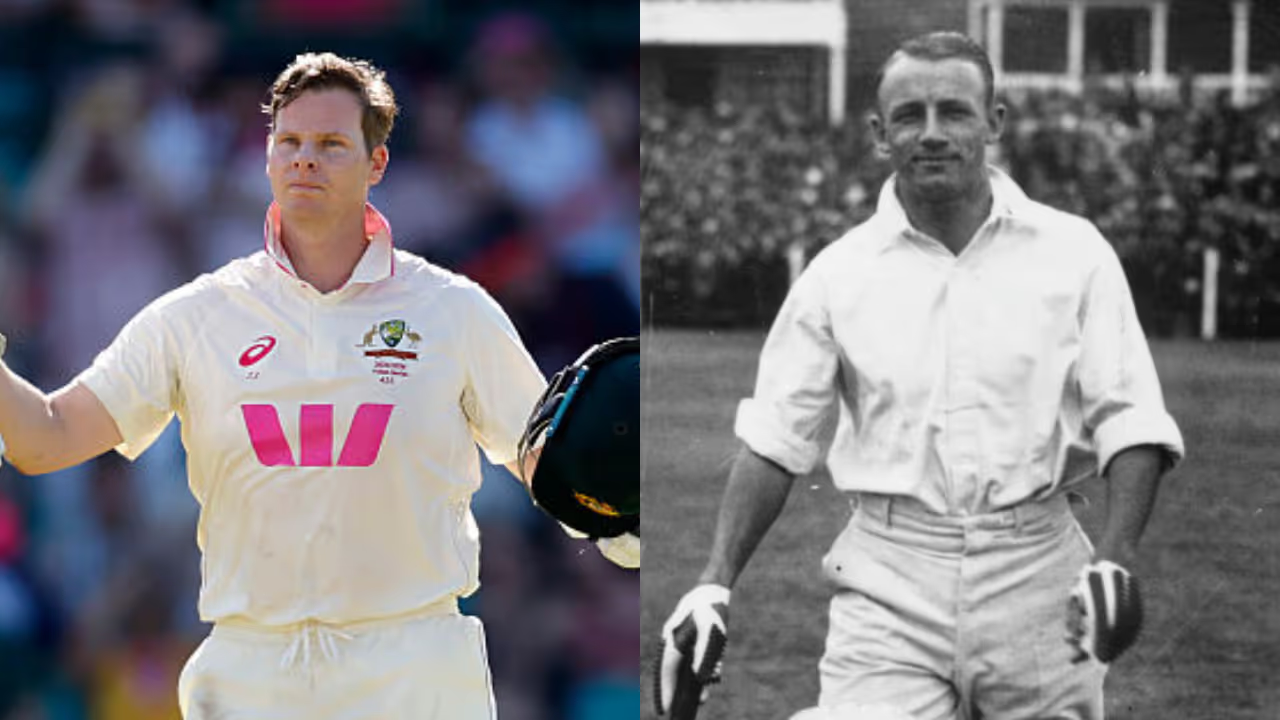
Steve Smith scored a vital century in the Ashes finale at the SCG, leading Australia to a first-innings advantage. The knock revived his form and brought him closer to Don Bradman’s Ashes records, sparking debate over Australia’s greatest batsmen.
Former Australia captain and talismanic batter Steve Smith lit up the Sydney Cricket Ground with his fluent century on Day 3 of the fifth and final Test of the Ashes series on Wednesday, January 6. Smith has had an up-and-down Ashes series, managing just one half-century before the Sydney Test, but produced a timely century when Australia needed it most.
In Australia’s first innings, ‘vintage’ Steve Smith’s batting was on display in Sydney, playing an unbeaten 129 off 205 balls, including 15 fours and a six. His masterclass guided the hosts to 518/7, giving Australia a 134-run lead over England’s first-innings total of 384 at the end of Day 3 of the Ashes series finale at the Sydney Cricket Ground. This was the first century of the ongoing Ashes 2025, a knock that once again highlighted his ability to rise when the stakes are highest.
Steve Smith’s century was a statement knock after a string of modest scores in three Tests of the Ashes series, arriving at a crucial juncture of the Ashes finale. The veteran Australian batter is helping Australia seize control and take a crucial lead heading into Day 4, after a mixed run earlier in the series.
Related Articles

Smith Gets Closer to ,Don Bradman
Whenever Steve Smith performs well in a Test match or an entire series, legendary Don Bradman’s name inevitably comes into the conversation. In the ongoing Sydney Test, Smith’s statistical output in the Ashes continues to rank him alongside the most dominant performers in the rivalry’s history.
With an unbeaten 129-run innings, Smith has become the second-leading run-getter in the history of the Ashes, overtaking former England batting legend, late Jack Hobbs’ tally of 3636 runs in 41 matches. The former Australia captain now sits behind fellow compatriot late Don Bradman, who amassed a whopping 5028 runs at an average of 89.78 in 37 matches.
Moreover, Steve Smith recorded his 13th century in his Ashes career, which is the second most centuries in the history of the Ashes series, trailing behind Bradman’s 19 tons. In both statistical tallies, Smith now trails behind Australia's batting legend, with his 129-run innings bringing him closer to a monumental Ashes record, reinforcing his status as one of the greatest performers in the storied rivalry.
However, Steve Smith has surpassed Don Bradman’s Australian record in international cricket, scoring the most runs against a single opponent. Smith has aggregated 5085 runs against England across all formats, eclipsing Bradman’s 5,028 runs in Tests, and further cementing his legacy as one of Australia’s most prolific batsmen.
Steve Smith Matching Don Bradman’s Legacy
Steve Smith’s technical brilliance and consistency in international cricket, especially Tests, have often drawn parallels between him and Don Bradman. Though both players have two different eras, with Bradman’s illustrious career defined by pre- and post-war cricket and Smith thriving in the modern game, their ability to dominate England, carry the teams under pressure, and leave an indelible mark on the Ashes.
When Steve Smith's batting average was over 60 with a minimum of 2000 Test runs, he became only the second Australian, after Don Bradman, to achieve this feat, highlighting extraordinary consistency and placing him among the elite in cricketing history. Smith’s current Ashes batting average of 57.53 ranks third for Australia, behind Don Bradman and Steve Waugh.
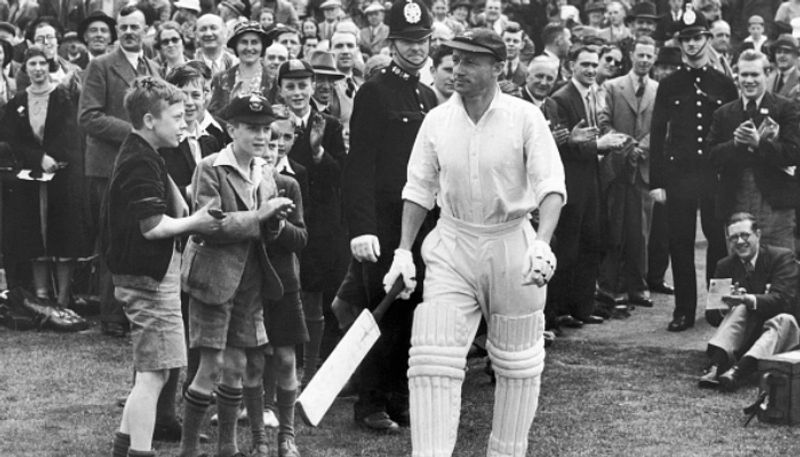
Just like Don Bradman, Steve Smith has enjoyed playing Ashes on English soil, with both scoring over 2000 runs. Bradman aggregated 2674 runs, including 11 centuries, while Smith has amassed 2000 runs, including seven centuries. Interestingly, both Australian batting stalwarts scored more centuries on English soil than at home, highlighting their ability to excel in challenging overseas conditions.
In December 2017, Steve Smith achieved a peak Test batting rating of 947 points, the highest ever recorded in a contemporary era of modern-day cricket, and the second-highest overall, just behind Don Bradman’s unmatched 961, further underscoring Smith’s dominance and elite status in the history of the game.
What Sets Steve Smith and Don Bradman Apart?
Though Steve Smith and Don Bradman are often regarded as the batting greats in Australian cricket and the cricketing world as a whole, their styles and eras set them apart. Bradman played in an era where Test cricket was the only format, facing uncovered pitches and limited protective gear, while Smith played in the modern era with T20Is and ODIs, advanced analytics, and fast-paced, highly competitive international schedules.
Don Bradman spent the majority of his playing career against England, scoring 19 centuries in 37 Ashes matches out of 52 Tests. Steve Smith, on the other hand, has played against every Test-playing nation, including India, England, Australia, South Africa, West Indies, Sri Lanka, New Zealand, and Pakistan, scoring 10 or more centuries against India (11) and England (13).
Against India (2356), England (3682), and Pakistan (1175), Smith has scored heavily, proving his dominance across top teams and conditions. Steve Smith has played all three formats of the game, compared to Don Bradman, who played only Test, showcasing the former’s versatility and adaptability across formats and modern cricket conditions.
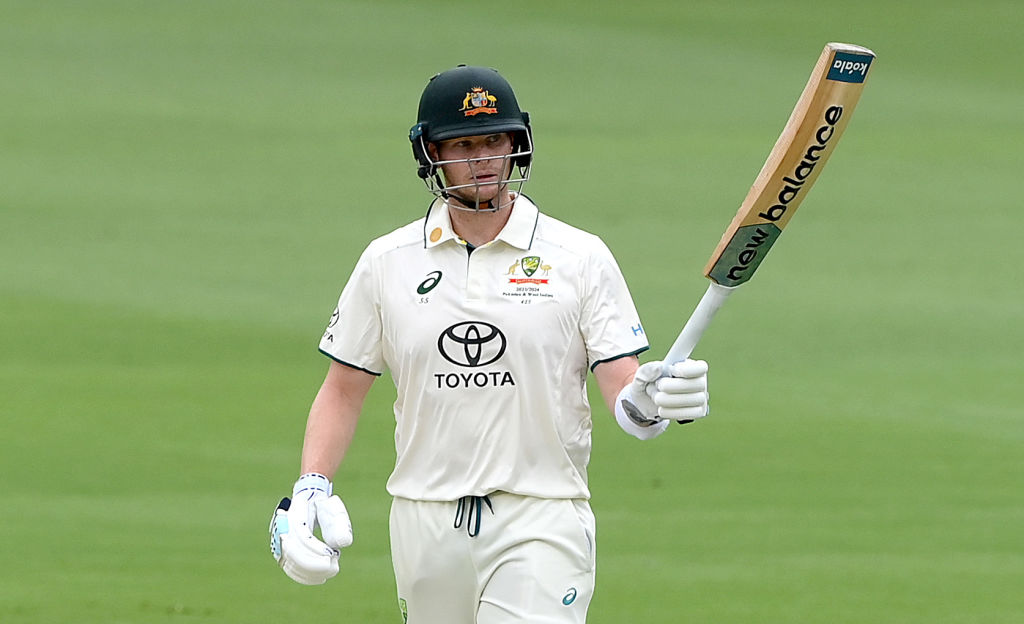
Don Bradman’s legacy was built on unmatched consistency and dominance in an era of limited cricket, which has remained a benchmark over the last several decades, while Steve Smith’s success and adaptability across all formats at the international level show how the spirit of that greatness continues in the modern game.
In his international career, Steve Smith has amassed 17636 runs, including 49 centuries and 84 fifties, at an average of 47.92 in 360 matches. Don Bradman’s Test career, amassing 6996 runs, including 29 centuries and 13 fifties, at an average of 99.94 in 52 matches, remains the golden standard, while Smith’s numbers reflect modern cricket’s challenges and his adaptability across formats.