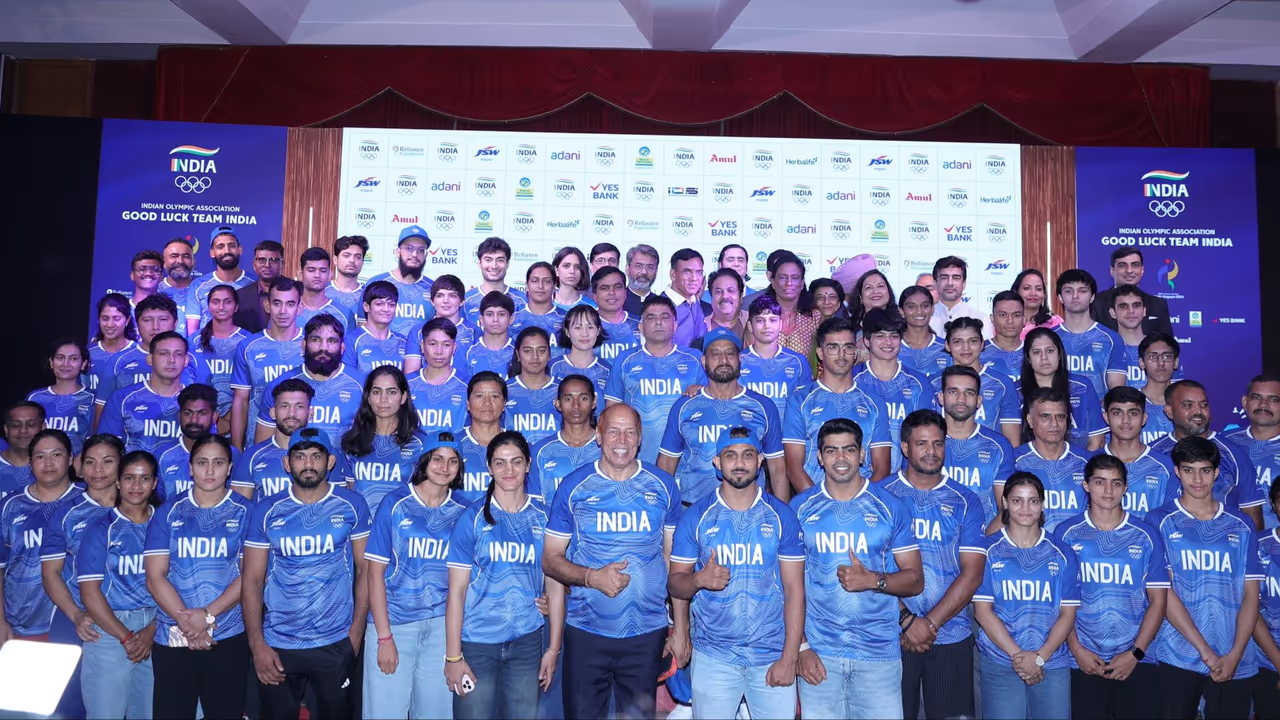
Indian athletes arriving in Nagoya for the 2026 Asian Games faced logistical chaos, with missing paperwork and decentralized housing. Many were stranded at transit hubs for over 12 hours without food or water before receiving room allocations.
Ahead of the Asian Games 2026, Indian athletes reportedly faced chaotic lodging arrangements and administrative delays upon arriving in Nagoya, Japan. Following their send-off and departure from New Delhi, the contingent was greeted by an off-field logistical nightmare rather than a seamless welcome.
India has sent a 503-member contingent (comprising 269 men and 234 women) to compete across 35 sporting disciplines. India's men's and women’s cricket teams are expected to arrive in Japan separately, with the cricket contingents set to stay in designated accommodation arranged by the Asian Games organisers rather than in problematic temporary lodging.
However, the Indian athletes' arrival in Nagoya quickly soured as they confronted a decentralised housing structure, relying on scattered hotels and the Costa Serena cruise ship instead of a traditional Athletes' Village, which triggered massive administrative delays, missing paperwork, and frustrating hours stranded at transit hubs before they could finally access their rooms.
Related Articles

Also Read: Indian judo team in Japan for training ahead of Asiad, World C'ships
Indian Athletes Stranded at Airport for Over 12 Hours
The journey from New Delhi to Nagoya might have taken more than 12 hours, but the ordeal continued after they arrived in Japan, with several Indian athletes reportedly waiting for accommodation until late Wednesday night.
According to reports, Indian and Thai athletes were left stranded after their names were missing from the accommodation lists, preventing them from checking in and forcing them to wait for hours at the venue. In a video that went viral on social media, especially X (formerly Twitter), athletes from both nations were seen waiting for hours with their luggage.
Reportedly, some of the athletes were forced to sit or sleep on the floor of the airport as they waited for their accommodation arrangements to be sorted out. Ahead of the Indian athletes' arrival, accommodation has been a major issue, with event organisers facing several complaints from several participating nations over shortages, cramped temporary facilities and problems with room allocations.
Reportedly, after 14 hours, some Indian athletes finally received accommodation, although several had to share rooms, while others were temporarily shifted to hotels due to the ongoing lodging confusion.
Despite the organisers’ assurance that efforts were underway to address the complaints, the accommodation problems continued to cause frustration among athletes and officials ahead of the Games’ opening.
Indian Shooters Face Nightmare After Arrival in Japan
Meanwhile, the Indian shooting contingent, which includes 30 members, faced further logistical hurdles after being accommodated around 50 km from the shooting range, resulting in long commutes and delays in transportation.
According to the report by Times Now, the Indian shooting team arrived in Japan at 9 am and had to wait till 2 am in the morning to get their accommodation sorted, with the team facing prolonged delays in transportation and other logistical arrangements. They were not provided with food or water at the accommodation verification centre.
Additionally, the Indian shooters were also split across two hotels due to a shortage of hotel rooms, with additional delays as officials scrambled to secure sufficient space for the full squad.
For the first time, there is no Athletes' Village at the Asian Games, with organisers instead relying on hotels, temporary container-style accommodation and the Costa Serena cruise ship to house athletes and officials across multiple locations.
Therefore, the Asian Games 2026 has already turned into a logistical test of patience before the opening even begins, highlighting structural flaws in the decentralized housing experiment that organizers are scrambling to fix.
Also Read: Delhi Capitals partners with Tokyo school to boost cricket in Japan