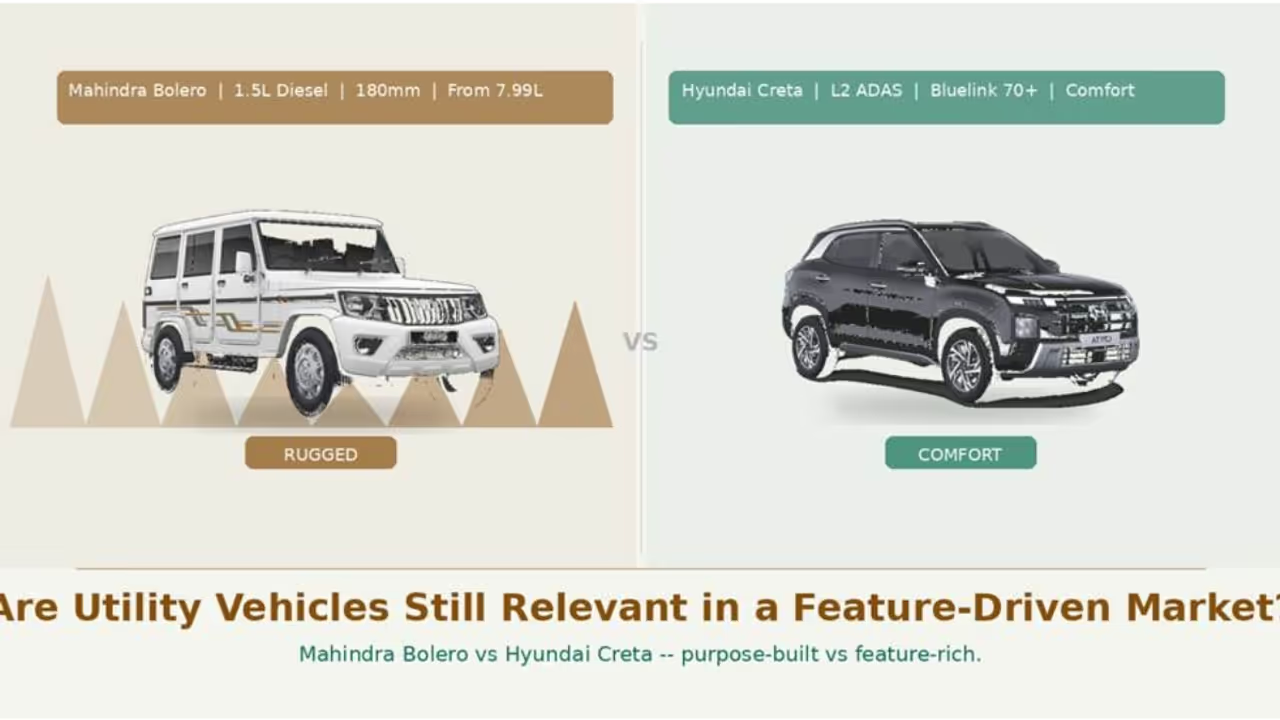
Models like the Hyundai Creta reflect this shift, offering a balance of comfort, technology, and everyday usability.
The modern automotive market is dominated by features. Large touchscreens, connected technology, advanced driver assistance systems, and premium interiors have become key selling points. In this environment, cars are often judged by how much they offer rather than how they are built.
This raises an important question: are traditional utility vehicles still relevant in a feature-driven market?
What Defines a Utility Vehicle?
Related Articles

Utility vehicles are designed with a clear purpose: durability, reliability, and functionality.
They typically focus on:
- Strong build quality
- Ability to handle rough terrain
- Simple, easy-to-maintain mechanicals
- Long-term dependability
Vehicles like the Mahindra Bolero represent this philosophy, where practicality takes precedence over luxury.
The Rise of Feature-Driven Cars
Over the past decade, buyer expectations have evolved significantly.
Today’s cars are expected to offer:
- Advanced infotainment systems
- Smartphone connectivity
- Comfort features like climate control and premium seating
- Safety technologies such as ADAS
Models like the Hyundai Creta reflect this shift, offering a balance of comfort, technology, and everyday usability.
This trend has made the market increasingly feature-focused.
Why Features Have Become Important
There are several reasons behind the rise of feature-driven cars:
1. Changing Usage Patterns
Most cars today are used in urban environments, where comfort and convenience matter more than rugged capability.
2. Increased Competition
Automakers are adding more features to differentiate their products and attract buyers.
3. Buyer Awareness
Modern buyers are more informed and expect better value, often equating more features with a better purchase.
Where Utility Vehicles Still Excel
Despite the shift towards features, utility vehicles remain highly relevant in specific areas.
1. Toughness and Durability
Utility vehicles are built to handle:
- Poor road conditions
- Heavy usage
- Challenging environments
Their robust construction makes them more dependable in demanding situations.
2. Low Maintenance and Reliability
With simpler mechanical systems, utility vehicles are often:
- Easier to repair
- More cost-effective to maintain
- More reliable over long-term usage
This makes them ideal for users who prioritise practicality.
3. Real-World Capability
While feature-rich SUVs may offer comfort, utility vehicles deliver:
- Better load-carrying ability
- Higher tolerance for rough usage
- Consistent performance in varied conditions
This capability is difficult to replace with features alone.
The Limitations of Feature-Heavy Cars
While modern SUVs offer impressive features, they are not always suited for every environment.
Some limitations include:
- Higher maintenance costs
- Increased complexity due to electronics
- Less focus on rugged durability
In demanding conditions, simplicity can often be more effective than sophistication.
The Changing Role of Utility Vehicles
Utility vehicles are no longer the default choice for all buyers, but they have not disappeared.
Instead, their role has become more defined.
They are now preferred by:
- Buyers in rural or semi-urban areas
- Businesses and commercial users
- Individuals who need reliability over luxury
This shows that utility vehicles continue to serve a clear purpose.
Can Utility and Features Coexist?
Interestingly, the gap between utility and features is beginning to narrow.
Some modern utility vehicles now offer:
- Basic infotainment systems
- Improved cabin comfort
- Better safety features
At the same time, feature-rich SUVs are becoming more capable.
This convergence suggests that the future may not be about choosing one over the other.
Buyer Priorities: Then vs Now
Earlier, buyers focused on:
Strength
Reliability
Longevity
Today, they also consider:
- Comfort
- Technology
- Design
This shift has expanded expectations rather than replacing older priorities.
The Emotional vs Practical Perspective
Utility vehicles appeal to practical thinking:
- They are dependable
- They are cost-effective
- They are built for a purpose
Feature-driven cars appeal to lifestyle and experience:
- They offer comfort and convenience
- They enhance daily driving
- They create a premium feel
The choice often depends on which of these matters to the buyer.
Role of Digital Platforms in Decision-Making
With such diverse options available, platforms like ACKO Drive help buyers:
- Compare utility and feature-driven vehicles
- Understand ownership costs
- Evaluate real-world usability
This allows buyers to make more informed decisions based on their needs.
Final Thoughts
So, are utility vehicles still relevant in a feature-driven market?
The answer is yes—but in a more focused way.
Utility vehicles continue to matter because:
- Not all driving conditions are urban
- Not all buyers prioritise features
- Practical needs still exist
While feature-rich SUVs dominate urban markets, utility vehicles remain essential for buyers who value durability, reliability, and real-world capability.
In the end, relevance is not defined by trends—it is defined by purpose. And as long as there are real-world needs that demand toughness and dependability, utility vehicles will continue to have a place in the market.