
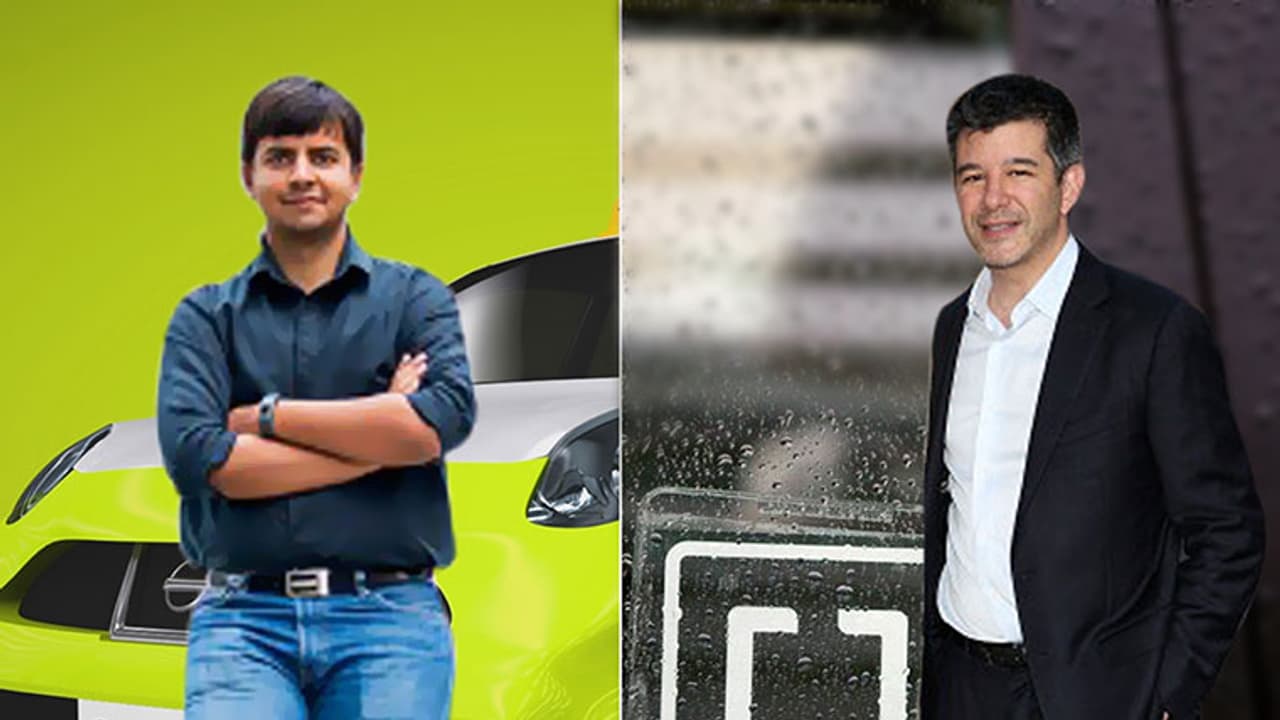
Last year, China's largest transportation app Didi Chuxing rallied Uber's topmost global competitors together to form a so-called anti-Uber alliance said a report in the Times of India. Besides Didi, Uber's cross-town rival Lyft, India's Ola and Malaysian Grab, formerly GrabTaxi, were part of this alliance to ward off Uber's threat to these players in different regions of the world. Didi went on to invest $100 million in Lyft and pumped around $20 million into Ola, cementing its position as the cash-rich, ringleader of the group.
Monday's announcement of UberChina's sale to Didi now leaves this alliance on a bit of a shaky ground and brings in a new twist to the tech-backed urban transportation market.
While it's not clear what Didi's equation will be with the other three ride-hailing companies, there's a general view that for now it will look to get its own house in order in China before backing others. What's noteworthy is that Uber now becomes an indirect shareholder through Didi in both Lyft and Ola.
Ola's co-founder & CEO Bhavish Aggarwal did not offer any comments on what the upshot of the China development will be on his company when TOI contacted him. Most people familiar with the developments at the two companies said it was early to gauge the impact of the news on what may eventually be the India alignment in the taxi-hailing sweepstakes.
But it's a given that for Ola, valued at $5 billion, the fight to dole out more subsidies and, therefore, the need to mop up more capital becomes immediate.
Having racked up $1.3 billion from investors like DST Global and SoftBank, Ola has been in talks to raise fresh capital on the back of its increasing lead over Uber in terms of market share with the launch of Micro, its low-cost option, as well as Prime, and other options in the past six months.
Lead critical for Ola
There has been chatter around Ola now averaging 1 million rides daily (this number could not be independently verified), which is almost three times the size of Uber. Ride numbers have been a hot-button topic for both Ola and Uber and also internationally between all the players involved.
In India, Uber claims it is very close to cornering 50% market share, while in an interview to TOI in June, Ola's Aggarwal said there is no city in which competition is neck-and-neck.
An investor who did not want to be named said Ola will have to make life difficult for Uber, there's no other way. "For Uber, this is one big market left, after China. They will give it all."
Analogies were drawn with the US e-commerce giant Amazon's ongoing fight with homegrown Flipkart, after its failed attempt in China.
