
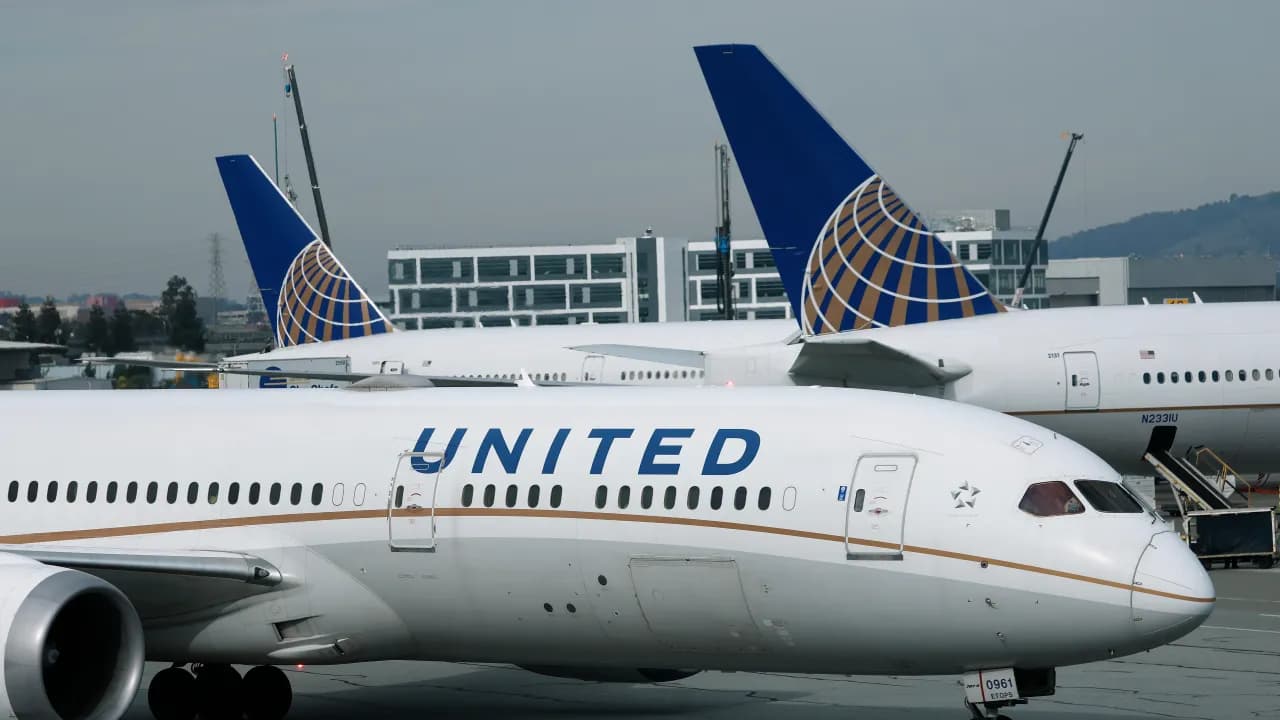
United Airlines tried for a potential Delta merger as CEO Scott Kirby pursued industry transformation.
- United Airlines explored a possible merger with Delta Air Lines, though the talks ended without a deal.
- Kirby also pursued a possible American Airlines deal, which faced opposition and was rejected.
- Both airlines beat second-quarter expectations despite higher fuel costs, but United stood out by raising its earnings outlook.
United Airlines (UAL) stock is gaining investor interest after the airline reportedly considered a possible merger with Delta Air Lines (DAL) last year, as CEO Scott Kirby looked for a major deal that could reshape the U.S. airline industry.
United’s Bold Merger Push Targets Industry Transformation
United Airlines explored a major industry shake-up last year by approaching Delta Air Lines about a possible merger, according to a Wall Street Journal report. The discussions ended without a deal, but the outreach highlights United’s push for a transformative transaction.
United Airlines CEO Scott Kirby contacted Delta Air Lines CEO Ed Bastian to discuss a potential combination, according to people familiar with the matter. Delta executives reviewed the proposal and conducted early evaluations, but the conversations did not develop into formal negotiations.
Unlike traditional airline mergers designed mainly to reduce costs, Kirby has said that United would only consider combinations that create a stronger competitive platform. Kirby later explored a possible deal with American Airlines Group Inc. (AAL), though that effort faced public opposition and was rejected by American. United Airlines stock inched 0.06% lower overnight, ahead of Monday.
United And Delta Navigate A Changing Airline Landscape
A United-Delta combination would have brought together two dominant U.S. airlines and likely triggered intense scrutiny from antitrust regulators, lawmakers and state officials. The country’s airline sector has already consolidated over the past two decades, leaving four major carriers controlling much of the market.
Delta’s focus on customer experience, premium travelers and operational performance has made it one of the industry’s most profitable airlines. United has adopted several elements of that strategy as it works to improve its own service offerings.
United Airlines and Delta Air Lines both surpassed Wall Street expectations in the second quarter despite higher fuel costs hurting profits. Delta posted record revenue, while United raised its yearly earnings outlook, boosting investor confidence in the airline stock.
United stood out with adjusted earnings of $1.99 per share, 16% revenue growth and an increased full-year adjusted EPS forecast of $9 to $11. The airline improved profitability by cutting weaker routes, focusing on higher-value markets and managing capacity more effectively.
Fuel Expenses Threaten Airline Earnings Despite Strong Demand
The International Air Transport Association (IATA) lowered its 2026 global airline profit forecast to $23 billion from $41 billion due to higher fuel costs and Middle East disruptions. Although travel demand remains strong, rising expenses are putting pressure on airline profits.
Airlines are increasing ticket prices and improving efficiency to manage costs, but IATA said these steps may not fully offset the impact on profitability.
UAL Stock: Retail Traders’ View
On Stocktwits, retail sentiment for UAL remained in ‘bearish’ territory.
A user said, “What matters now is execution: can United keep passing higher costs into fares without weakening bookings?”
While UAL and DAL stocks have gained 5% and 22% year-to-date, AAL stock has declined 5%.
For updates and corrections, email newsroom[at]stocktwits[dot]com.
