
A day after Trump’s remarks, Iran’s newly appointed supreme leader, Mojtaba Khamenei, issued his first public statement, promising that Iran would continue resisting.
- Khamenei signaled that Tehran might extend the war to new fronts targeting weaker points of its opponents.
- The Axios report said Trump told G7 leaders the operation had removed a major threat and indicated Iran’s government was close to collapsing.
- The IEA warned of the “largest supply disruption” in global oil markets as shipping through the Strait of Hormuz has almost come to a halt.
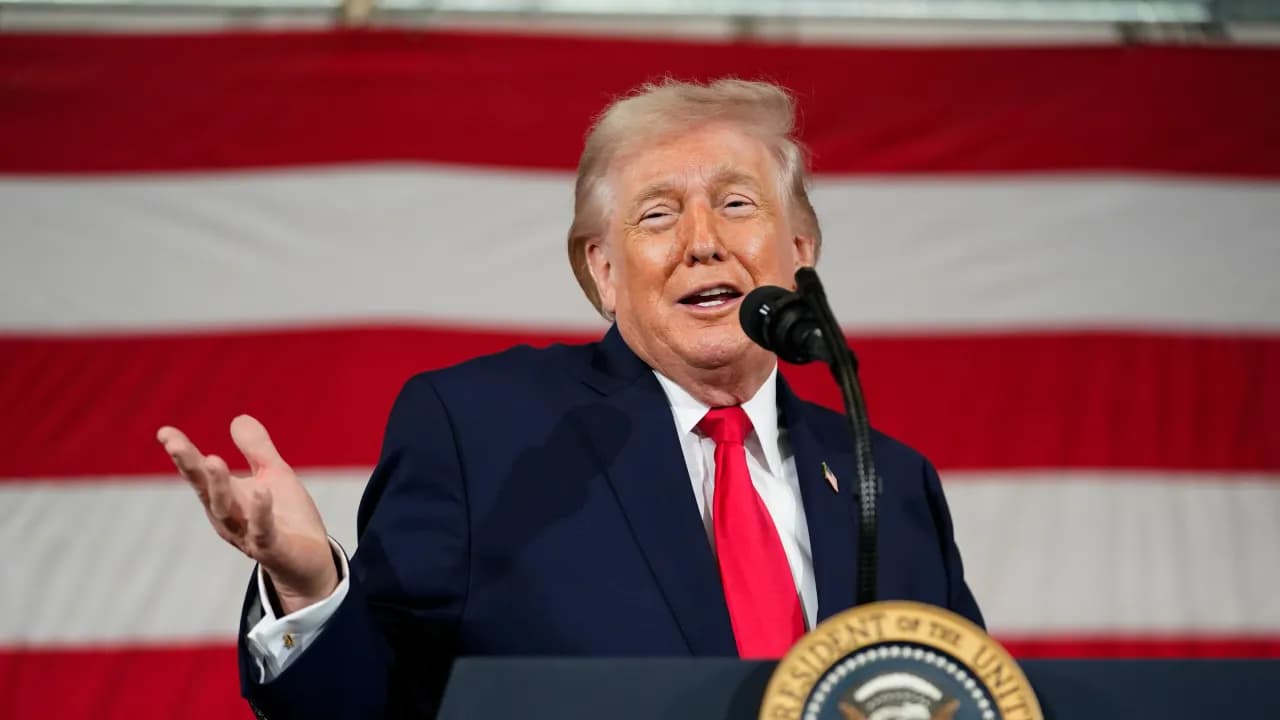
U.S. President Donald Trump had reportedly told leaders of the Group of Seven (G7) nations in private that Iran was “about to surrender” during a virtual summit on Wednesday, even as signs from Tehran suggested the conflict remains far from over.
According to a Axios report, the development highlighted a stark gap between Washington’s expectations and the signals emerging from Iran.
Iran Responds With Escalation Threats
Roughly a day after Trump’s comments, Iran’s newly installed supreme leader, Mojtaba Khamenei, delivered his first public address, pledging continued resistance and warning that Tehran would broaden the conflict into new areas where its opponents are vulnerable.
Khamenei also added that the Strait of Hormuz would stay shut. The developments come nearly two weeks after hostilities intensified between the United States and Iran, with energy markets and global security increasingly at risk.
U.S. West Texas Intermediate (WTI) crude futures maturing in April inched 0.1% higher at nearly $96 a barrel. Brent crude futures expiring in April increased 0.6% to hover around $101 a barrel.
Trump’s Confidence In War’s Outcome
According to the report, Trump briefed the G7 officials that the operation was eliminating a major threat and suggested the Iranian government was on the brink of collapse. At the same time, he added there might be no surviving officials in Tehran capable of formally announcing a surrender.
Unnamed sources in the report described Trump’s comments during the call as unclear regarding the timeline or specific goals for ending the war.
The Strait of Hormuz Conundrum
The IEA warned of the “largest supply disruption” in the global oil market as traffic through the Strait of Hormuz has nearly stopped, even though the route normally carries about one-fifth of the world’s crude oil shipments.
Recent attacks on vessels in the region have already sent crude prices beyond $100 per barrel, raising alarm about potential disruptions to global supply chains and the broader economy. In response, the Trump administration is preparing temporary waivers that would last 30 days, allowing foreign tankers to transport fuel from the Gulf Coast.
U.S. equity futures edged lower on Friday. At the time of writing, the SPDR S&P 500 ETF (SPY), which tracks the S&P 500 index, was up 0.2%; the Invesco QQQ Trust ETF (QQQ) inched 0.2% higher. Retail sentiment on Stocktwits around the S&P 500 ETF was in the ‘bearish’ territory.
For updates and corrections, email newsroom[at]stocktwits[dot]com.<
