
In a note dated Thursday, Jefferies said that Teslas were cheaper but had a longer wait time as compared to Uber.
- The firm spent two days in Austin taking 19 rides on Uber and 15 rides on Tesla within Waymo and Tesla’s autonomous vehicle operating zones.
- Tesla under performed despite their rides being offered at a sizable 60% discount compared to UberX, Jefferies said.
- The wait time was significantly longer and the vehicle took suboptimal routes resulting in longer average trip times and further struggled with pickup and drop-off, it said.
Jefferies on Thursday said that it took a series of rides in Austin earlier this month only to notice that most of Tesla Inc’s robotaxis still have a safety monitor in the front seat to take over as required.

In a note dated Thursday, Jefferies said that Tesla robotaxis were cheaper but had a longer wait time as compared to Uber. The firm spent two days in Austin taking 19 rides on Uber and 15 rides on Tesla within Waymo and Tesla’s autonomous vehicle operating zones.
While Waymo prices were similar to Uber rideshare, the wait times were longer and the robotaxis struggled with pickup and drop-off, the analyst said. 14 of the analysts’ Uber rides were composed of Waymo.
Tesla under performed despite their rides being offered at a sizable 60% discount compared to UberX, Jefferies said. The wait time was significantly longer and the vehicle took suboptimal routes resulting in longer average trip times and further struggled with pickup and drop-off, it said.
“AVs currently rely on novelty, premium cars, and lower prices to capture share, all unsustainable tailwinds that could foreshadow a tougher road ahead,” the analyst wrote. “While AVs will inevitably make progress closing the gap as the tech improves and fleet sizes expand, we believe a hybrid model that leverages both AVs and humans will ultimately provide the best experience.”
The Future Fund Managing Partner Gary Black said on Thursday on the heels of the note that Tesla shouldn’t be trading at its current valuation if a majority of its robotaxis require supervision.
“13 of 15 “fully autonomous” ride hailing trips were actually supervised. $TSLA shouldn’t trade at a 200x P/E if its fully autonomous ride hailing platform actually requires supervision. Safety monitors aren’t scalable,” they wrote on X.
Tesla’s Robotaxi Efforts
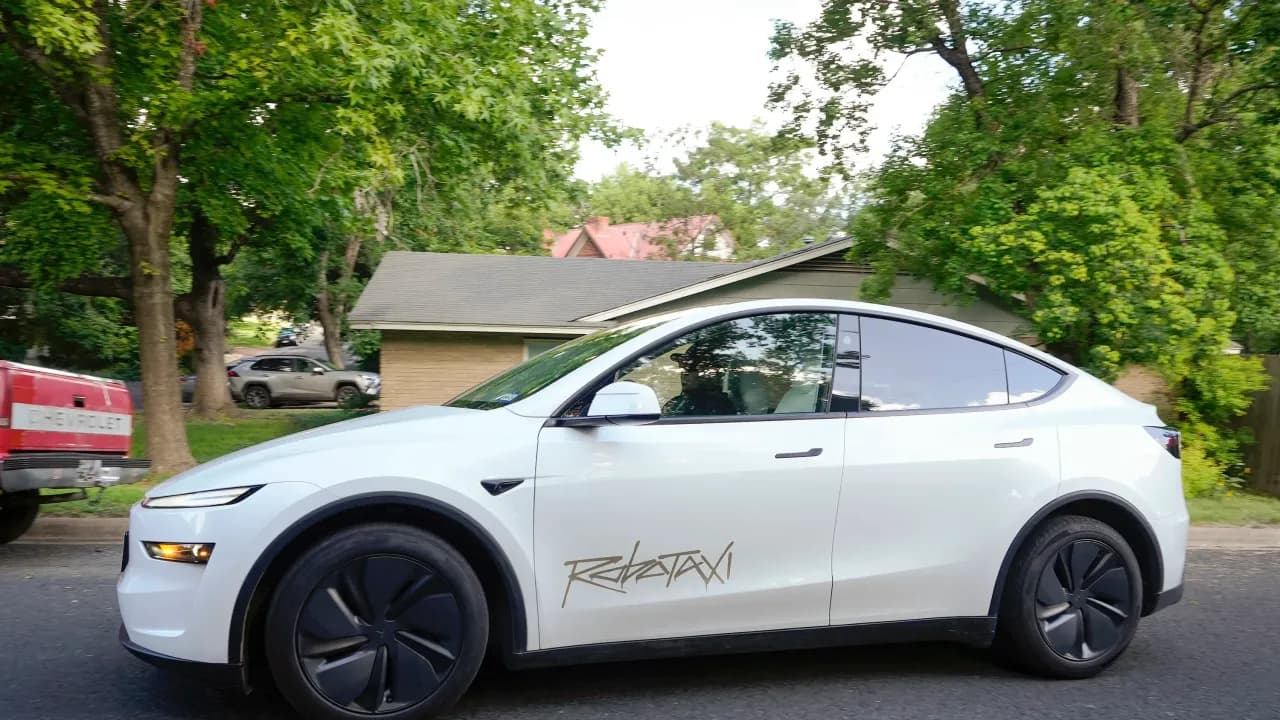
Tesla launched a number of its Model Y vehicles equipped with its full self-driving (FSD) technology as robotaxis in Austin in June 2025, albeit with a safety monitor in the front seat to take over as required. In January, Tesla launched a few robotaxis with no safety monitors, marking a key step towards CEO Elon Musk’s ambitions of deploying autonomous vehicles in as much as half of the U.S. by year-end.
The company has about 500 Model Y vehicles operating as robotaxis across the Bay Area and Austin, Musk said during the company’s fourth-quarter earnings call in late January. However, the company is being cautious while scaling the service, he added.
How Did Stocktwits Users React?
On Stocktwits, retail sentiment around TSLA stock rose from 'bullish' to ‘extremely bullish’ territory while message volume stayed at ‘low’ levels.
TSLA stock has gained 41% over the past 12 months.
For updates and corrections, email newsroom[at]stocktwits[dot]com.<
