
SpaceX CFO Bret Johnsen said the company will fund much of its AI and growth push through tighter cash-flow management and short paybacks.
- Johnsen said paybacks on current deals are often under a year and “a large portion will be just funded by the business itself” through better handling of deposits, supplier terms, and operating cash flow.
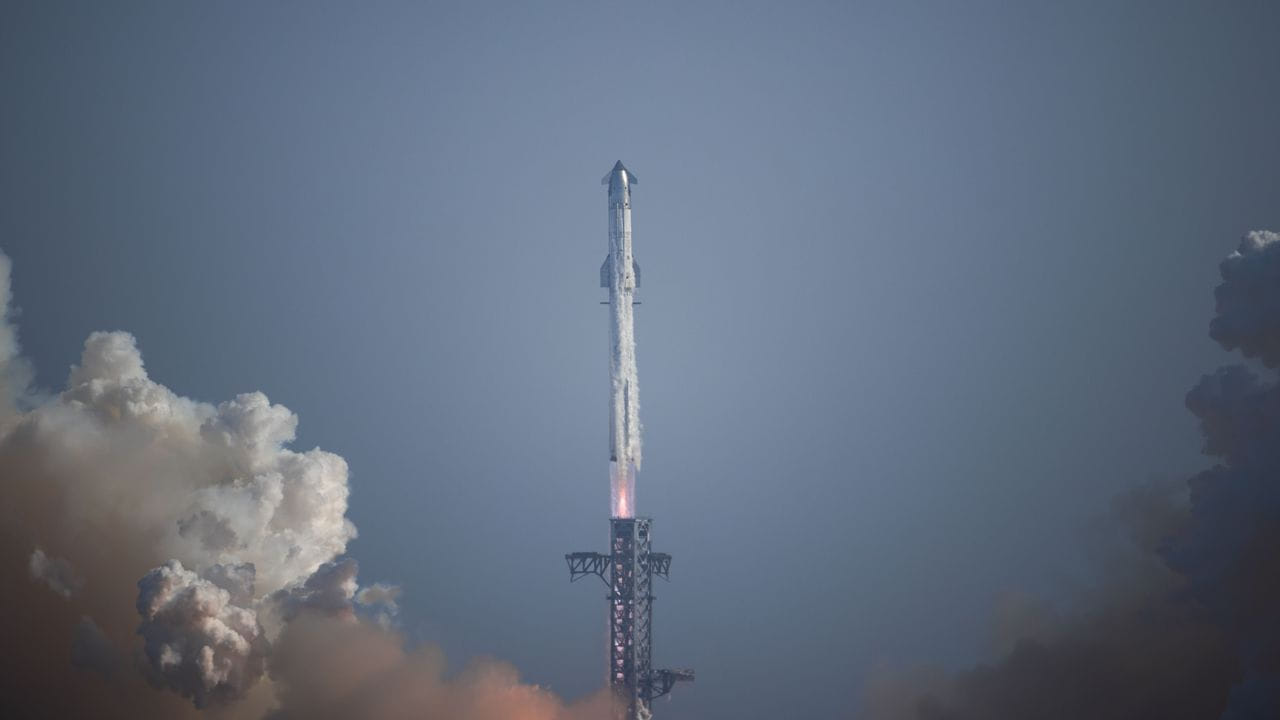
- The CFO called the weekend recovery of Starship’s second stage a critical milestone that opens the path to rapid reusability and much lower costs.
- Orbital AI satellites are slated to begin flying next year, with meaningful gigawatt-scale capacity expected in 2029, he added.
SpaceX is leaning heavily on internal cash-flow management to fund its expanding operations rather than depending solely on external capital, CFO Bret Johnsen said in an appearance at the TomorrowX Summit on Tuesday.
The company is now tightening how it handles customer deposits and supplier payments after years focused on hosting work for others, Johnsen said.
Johnsen noted that paybacks on current deals are often under a year, so the company only needs to cover a short gap of months. Stronger operating cash flow, better working-capital practices, and existing debt facilities should cover a large share of needs. “A large portion will be just funded by the business itself,” he said.
The comments come on the heels of a Bloomberg report that SpaceX may begin selling bonds worth around $4 billion this week as part of its $40 billion financing plan to expand its AI computing business. SpaceX announced the $40 billion financing commitment to acquire Nvidia’s next-generation Vera Rubin chips for its computing infrastructure in October.
Critical Milestone Accomplished, Says CFO
Over the weekend, the company also caught the second stage of its ambitious two-stage Starship rocket back at the launch pad.
“This was a critical milestone for us to accomplish… we’ve never brought back the second stage. Nobody’s ever brought back the second stage,” he said. The demonstration supports a path to much lower costs per kilogram and the possibility of flying the same vehicle repeatedly, “just like an aircraft.” That capability, he added, “opens up whole new markets for us, especially orbital compute.”
Orbital Compute Will Provide Cost Edge, Says Johnsen
First dedicated satellites slated to operate as AI data centers in space, called Starmind, are scheduled next year, with constellation growth in 2028 and meaningful gigawatt-scale capacity arriving in 2029. Once a few additional second-stage flights prove routine reflight, the economics are expected to undercut terrestrial alternatives, the CFO said.
After launch, operating costs approach zero: satellites in sun-synchronous orbits keep solar panels continuously illuminated, while simple radiators handle cooling.
“It’s really obvious to us,” Johnsen said. “...I think is going to be amazing,” Johnsen said, pointing to abundant clean power free of terrestrial constraints of scaling compute. Terrestrial costs remain higher and face growing headwinds, while orbital unit costs are projected to decline with volume and experience, he said.
How Did SPCX Retail Traders React?
On Stocktwits, retail sentiment around SPCX stock stayed within the ‘bullish’ territory over the past 24 hours, while message volume stayed at ‘normal’ levels.
A Stocktwits user highlighted that SpaceX is building its own chip fab with Tesla, called the Terafab, and once it's up and running, the external dependence on chips will fade.
View this Stocktwits post
Another cheered the company’s plans for its Starmind constellation in space.
View this Stocktwits post
SPCX closed Tuesday at $141.70, above its June IPO price of $135 but below its all-time highs near $225.
For updates and corrections, email newsroom[at]stocktwits[dot]com.<








