
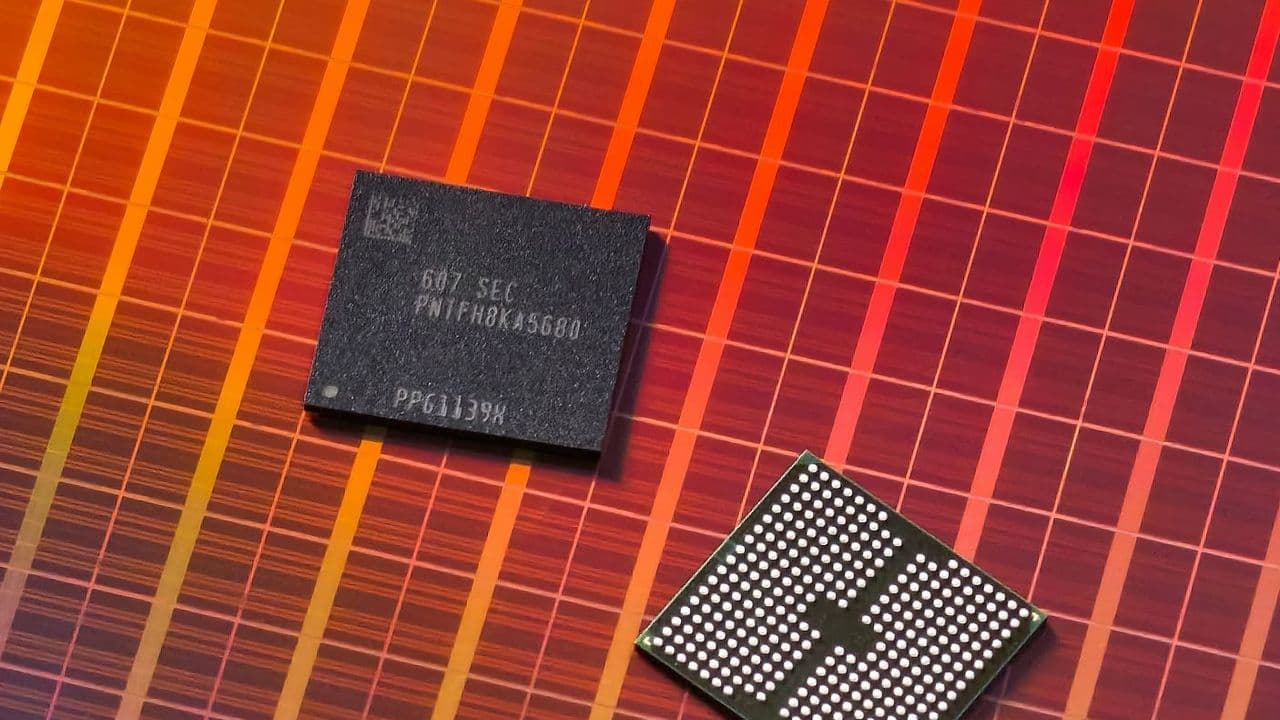
Roundhill CEO Dave Mazza called the memory pullback a leverage-driven “shakeout and repositioning,” even as DRAM attracted fresh inflows.
- Mazza said companies must now “beat and really, truly raise” to satisfy investors.
- Morningstar expects Sandisk’s supercycle to peak in early 2028 but considers SNDK overvalued.
- Retail sentiment remained ‘extremely bullish’ toward both stocks, with poll voters favoring SNDK as the dip-buying opportunity.
Sandisk (SNDK) and Western Digital (WDC) suffered sharp post-earnings declines this week as elevated expectations eclipsed robust AI demand, stronger pricing and upbeat guidance, prompting Roundhill CEO Dave Mazza to declare that companies must now “beat and really, truly raise.”
After sliding on Wednesday and Thursday around their earnings reports, SNDK is up 4% for the week, while WDC has fallen 17% over the same period. Meanwhile, the Roundhill Memory ETF (DRAM) is on track for its best week in a month, up 2%, while the Roundhill Magnificent Seven ETF (MAGS) has gained 4% and is heading for a second consecutive weekly rise.
Chip Investors Reassess Crowded Trades
“Beat and raise is not enough,” Mazza told CNBC. Mazza noted that Sandisk exceeded revenue expectations, but not by the margins investors had grown accustomed to seeing in recent quarters. With expectations “so incredibly high,” Mazza said investors were reassessing the memory cycle and the industry’s transition toward multiyear customer agreements.
Leverage intensified the selloff. Korean retail margin balances fell from 38 trillion won ($26.8 billion) at their June peak to 27 trillion won, returning to where they began the year. “It was astronomical how much leverage was in that system,” Mazza said, calling the pullback a “shakeout and repositioning.”
Yet investors have not abandoned memory broadly. Mazza said Roundhill’s DRAM ETF attracted $10.4 billion between the market’s peak and trough, indicating traders are retaining thematic exposure while becoming more selective about individual stocks.
Money is also rotating back into Nvidia, which had lagged as memory stocks “took all the air out of the semi trade.” Mazza called Nvidia’s Aug.26 earnings one of the market’s most important upcoming events. He also linked pressure across AI stocks to increased equity supply from Alphabet, SpaceX and SK Hynix. SpaceX attracted substantial retail interest at its IPO but has since become a “solid underperformer,” he said, adding that stabilization in SPCX could support the broader AI trade.
Sandisk’s ‘Supercycle’ Faces A Higher Bar
Sandisk reported adjusted earnings of $39.25 per share on revenue of $8.97 billion, topping estimates of $34.51 and $8.39 billion. Revenue surged 372%, while data-center sales doubled sequentially to nearly $3 billion. For the first quarter (Q1), Sandisk projected revenue of $10.3 billion to $10.8 billion, compared with the $10.62 billion consensus. CEO David Goeckeler called AI “a memory-centric, storage-intensive problem,” with the company expecting NAND demand to outstrip supply beyond 2027.
Its eight multiyear agreements represent at least $93.9 billion in expected revenue, but only $16.5 billion is financially guaranteed. Morningstar said “the supercycle rages on” but warned the contracts are not “watertight,” forecasting a peak in early 2028 before supply pressures emerge. Morningstar maintained its $1,000 fair-value estimate but considers SNDK overvalued. Sandisk’s Aug.13 investor day is the next catalyst.
Western Digital Delivered ‘Exceptional Quarter’
Western Digital’s revenue rose 44% to $3.75 billion, while adjusted earnings of $3.56 per share beat the $3.29 estimate. Its Q1 outlook of $4.1 billion in revenue and $4 per share also exceeded consensus. Gross margin expanded to 54.4%, cloud contributed 89% of revenue and pricing per terabyte grew by the high teens. However, exabyte shipments increased 22%, slowing from the 30% pace recorded recently.
Morningstar called it “another exceptional quarter” but said slower volume growth and more restrained commentary than Seagate likely fueled the selloff. It raised its fair-value estimate to $420 from $415, while warning that hard-drive stocks “remain tough to value.”
How Do Retail Traders Feel About SNDK And WDC?
On Stocktwits, retail sentiment toward SNDK and WDC was ‘extremely bullish.’ SNDK drew ‘high’ message volume, while WDC generated ‘extremely high’ chatter.
In a Stocktwits poll of 843 users, 41% said they were buying the dip in SNDK, 18% planned to buy both stocks and 9% favored WDC, while 32% preferred to stay away.
Over the past year, SNDK has surged 2,890%, far outpacing WDC’s 514% gain.
For updates and corrections, email newsroom[at]stocktwits[dot]com.<
