
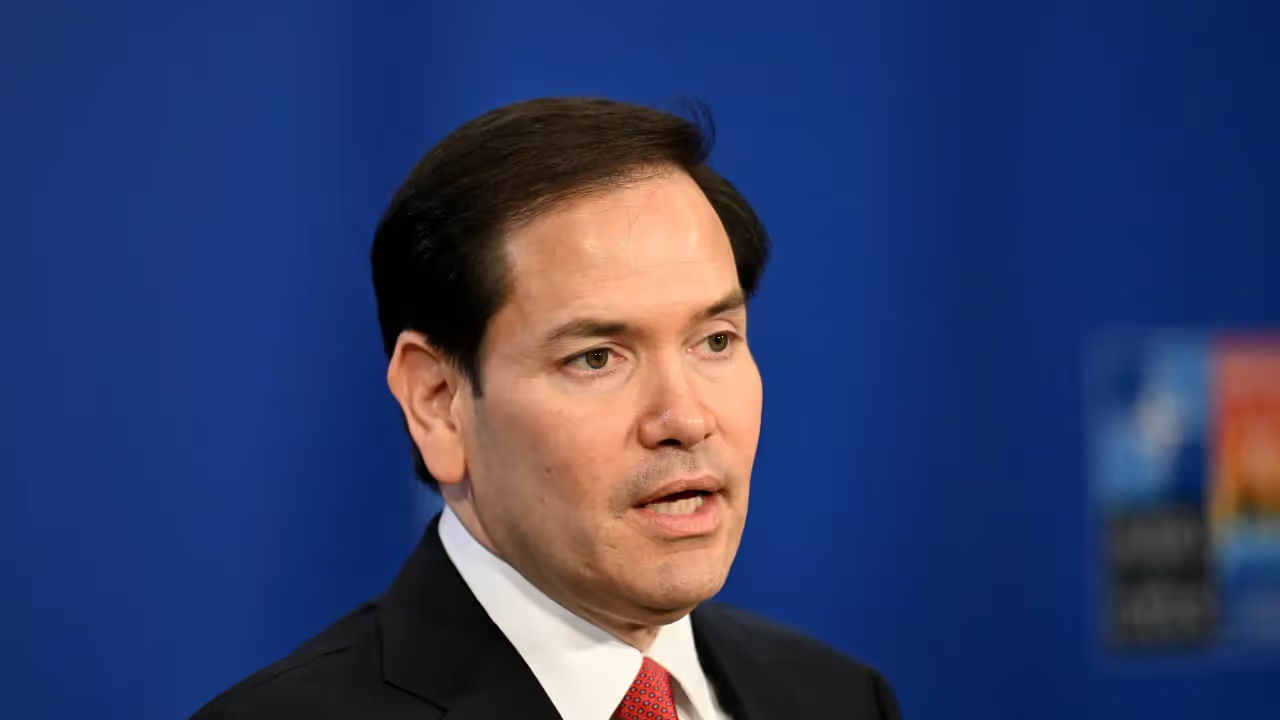
Rubio’s comments came a day after Trump waived key measures targeting Russian exports and countries that buy Russian energy.
- According to a Reuters report, Rubio said that disruptions from the Russia-Ukraine and Iran conflicts are now affecting one another.
- He also defended a separate agreement with Russia to increase diesel supplies to global markets, as the administration looks for ways to ease fuel prices that have climbed amid disruptions to global energy supplies.
- Under the agreement, Russia initially would supply more than 300,000 metric tons of diesel to the U.S., with additional shipments expected in November and beyond.
President Donald Trump has yet to make a final decision on whether to impose Russia-related sanctions and tariffs, with Secretary of State Marco Rubio saying the administration could take up to 60 days to assess their potential economic impact.
Rubio’s comments came a day after Trump waived key measures targeting Russian exports and countries that buy Russian energy, as the administration weighs the potential impact of the sanctions on the U.S. and global economy.
Rubio Says Trump Could Take 60 Days To Decide
According to a Reuters report, Rubio said on Saturday that Trump intends to use the 60-day period to evaluate what imposing the sanctions and tariffs could mean for the economy before deciding how to proceed.
“I think the president wants to take the 60-day period of time to sort of analyze what imposing both sanctions and tariffs will mean to the global economy and even to the U.S. economy,” Rubio said.
The waiver applies to measures under the Graham Act, which Trump signed last month after lawmakers pushed for tougher economic pressure on Russia over its war in Ukraine.
The measures include tariffs on Russian goods as well as penalties targeting countries that continue to purchase Russian oil and gas. They were scheduled to take effect next week.
But the law creates a broader economic dilemma for the administration because its potential tariffs could also hit countries that import Russian energy. Rubio specifically pointed to India, a major U.S. partner that has diversified its energy supplies but remains heavily dependent on Russian oil.
Rubio Defends Russian Diesel Deal As Fuel Prices Rise
Rubio also defended a separate agreement with Russia to increase diesel supplies to global markets, as the administration looks for ways to ease fuel prices that have climbed amid disruptions to global energy supplies.
Under the agreement, Russia initially would supply more than 300,000 metric tons of diesel to the U.S., with additional shipments expected in November and beyond.
“That diesel is going to be sold one way or the other. The only difference is how much of it the United States was going to get,” he said.
Rubio added that disruptions from the Russia-Ukraine and the Iran conflicts are now affecting one another, making it more difficult for the administration to balance geopolitical pressure with the need to keep energy supplies flowing.
“These conflicts around the world are starting to crash into each other,” he said.
Crude Oil Prices Hit Five-Month High
Crude oil prices rose last week, with the U.S. West Texas Intermediate (WTI) futures expiring in November rising 10.41% to $101.84 a barrel after a 0.81% gain the week before. Brent crude futures expiring in December rose 4.91% this week, hovering around $109.69 a barrel after a 2.42% increase the week before.
The United States Oil Fund ETF (USO) rose about 3% on Friday, while the ProShares Ultra Bloomberg Crude Oil ETF (UCO) gained more than 4%.
During the after-hours session on Friday, the SPDR S&P 500 ETF (SPY), which tracks the S&P 500 index, fell 0.26%; the Invesco QQQ Trust ETF (QQQ) edged lower by 0.27%; and the SPDR Dow Jones Industrial Average ETF Trust (DIA) declined 0.21%. Retail sentiment on Stocktwits toward the S&P 500 ETF was in the ‘bearish’ territory at the time of writing.
For updates and corrections, email newsroom[at]stocktwits[dot]com.<
