

In an interview with CNBC, Apollo’s Torsten Slok said the Fed faces a choice between addressing persistent inflation and responding to slowing consumer spending and economic growth.
- Slok described the combination of rising prices and consumers buying less as a definition of stagflation.
- The economist pointed to pressure on interest-rate-sensitive sectors such as housing and autos.
- He expects some moderation in data center construction as expectations for AI-related earnings and revenue payoffs adjust, but said he does not expect a recession.
Apollo Global Management (APO) Chief Economist Torsten Slok stated that the Federal Reserve faces a difficult policy choice as producer prices accelerate and consumers begin pulling back on spending, raising the risk of an uncomfortable mix of persistent inflation and slowing economic growth.
“This is a definition of stagflation,” Slok said during a CNBC interview. “We have higher prices, and in response to higher prices, we buy less.”
His comments came after U.S. producer price inflation accelerated sharply in August, defying expectations for a decline. The annual producer price index (PPI) rose to 6.3%, its second-highest level in four years, higher than the expected 5.5%.
PPI Inflation Runs Hot
Monthly headline PPI climbed 1.3%, more than double the 0.6% increase economists had expected. Core PPI also exceeded expectations, with the monthly reading coming in at 0.7% against an estimate of 0.3%.
U.S. equities traded lower ahead of the PPI data release. After markets opened, the S&P 500 and the Nasdaq were on track to hit their worst week since June. The SPDR S&P 500 ETF (SPY) was down 0.4%, and the Nasdaq-100 tracking Invesco QQQ Trust (QQQ) dropped 1.3%. Meanwhile, SPDR Dow Jones Industrial Average ETF (DIA) stayed in the green, with gains of around 0.44%.
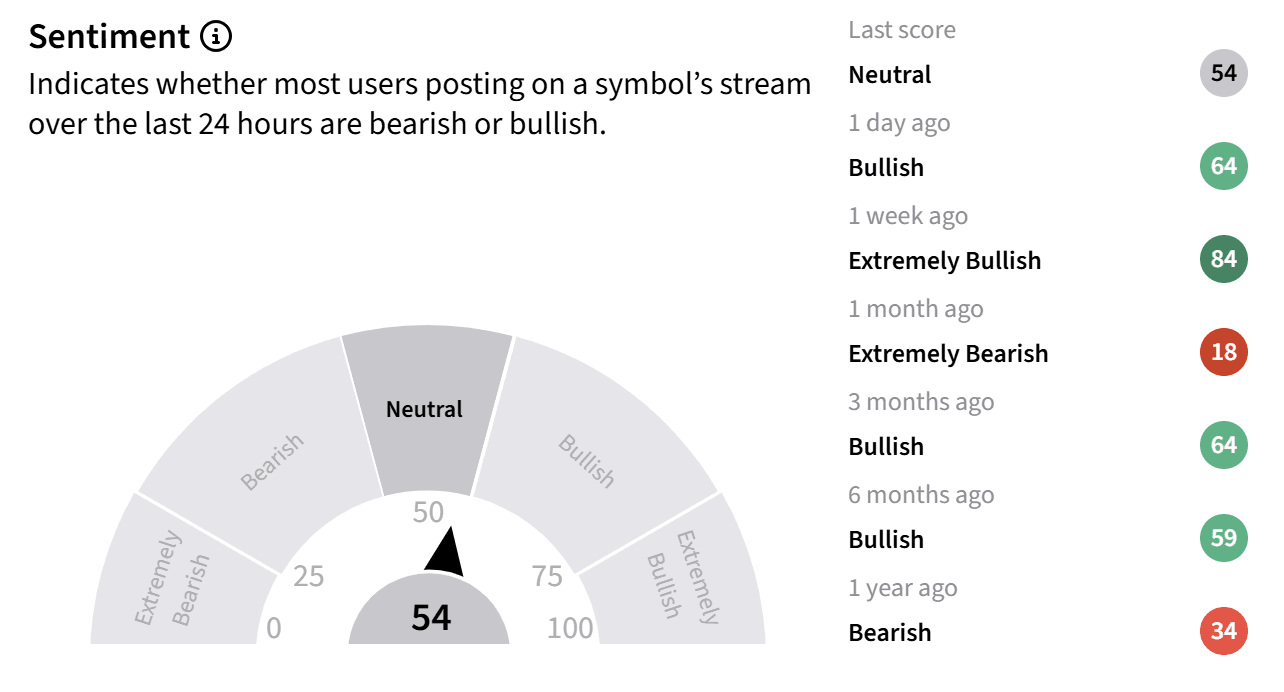
SPY and QQQ were among the top trending tickers on Stocktwits at the time of writing. Retail sentiment around QQQ shifted to ‘neutral’ from ‘bullish’ territory over the past day, while chatter increased to’high’ from ‘normal’ levels.
Fed Faces Inflation-Growth Trade-Off
According to Slok, the hotter inflation reading complicates the Fed’s efforts to balance price stability against the risk of slowing growth. Slok said policymakers must decide whether to prioritize rising inflation or signs that consumers are beginning to rein in spending.
“The challenge for the Fed is: Should they be focusing on inflation going up, or should they be focusing on the slowdown in consumers’ money and the risk of GDP growth?” he said.
Slok pointed to housing and autos as early examples of interest-rate-sensitive sectors responding to tighter financial conditions. Mortgage rates have climbed substantially from their pandemic-era lows, while financing and leasing a car have become more expensive.
“The more interest rate-sensitive parts of the economy are beginning to respond,” Slok said. “We’re seeing that in housing. We’re seeing that in autos.” He added that consumers are also showing early signs of adjusting their spending as higher prices squeeze household budgets.
AI Spending Poses A Risk To GDP Growth
Slok also warned that the U.S. economy has become increasingly dependent on AI investment, leaving growth vulnerable if companies slow spending on data centers and related infrastructure.
“GDP growth is normally two [percent], and now roughly one percentage point of GDP is coming from the AI spending boom,” he said.
A slowdown in the build-out could weigh on economic growth even without triggering a recession. The key question, Slok said, is whether the financial returns from AI investment arrive as quickly as investors expect.
“What if that payoff does not arrive with the speed that the consensus was expecting?” he said.
Slok expects some moderation in data center construction as expectations for earnings and investment returns adjust, but does not anticipate a recession. “I think the answer is that we will not get a recession, but I do think we’ll get some more dampening of the data center build-out,” he said.
With PPI inflation at its second-highest level in four years, CME FedWatch data put the odds of a Fed rate hike at 27.1% in October.
Read also: CRWV Stock On Track For 4-Day Slide Amid CoreWeave’s Debt Test: Analysts Split On Whether Selloff ‘Grossly Overexaggerated’
For updates and corrections, email newsroom[at]stocktwits[dot]com.<
