Lilly acquired LoQus23 Therapeutics for up to $725 million in cash on Monday.
- LoQus23’s lead candidate, LQT-23, is an experimental oral treatment targeting MSH3.
- LQT-23 has shown promising results in laboratory and animal studies but has not yet been approved to be tested in human trials.
- LoQus23 expects to submit a clinical trial application by the end of 2026.
Eli Lilly’s (LLY) buying spree this year continued as the pharmaceutical behemoth acquired British biotechnology firm LoQus23 Therapeutics, adding another experimental treatment to its growing neuroscience pipeline.
LLY shares were up 1% in pre-market trading on Monday, on track to reverse five straight sessions in the red. As of Friday’s close, the stock saw its biggest weekly loss in eight months.
LoQus23’ Lead Candidate Yet To Be Tested In Humans
On Monday, Lilly acquired LoQus23 Therapeutics for up to $725 million in cash. The acquisition adds to 15 deals Lilly has announced so far this year, as the pharmaceutical giant continues to expand beyond its booming obesity and diabetes businesses.
Under the agreement, Lilly will pay an undisclosed upfront amount, with additional payments tied to development and regulatory milestones.
LoQus23’s lead candidate, LQT-23, is an experimental oral treatment targeting MSH3, a protein involved in the expansion of repeated DNA sequences that lead to Huntington’s disease spreading. By blocking MSH3, LQT-23 aims to slow the harmful DNA changes driving the disease progression.
Huntington’s is an inherited neurological disorder that progressively damages brain cells, affecting movement, thinking, and behavior. According to LoQus23, the disease affects around 41,000 people in the U.S., with no approved treatment that slows the underlying disease.
The drug has shown promising results in laboratory and animal studies but has not yet been approved for human trials. LoQus23 expects to submit a clinical trial application by the end of 2026. The company believes the treatment could also apply to other diseases caused by repeated DNA sequences, including myotonic dystrophy.
Lilly’s Push Beyond Obesity
The deal follows Lilly’s agreement last week to acquire Calytrix Bio for up to $1.5 billion, targeting rare blood cancers. Earlier this year, Lilly acquired Centessa Pharmaceuticals in a deal valued at up to $7.8 billion, expanding its pipeline of treatments for sleep disorders.
In May, Lilly also announced deals to acquire three vaccine developers for up to $3.8 billion combined.
Retail Remains ‘Bearish’ On LLY
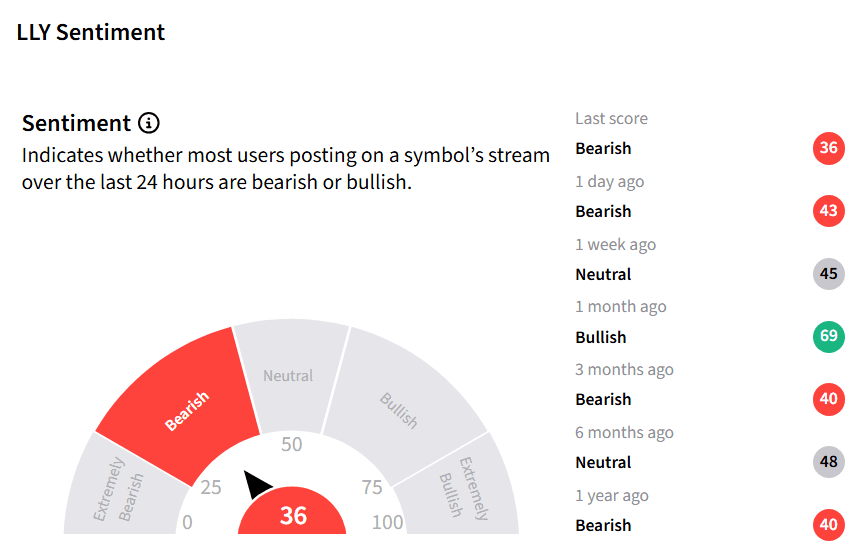
Retail sentiment for LLY continued to trend in the ‘bearish’ territory over the past 24 hours on Stocktwits.
Despite the recent selloff, LLY shares are up about 25% so far in 2026, significantly outperforming rival Novo Nordisk (NVO), whose shares have fallen nearly 28%.
Also read: CAPR Stock Gets A 96% Price Target Cut After FDA Issues 2nd CRL For DMD Therapy — Piper Sandler Downgrades CAPR On Projected Cash
For updates and corrections, email newsroom[at]stocktwits[dot]com<