
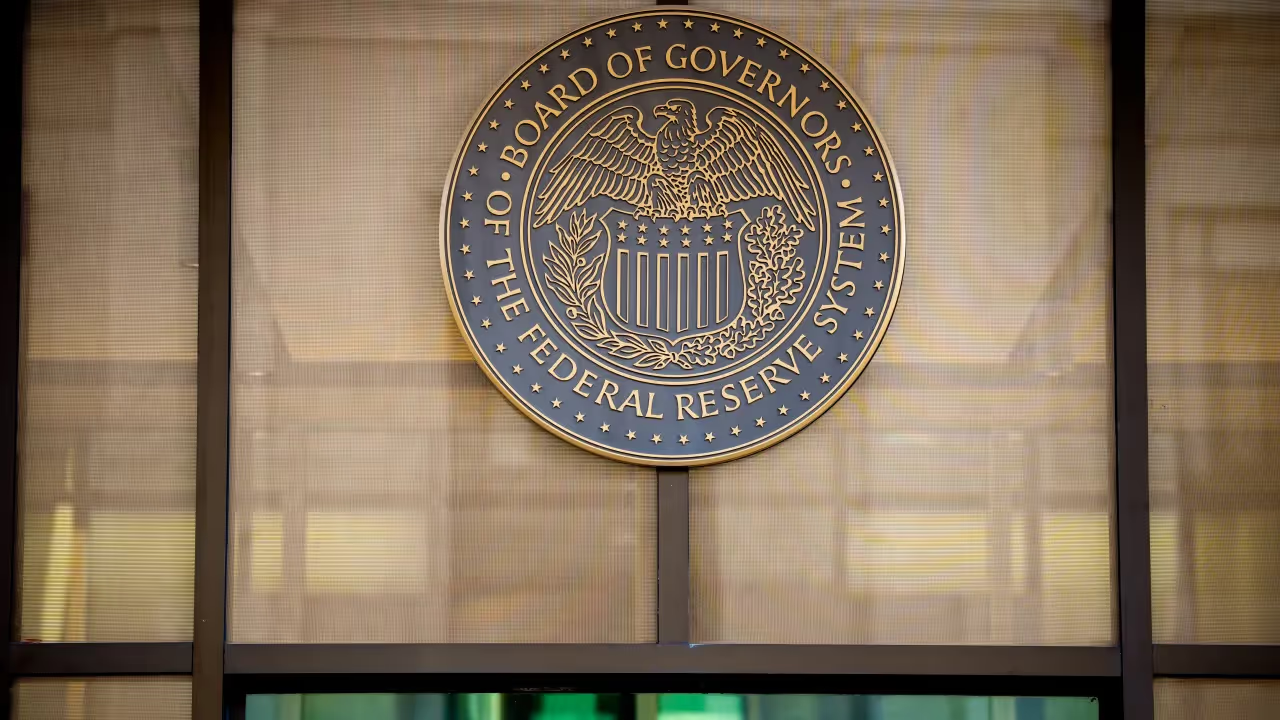
The minutes highlight a cautious Fed weighing whether slowing inflation will allow further rate cuts without risking economic stability.
- The December cut was closely contested, with some officials saying they nearly held rates steady.
- Policymakers remain split between supporting jobs and preventing inflation from becoming entrenched.
- Markets still price further easing next year despite officials urging caution.
The Federal Reserve’s Dec. 9–10 meeting minutes showed officials still see room to lower interest rates if inflation continues to ease as expected, while underscoring caution over how quickly further cuts should follow the December move.
Several policymakers said rates may need to remain unchanged “for some time” before additional easing.
Rate Cut Clears With Narrow Conviction
The Committee voted 9–3 to lower the federal funds rate by 25 basis points to a 3.5%–3.75% range, marking the third straight reduction, earlier this month.
“A few of those who supported lowering the policy rate at this meeting indicated that the decision was finely balanced or that they could have supported keeping the target range unchanged,” the minutes said.
The three dissenting votes reflected differing concerns. Governor Stephen Miran opposed the quarter-point cut in favor of a larger half-percentage-point reduction, while Chicago Fed President Austan Goolsbee and Kansas City Fed President Jeff Schmid dissented because they preferred no change.
Markets Price Further Cuts
While policymakers stopped short of signaling a clear path, the minutes noted that the modal outlook from the Desk survey and options pricing continued to imply two additional rate cuts next year.
Officials, however, remained split on risks, with many arguing that a move toward a more neutral stance could help prevent a sharper labor-market slowdown, while others warned that cutting too far or too fast could undermine confidence in the Fed’s commitment to its 2% inflation goal.
Data Gaps Complicate Outlook
Officials also flagged that a recent government shutdown disrupted the flow of economic data. Several participants cautioned that this could lead to volatility in growth indicators in coming months, complicating efforts to assess underlying economic momentum as they consider whether further easing is appropriate.
How Did Stocktwits Users React?
On Stocktwits, retail sentiment was ‘bullish’ for the SPDR S&P 500 ETF Trust (SPY) and the Invesco QQQ Trust (QQQ), with message volume ‘normal’ for SPY and ‘low’ for the QQQ, while sentiment was ‘bearish’ for the SPDR Dow Jones Industrial Average ETF Trust (DIA) amid ‘low’ message volume.
So far this year, SPY is up 19%, QQQ has gained 22%, and DIA is higher by 15%.
For updates and corrections, email newsroom[at]stocktwits[dot]com.<
