
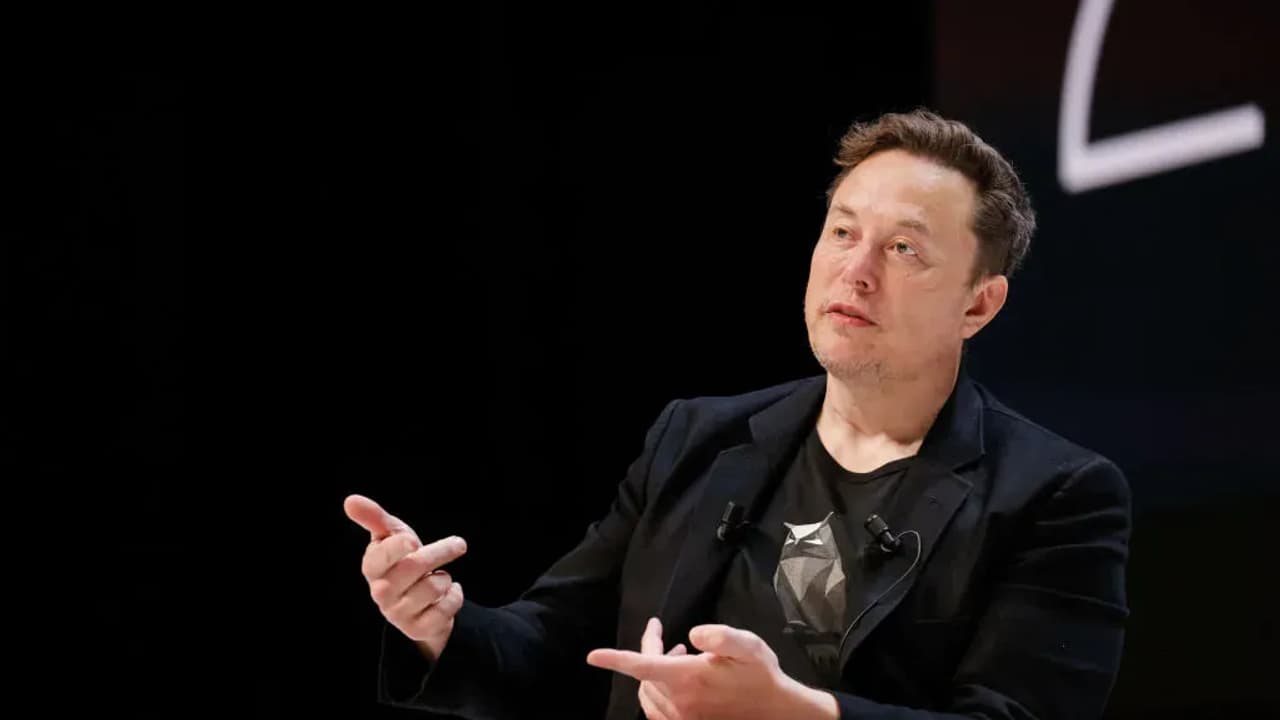
The billionaire entrepreneur outlined how the energy required to operate and expand AI computing capacity has emerged as a key constraint for future growth.
Elon Musk on Thursday highlighted the challenges of artificial intelligence infrastructure at the World Economic Forum, at Davos, focusing on the rising costs and practical limits of powering AI systems.
The billionaire entrepreneur outlined how the energy required to operate and expand AI computing capacity has emerged as a key constraint for future growth, a topic of growing importance as the technology spreads across industries.
Power Constraints And AI Growth
Musk emphasized that energy, not just computing chips, will determine how quickly AI can scale, noting that the cost of AI infrastructure shifts almost monthly.
He added that the limiting factor for widespread AI deployment is the ability to supply sufficient electricity to run advanced systems, and predicted that hardware producers may soon build more chips than there is power to activate them.
“The limiting factor for AI deployment is fundamentally electrical power.”
-Elon Musk
However, Musk said that China is an exception because the country’s electricity growth is ‘tremendous’. He highlighted that China is deploying over 1000 gigawatts of solar energy.
“Solar is by far the biggest source of energy. It’s really all about the sun. That’s why one of the things we will be doing with SpaceX within a few years is launching solar-powered AI satellites,” Musk stated.
Get updates to this developing story directly on Stocktwits.<
