

IMAX, AMC, and Cinemark stocks climbed as blockbuster movies filled theaters, while Netflix stock declined.
- IMAX, Cinemark, and AMC stocks are posting strong gains this year while Netflix has declined.
- IMAX recorded its strongest month ever in July, driven by “The Odyssey,” which helped push the stock to record highs.
- The broader 2026 box office revival has been fueled by major releases like “Spider-Man: Brand New Day.”
Hollywood’s long-running battle between theaters and streaming services has taken an unexpected turn in 2026, as movie exhibitors benefit from major releases, premium viewing formats and renewed interest in shared entertainment experiences.
While streaming platforms like Netflix Inc. (NFLX) face slower growth, cinema operators including IMAX Corp. (IMAX), Cinemark Holdings (CNK) and AMC Entertainment (AMC) have gained momentum as audiences return to the big screen.
Hollywood's Surprise Winning Trade
Movie theater stocks have outperformed several streaming names this year. Year-to-date, IMAX stock is up roughly 38%, Cinemark about 64%, and AMC a whopping 82%. Netflix, once the undisputed king of the post-theater era, is down about 21%. Walt Disney Co. is down 13%, while Paramount Skydance stock has crashed 38%.
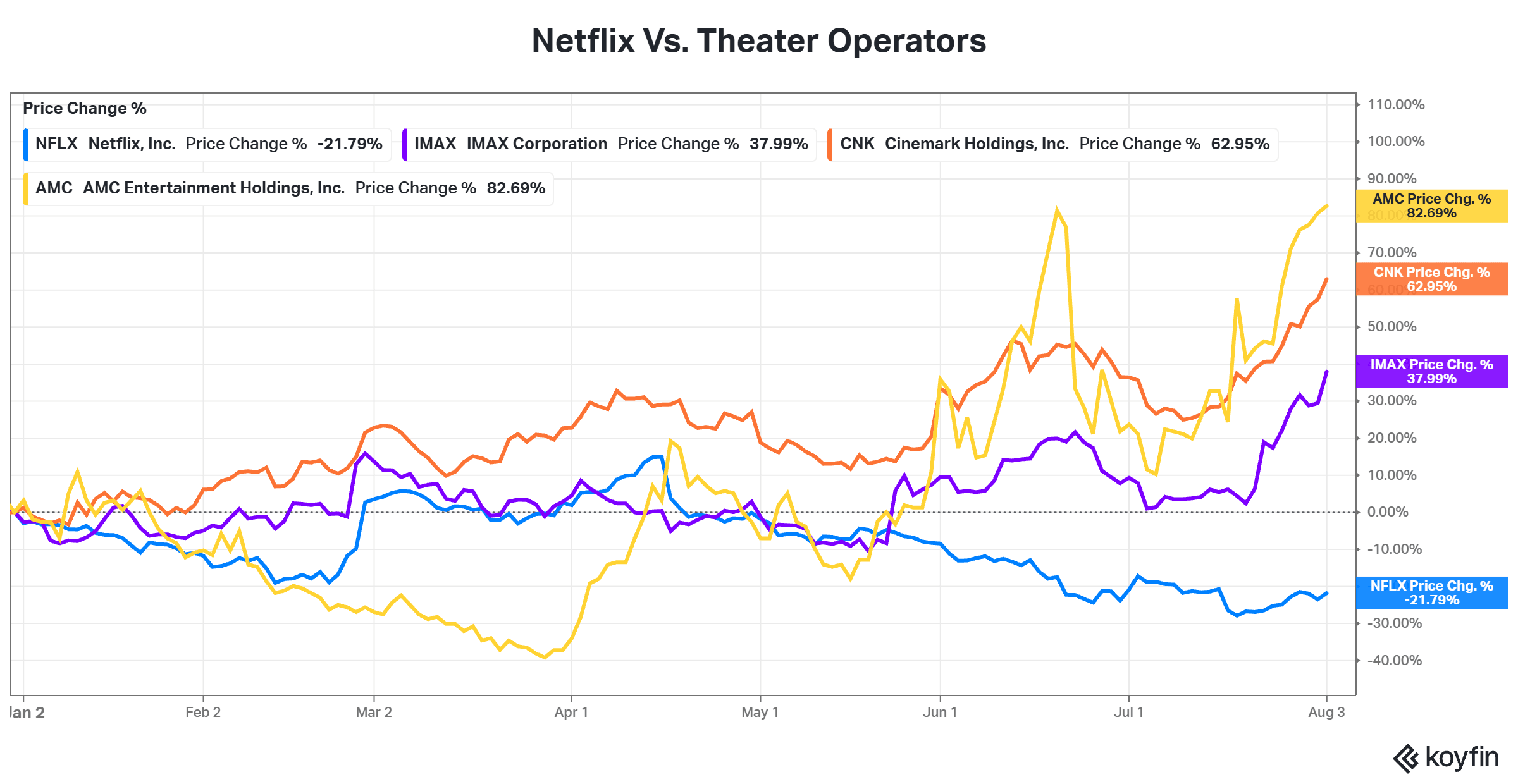
The comeback is not because of just one successful weekend. It is being driven by a strong lineup of movies, including Christopher Nolan’s “The Odyssey” and Sony’s hit “Spider-Man: Brand New Day,” along with unexpected Gen Z favorites and theater chains adding more premium viewing options. At the same time, Netflix is dealing with challenges after its failed attempt to acquire Warner Bros. Discovery’s (WBD) studio assets.
The Summer That Broke IMAX's 50-Year-Old Record Book
July delivered IMAX its highest-grossing month in company history: $257 million at the global box office, 47% above its previous record. The Odyssey, shot entirely with IMAX cameras and starring Matt Damon as Odysseus, has already generated $221 million in IMAX ticket sales alone and more than $640–700 million worldwide, with major markets in China, Japan, and South Korea still ahead.
It became the fastest film in IMAX history to surpass $200 million in the format and the only release ever to post multiple $40 million-plus IMAX weekends. The stock reaction was immediate: IMAX stock hit an all-time high of $50.72 on the news, up more than 30% since the film's July 17 U.S. debut, with CEO Rich Gelfond saying the film’s box office trajectory "continues to defy gravity."
Why IMAX Is Emerging As The Biggest Winner
This is not a one-movie miracle. The 2026 slate is stacked with event pictures. Sony (SONY) and Marvel's "Spider-Man: Brand New Day" just posted the biggest domestic opening weekend in box-office history — $360 million, edging past "Avengers: Endgame's" long-standing $357.1 million record — on its way to a $932 million global weekend, the second-largest worldwide opening ever. Project Hail Mary surprised as a $683 million hit that drew younger crowds, and a string of mid-budget successes found audiences through social-media buzz.
According to a report from Variety, the U.S. box office is set to reach $10 billion this year, marking the first time since before the pandemic. More people are returning to theaters, and they are spending more per visit by choosing premium formats like IMAX and Dolby Cinema, which charge higher ticket prices.
Why Netflix Is Facing A Tougher Competition
Netflix's stock decline is linked to a major deal that never happened. The company had planned to buy Warner Bros. Discovery’s studio and streaming businesses for $82.7 billion, but Paramount Skydance entered the bidding. After a long takeover battle, Netflix decided not to increase its offer, saying the final price was too expensive.
Investors initially cheered the streaming giant’s discipline preference. But Netflix's second-quarter earnings report on July 16 largely met expectations and gave investors no meaningful upward revision to full-year revenue guidance, and the stock sold off sharply.
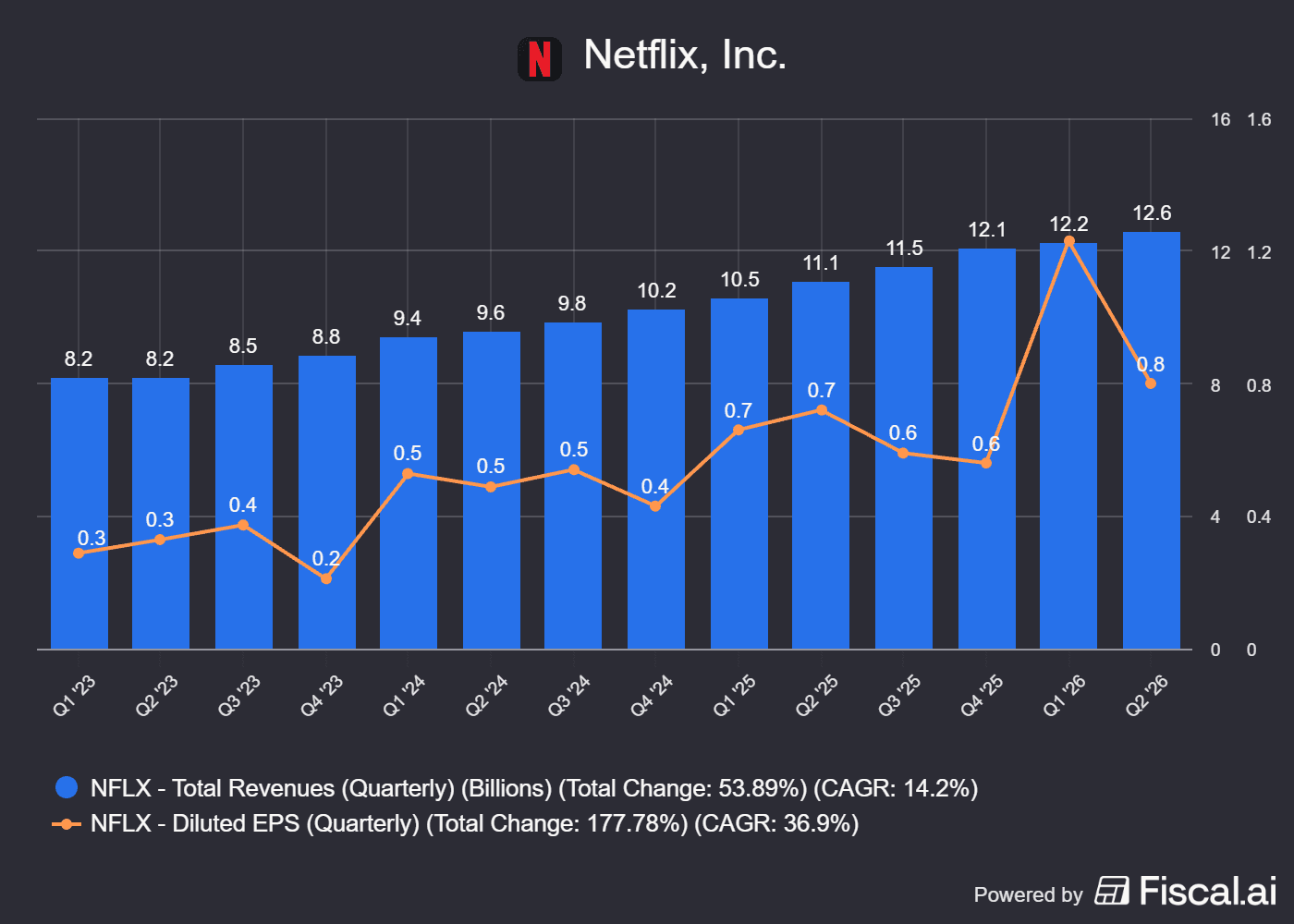
Netflix shares have fallen nearly 38% in the past year as investors worry about slower growth, deal-making plans and the company’s failed Warner Bros. acquisition attempt. At the same time, theaters, which Netflix was expected to replace, have enjoyed one of their strongest periods in years.
Theater Chains Lean Into The Premium Wave
AMC and Cinemark have treated the rebound as validation of a multi-year capital strategy rather than a temporary bounce. AMC’s Q2 results were historic with record revenue of $1.6 billion, adjusted EBITDA of $321 million, up 70%, the first time the company cleared $300 million in a quarter in its 106-year history.
Cinemark delivered its own records in Q2: $1.1 billion in revenue, $294 million adjusted EBITDA, and a 27.1% margin. Premium large formats contributed 13% to 14% of admissions revenue on a much smaller share of screens.
The valuation gap between theaters and streaming has narrowed, but the market still views them differently. IMAX’s stock is trading at a P/E (price-to-earnings) multiple of 26.9, while Cinemark trades at a more moderate multiple of 16.1. AMC remains unprofitable, and Netflix now trades at a lower multiple of 21.2 despite maintaining solid margins and revenue growth. The 2026 shift is less about streaming failing and more about investors rewarding theaters for a strong release cycle while demanding new growth from streaming companies.
For updates and corrections, email newsroom[at]stocktwits[dot]com.<
