
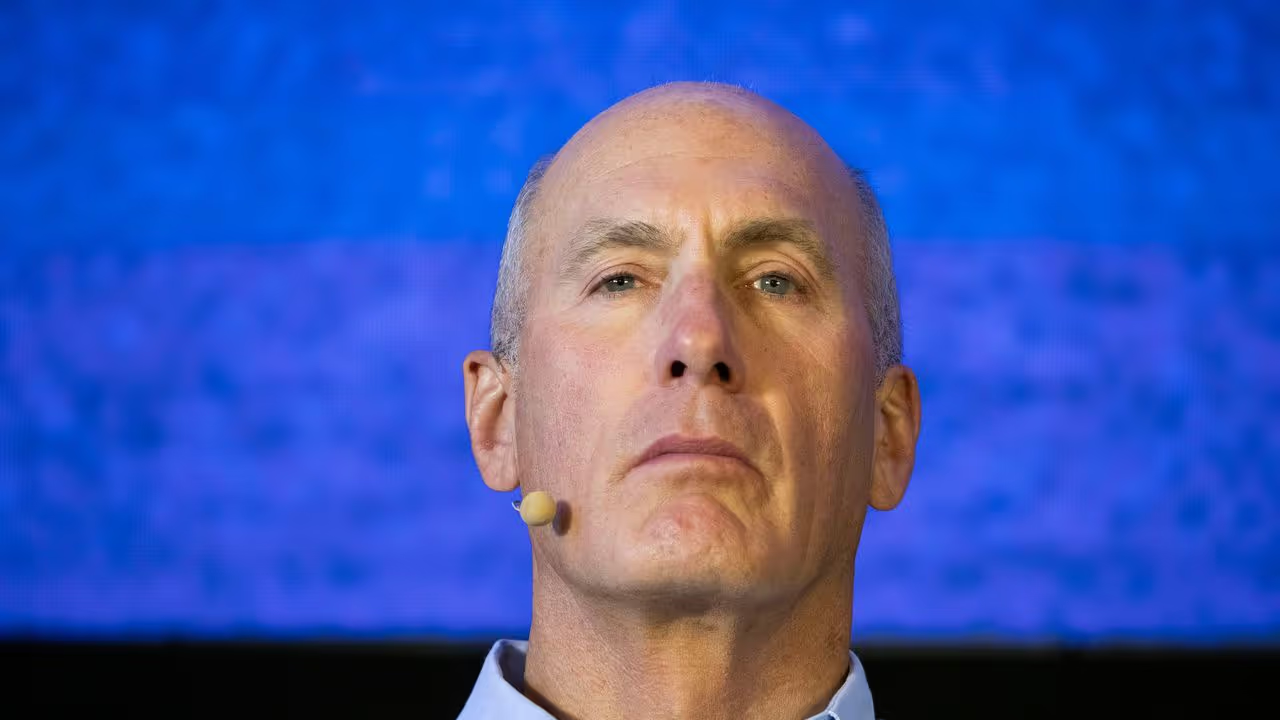
AT&T CEO John Stankey said on the company’s third-quarter earnings call that building a network capable of matching established carriers’ coverage and performance would require years of investment.
- Stankey sees low-Earth-orbit satellites as a potential way to extend connectivity in rural areas rather than replace terrestrial wireless networks.
- AT&T reported a 5.3% increase in quarterly revenue to $32.3 billion and adjusted earnings per share of $0.65.
- The company raised its 2026 adjusted EPS outlook to about $2.40 and expects at least $18 billion in free cash flow.
AT&T (T) CEO John Stankey told analysts on Wednesday that investors shouldn’t read too much into SpaceX’s plan to become a mobile carrier during the company’s third-quarter earnings call.
“I wouldn’t over-rotate on what I would call one carrier of low-band spectrum.”
– John Stankey, CEO, AT&T
SpaceX (SPCX) said this month, and confirmed on its second earnings call since going public on Tuesday, that it plans to turn Starlink into a major U.S. mobile carrier and is buying a block of low-band spectrum to do it.
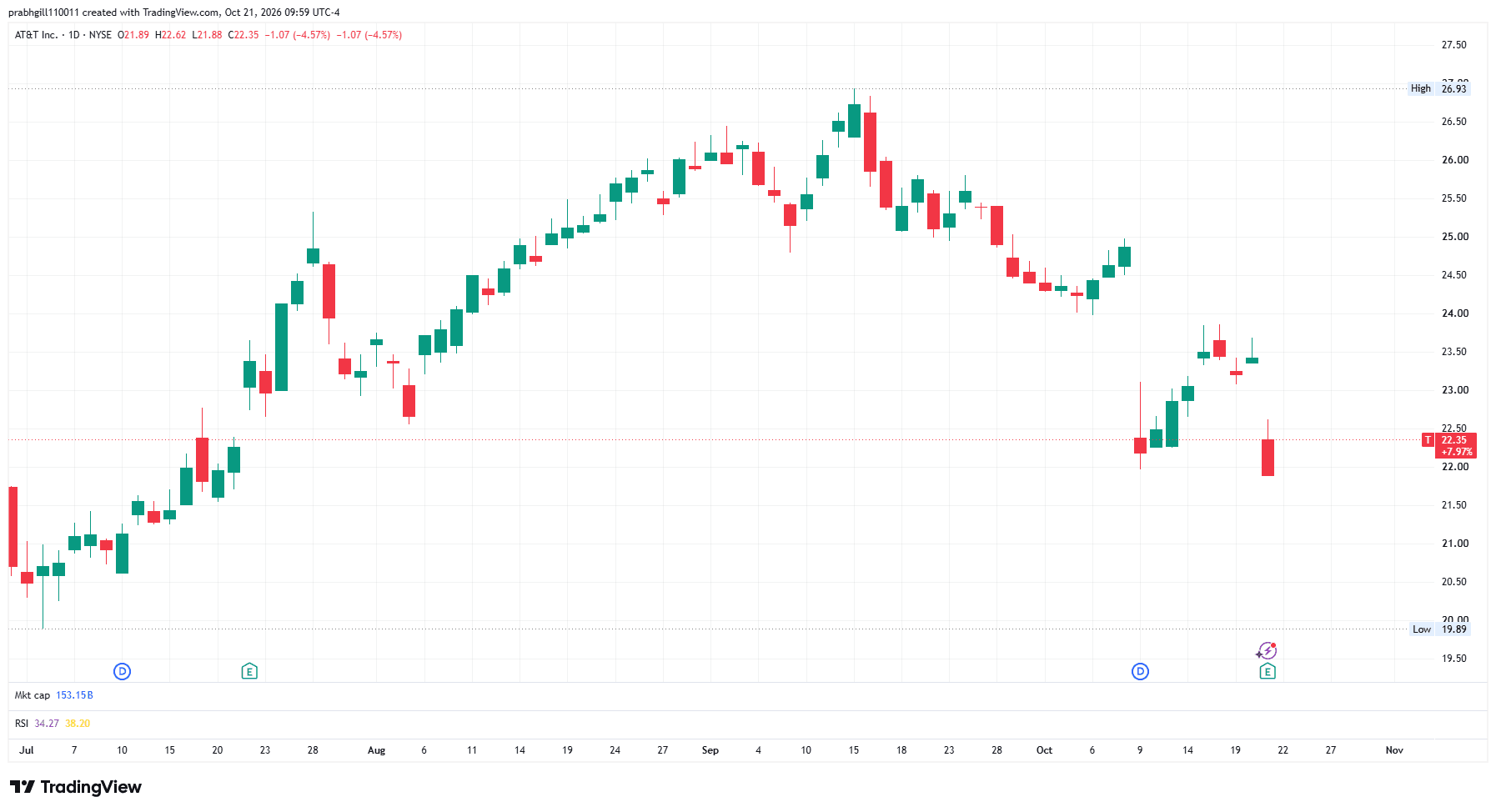
T stock fell over 4% in morning trade and was among the top trending tickers on Stocktwits alongside SPCX stock, which rallied over 8%. T stock pared losses after momentarily hitting a fresh three-month low at market open.
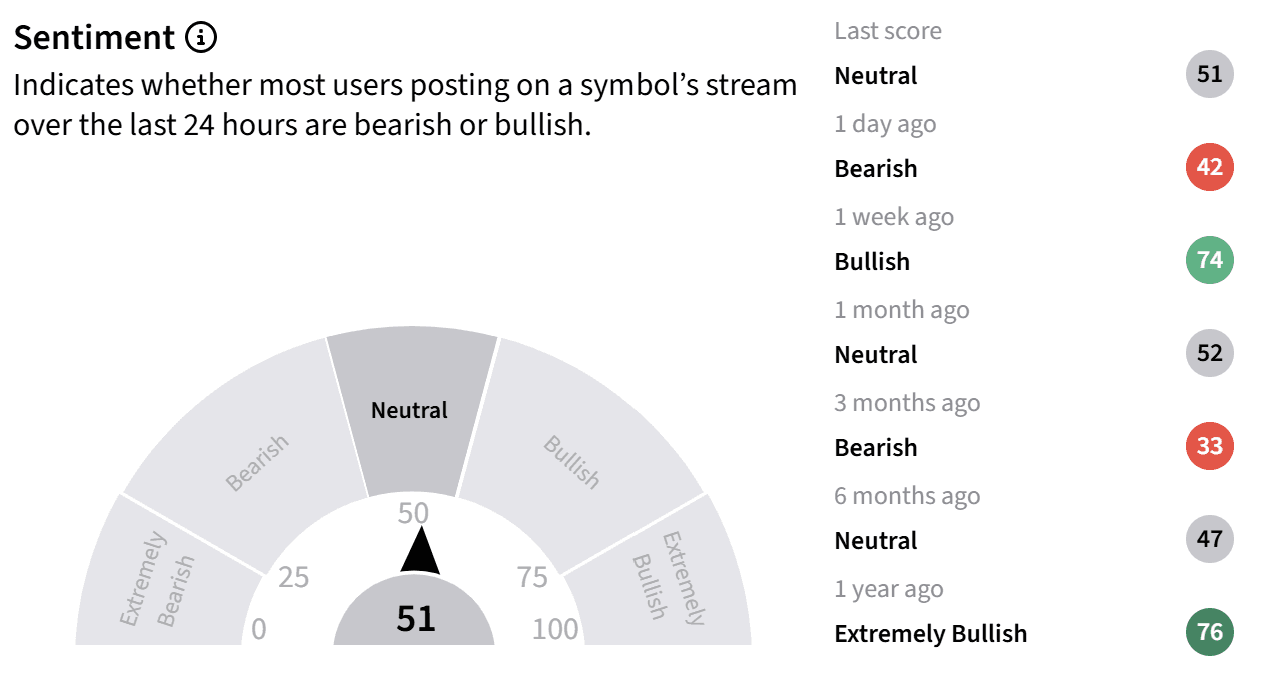
On Stocktwits, retail sentiment around T-Mobile improved to ‘neutral’ from ‘bearish’ territory over the past day. Meanwhile, sentiment around Elon Musk-led SpaceX jumped to ‘extremely bullish’ from the ‘neutral’ zone.
AT&T’s third quarter (Q3) call also marked Chief Financial Officer (CFO) Pascal Desroches’ last earnings call. Deputy CFO Jennifer Byry is set to take over after the new year.
Why AT&T Says Spectrum Alone Won't Make SpaceX A Wireless Rival
Stankey said AT&T operates “somewhere between six to eight carriers of low-band spectrum” in a typical metropolitan area. According to him, a wireless network’s performance depends on more than its spectrum holdings, pointing to the infrastructure needed to deliver service inside buildings, stadiums and hospitals.
He cited that in a city such as Chicago, 40% to 45% of mobile traffic originates indoors, where satellite signals face greater challenges.
“It takes a lot of years and a huge level of investment” to build a network that can deliver that level of performance, he said, adding that about 98% of the traffic is where AT&T already offers coverage.
Stankey did not dismiss satellite connectivity altogether. He said low-Earth-orbit (LEO) satellites are “fantastic for delivering bandwidth to rural areas” and could help AT&T serve sparsely populated areas more economically while reducing customer losses at the edges of its network.
AT&T’s Fiber Coverage Has ‘Never Been Greater’, Says CEO
Stankey said he expects “some kind of a peak and then a downward trajectory” for fixed wireless adoption. He said the most durable customer proposition is “a fiber-fed broadband customer with a great wireless service on top of it.”
AT&T reported a record quarter for internet net additions across fiber and fixed wireless. The company also said its fiber network is well positioned to serve growing demand from data centers and cloud providers.
Stankey said more than 90% of mapped U.S. data centers are within 10 miles of AT&T’s fiber network. Amazon Web Services (AWS) uses AT&T to connect its sites, and the carrier is working with Microsoft (MSFT) on high-capacity connectivity needs.
“Our fiber reach has never been greater. Our spectrum position has never been stronger.”
– John Stankey, CEO, AT&T
AT&T Q3 Earnings Recap
AT&T’s reported Q3 revenue rising 5.3% to $32.3 billion, above the roughly $31.65 billion consensus estimate as per Koyfin. Earnings per share (EPS) came in at $0.65, compared to Wall Street’s estimates of about $0.60. The company added 379,000 postpaid phone customers, with churn at 0.92%.
AT&T also raised its 2026 adjusted EPS outlook to about $2.40 from a previous range of $2.25 to $2.35. The company expects adjusted earnings before interest, tax, depreciation and amortization (EBITDA) growth toward the upper end of its 3% to 4% range and free cash flow of at least $18 billion, including about $6 billion in the fourth quarter (Q4).
The telecom giant lowered its planned annual capital spending for 2027 and 2028 to $22 billion to $23 billion, a reduction of about $1 billion. It continues to target more than 60 million fiber locations by 2030.
Near-term pressures remain. Executives said during the earnings call that higher marketing and customer acquisition costs, along with about $100 million in vendor dispute settlements, are expected to weigh on Q4 EBITDA. They added that fiber revenue per customer fell 4% and is expected to decline by a similar amount, while home internet net additions are expected to slow during the holiday period.
How Is Retail Feeling About AT&T Stock?
On Stocktwits, message volume around T stock more than doubled over the past day. Retail traders debated the drop in shares despite an earnings beat and guidance raise.
View this Stocktwits post
One retail trader argued that AT&T shares appeared oversold and pushed back on comparisons with SpaceX, pointing to the cost and maintenance required to operate a satellite network at scale.
View this Stocktwits post
AT&T shares have fallen nearly 9% this year and almost 15% in the last 12 months.
Read also: Nvidia GTC Berlin Keynote: Jensen Huang Puts $50 Billion Price Tag On 1GW AI Factory Amid DSX POD Launch
For updates and corrections, email newsroom[at]stocktwits[dot]com.<
