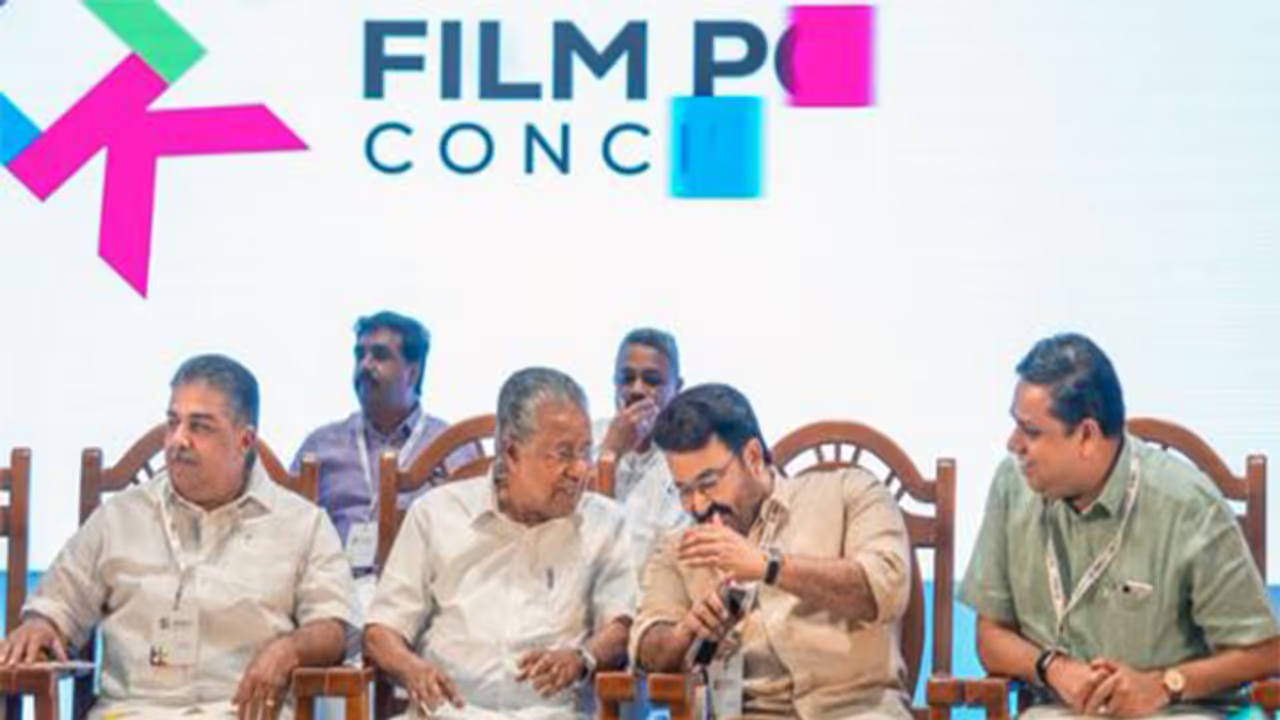
The Kerala Film Policy conclave aims to create a policy framework for a more inclusive and secure Malayalam film industry. Discussions also addressed grievance redressal cells and regulating theatre food prices.
Thiruvananthapuram: In a first-of-its-kind initiative, Chief Minister Pinarayi Vijayan inaugurated the Kerala Film Policy Conclave in Thiruvananthapuram on Saturday, August 2. Several leading voices from the Malayalam film industry came forward to take part in the conclave, including superstar Mohanlal. The first day of the event saw key discussions on the issues in the industry, focused on promoting inclusivity, safety, employment laws, working hours, legal safeguards and much more. Speaking at the event, the CM reiterated his thoughts on the 71st National Film Awards, calling out the recognition of Adah Sharma's ‘The Kerala Story’, the film received the Best Director and Best Cinematographer awards.
State minister Saji Cherian, who was also present at the event, spoke to the media and shared details about the discussions at the conclave. Cherian noted that the first day of the Kerala Film Policy Conclave concluded successfully with the participation of many prominent personalities and five panels. Some of the key issues that were actively discussed during the conclave were on "defined working hours, employment laws, work overload, and job security. There was also a strong suggestion that both male and female representatives must be present in grievance redressal cells. Discussions at the conclave strongly raised the demand for legal safeguards against online hate and cyberattacks. There was also a call to form a state-level jury for selecting films for various film festivals."
Cherian also spoke about a public demand to reduce the cost of food items sold in theatres. "The entire film industry should not be seen as problematic. The issues we witness are isolated incidents. Once the policy framework is in place, stricter measures will be adopted wherever necessary," he added. The Kerala Chief Minister also shared an update from the conclave, stating that the initiative marked a significant step in shaping the future of Malayalam cinema.
Draft Film Policy to be Finalised
Discussions on the draft cinema policy are set to conclude today, with the final report expected to be approved. However, a disagreement has emerged between the Women in Cinema Collective (WCC) and the Film Employees Federation of Kerala (FEFKA).
While FEFKA representatives stated that many of the suggestions in the draft policy—such as providing basic workplace amenities—have already been implemented, the WCC expressed dissatisfaction with this claim. According to the WCC, such a position is unhelpful in a forum intended to address ongoing issues and bring about meaningful change.
These differing perspectives will be taken up for further discussion later today. Renowned filmmaker Adoor Gopalakrishnan will be the chief guest at the closing ceremony, scheduled for 5 p.m. Cultural Affairs Minister Saji Cheriyan will present the final policy report.
Related Articles

Key recommendations in the draft policy
- Discrimination, sexual harassment, and abuse of power must be strictly prohibited on film sets.
- The ‘casting couch’ practice must be completely eradicated, with a zero-tolerance policy enforced.
- Offenders involved in harassment or abuse should be blacklisted from the industry.
- A centralized and transparent protocol for conducting auditions should be implemented.
- A unified code of conduct must be introduced and enforced across the film industry.
- Basic workplace amenities, including clean restrooms and designated rest areas, should be ensured on all sets.
- The POSH (Prevention of Sexual Harassment) Act should be strictly implemented at all production sites.
- A special anti-piracy cell should be formed under the jurisdiction of the Cyber Police.
- Public and industry support must be extended to individuals who speak out against harassment.
- Online abuse and targeted cyberattacks against film professionals should be actively prevented.
- Mentorship programs should be established to guide and support newcomers entering the film industry.