Mandya's jaggery prices have hit a record ₹6,740 per quintal amid sugarcane and labour shortages, reduced production and rising sugar prices. Traditional jaggery-making units are also struggling, while lower supplies have pushed prices higher.
Mandya's jaggery market is witnessing an unprecedented rise in prices, with the cost of a quintal reaching ₹6,500 to ₹6,740, a historic high for the region. The sharp increase has been attributed to a combination of factors, including a shortage of sugarcane, a lack of labourers, reduced jaggery production and rising sugar prices. The supply of jaggery to markets outside Mandya has also declined significantly, further contributing to the price surge.
Jaggery Prices Hit Record High
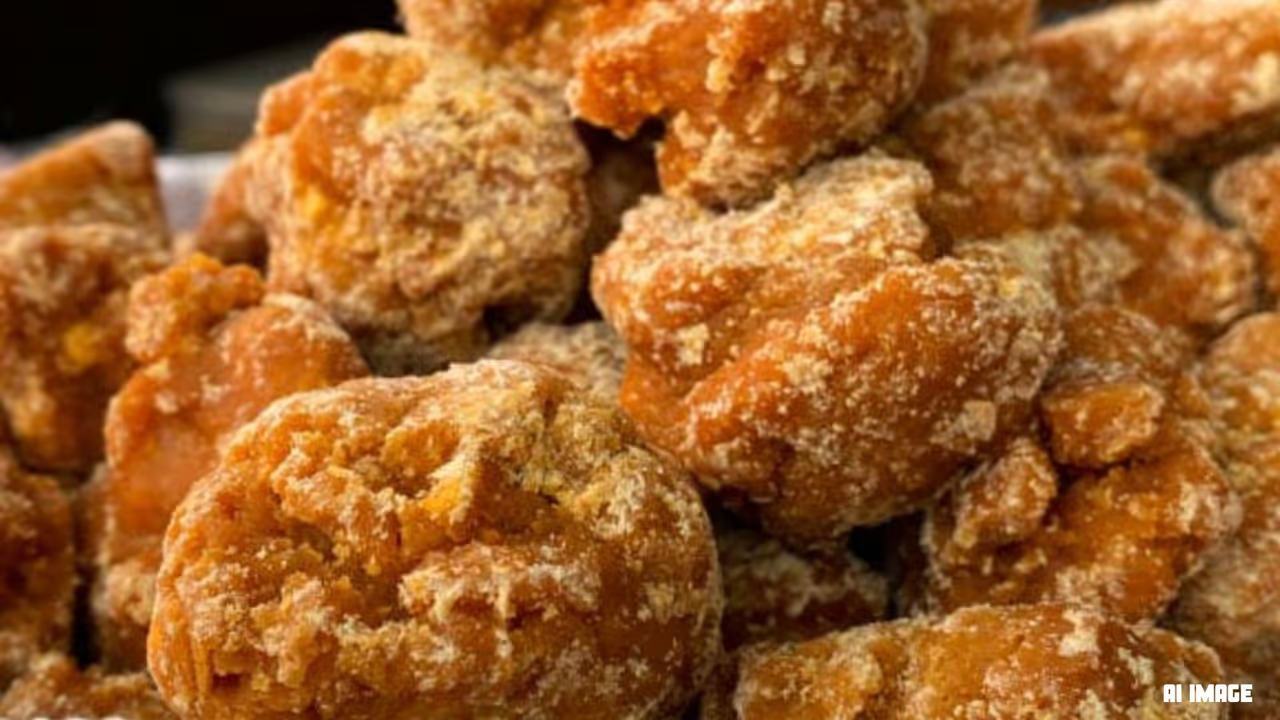
A quintal of jaggery in the Mandya market, which normally sells for around ₹4,500 to ₹4,700, is now being sold for ₹6,500 to ₹6,740.
The 'Kuri kal achu' variety is currently priced at ₹5,500 to ₹6,000 per quintal, while 'Achu' jaggery is being sold for ₹5,300 to ₹5,800.
Related Articles

The quantity of jaggery being transported from Mandya to other states has also declined sharply. Earlier, around 10 to 12 truckloads of jaggery would leave the Mandya market every day. Now, less than half that quantity is being transported.
The reduced supply has added further pressure on prices.
Sugarcane Supply Faces Shortage
The district's 'aalemanes', or traditional jaggery-making units, are facing a severe shortage of sugarcane due to a lack of labourers.
With insufficient local workers available to harvest sugarcane, farmers and jaggery producers have had to bring workers from North Karnataka and other states. The shortage has disrupted the supply of sugarcane to jaggery-making units and contributed to the decline in production.
There is also a shortage of skilled workers who specialise in making jaggery. Many of these workers previously came from Bihar, but their numbers have declined in recent years.
Several 'aalemanes' have reportedly been forced to shut down due to the shortage of workers, further affecting jaggery production in the region.
Rising Sugar Prices Add To Pressure
The sharp increase in sugar prices has also affected jaggery production.
Sugar, which previously cost around ₹40 to ₹42 per kg, is now priced at ₹68 to ₹72 per kg. Some jaggery producers used to add sugar during the manufacturing process, but the steep increase in sugar prices has made the practice less viable.
This has further contributed to the decline in jaggery production and added to the overall pressure on prices.
Ethanol Production Also Impacts Sugar Supply
The central government's E20 petrol policy is also being cited as one of the factors affecting sugar availability.
Sugar factories are increasingly prioritising ethanol production from sugarcane. As a result, the quantity of sugar being produced has declined, while demand has increased, contributing to higher sugar prices.
Sugar prices have reportedly risen by ₹20 to ₹30 per kg, adding to the production costs faced by jaggery makers.
With sugarcane supply, labour availability and sugar prices all affecting production, Mandya's jaggery market is witnessing a significant supply crunch. The combination of these factors has pushed jaggery prices to a record level, putting the traditional industry under further pressure.