
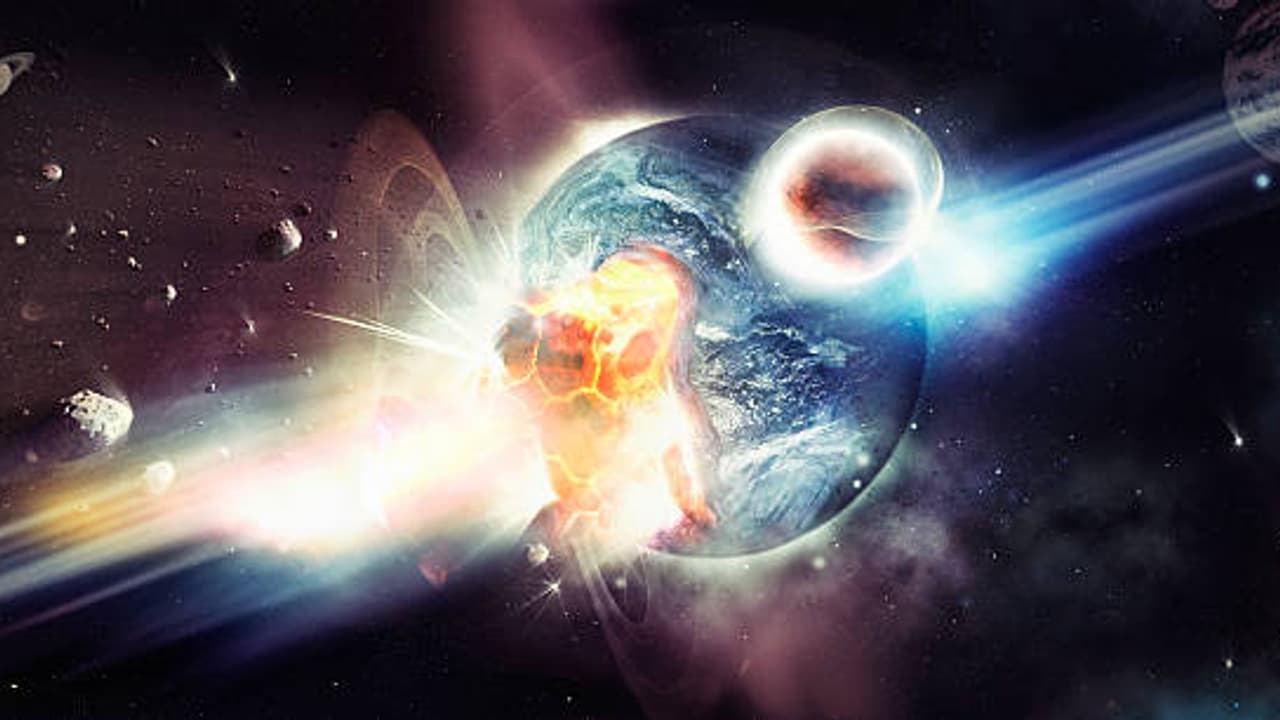
Scientists fear the "Kessler Syndrome," a theoretical chain reaction where collisions create more debris, potentially rendering Low Earth Orbit unusable.
While discussions about establishing human colonies on Mars are ongoing, a threat capable of destroying all communication systems on Earth lurks in space. Earth's orbit now contains not only satellites but also millions of pieces of debris. This debris is extremely dangerous. Even a small piece can destroy our satellites. A situation where space debris collides and creates more debris can also occur. This is called the Kessler Syndrome. Let's understand what space debris is, what the Kessler Syndrome is, and why the scientific community fears it.
What is man-made space debris?
Simply put, all useless objects left behind by humans in space are called space debris. This includes non-functional satellites, broken rocket parts, tools left after missions, and small fragments from collisions. This debris travels at speeds of several kilometers per second.
Why is it so dangerous?
Space debris orbits the Earth at very high speeds, reaching up to 28,000 kilometers per hour. At such speeds, even a small nail can pierce the surface of a satellite or render a multi-million dollar communication satellite useless. According to international agencies, millions of large and small pieces of space debris are orbiting the Earth. Many of these are so small that even radar cannot detect them. However, moving at very high speeds, they can cause significant damage to satellites.
Kessler Syndrome
This theory is named after NASA scientist Donald Kessler. In 1978, he proposed a theory about space debris. According to him, if the amount of debris in space exceeds a certain limit, these pieces will start colliding with each other. Each collision will create more debris. Donald Kessler said this would lead to a chain reaction. As a result, the Low Earth Orbit (LEO) will be filled with so much debris that it will become impossible to send new satellites or conduct space travel. If debris collides with a satellite, the communication system on Earth could be completely destroyed. This could cause our internet, TV signals, and GPS systems to be shut down forever.
Solutions and Challenges
Space agencies around the world are now taking this threat seriously. Special debris removal missions, technologies to safely de-orbit satellites, and new regulations are being developed. SpaceX is preparing to reposition thousands of its satellites in space to seek refuge from space debris. The company plans to reduce the altitude of thousands of satellites currently deployed in low Earth orbit at an altitude of 550 km to about 480 km. The company aims to complete this work by 2026. Starlink alone has more than 10,000 satellites deployed in space. However, it remains to be seen how successful debris removal missions and other efforts will be.
