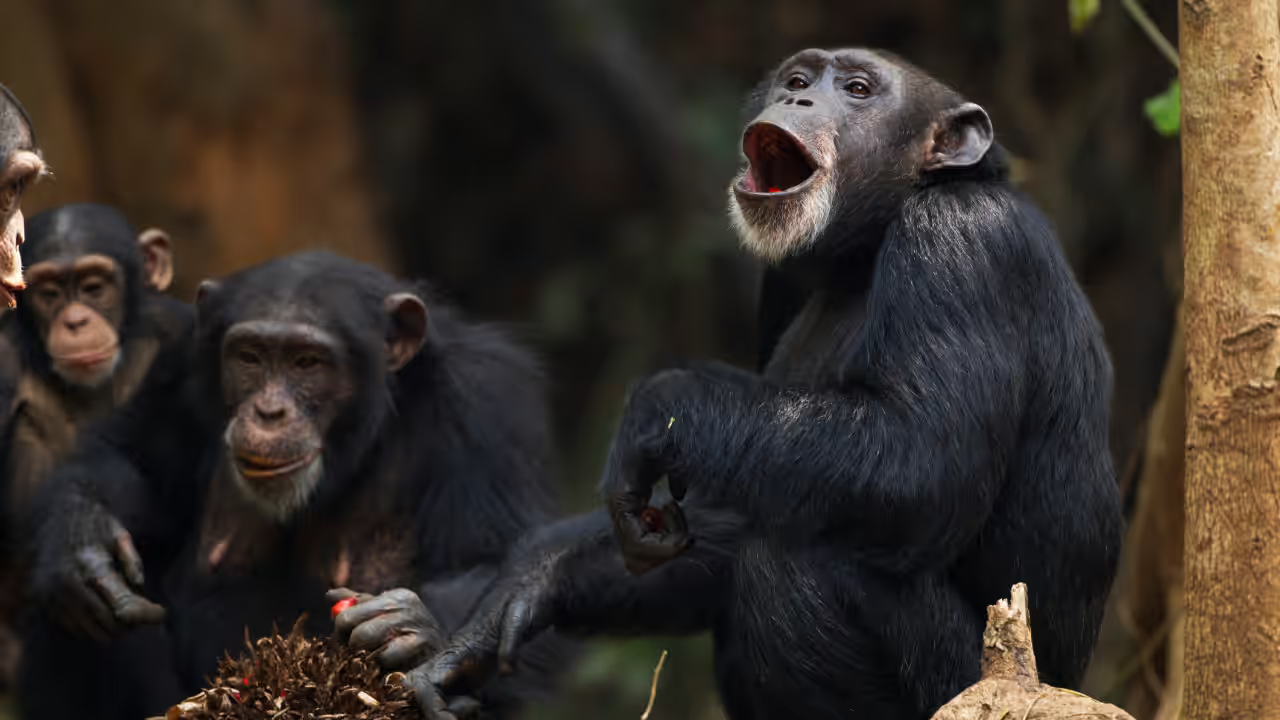
Why is same-sex behaviour so common in animals? A new study suggests it's a crucial survival strategy for building social bonds in tough environmental conditions.
A recent study has provided new understanding about why same-sex behaviour (SSB) happens in animals. From dolphins to chimpanzees, same-sex behaviour is common, but scientists have long been curious about its potential benefits.
Researchers at Imperial College London discovered that primates tend to show more same-sex behaviour when their environments are difficult, resources are scarce, predators are present, or their social groups are large and complex. This suggests that same-sex behaviour might help animals build strong social connections, which can keep groups together and improve their chances of surviving tough conditions.
The study was published in the journal Nature Ecology & Evolution.
Related Articles

Social Bonds
In complex social structures, trust and cooperation are essential for survival. Animals that work together, respond to each other's alarms, and maintain strong relationships are more likely to thrive. Same-sex interactions may be a way to strengthen these relationships, especially in risky or resource-scarce situations.
The study examined 491 primate species, 59 of which exhibit same-sex behaviour. It found that environmental and social factors, rather than genetics alone, are the main reasons SSB occurs. Species living in harsh conditions, with more predators, unequal male-female sizes, or longer lifespans are more likely to show SSB.
Evolutionary Benefits
These findings suggest that SSB evolved multiple times in primates to help highly social species cope with environmental challenges. Even in non-primate species, such as dolphins, ducks, or burying beetles, SSB is observed when survival or reproduction becomes harder. This shows that the advantages of forming bonds or reducing competition may be more important than the loss of mating opportunities.
Future Research
The study does not yet confirm that SSB directly leads to better survival or longer life. Scientists plan to conduct more research, especially in macaques, to explore the connection between SSB and survival. Overall, the research shows that homosexual behaviour is widespread across the animal kingdom and may have important social and evolutionary roles.