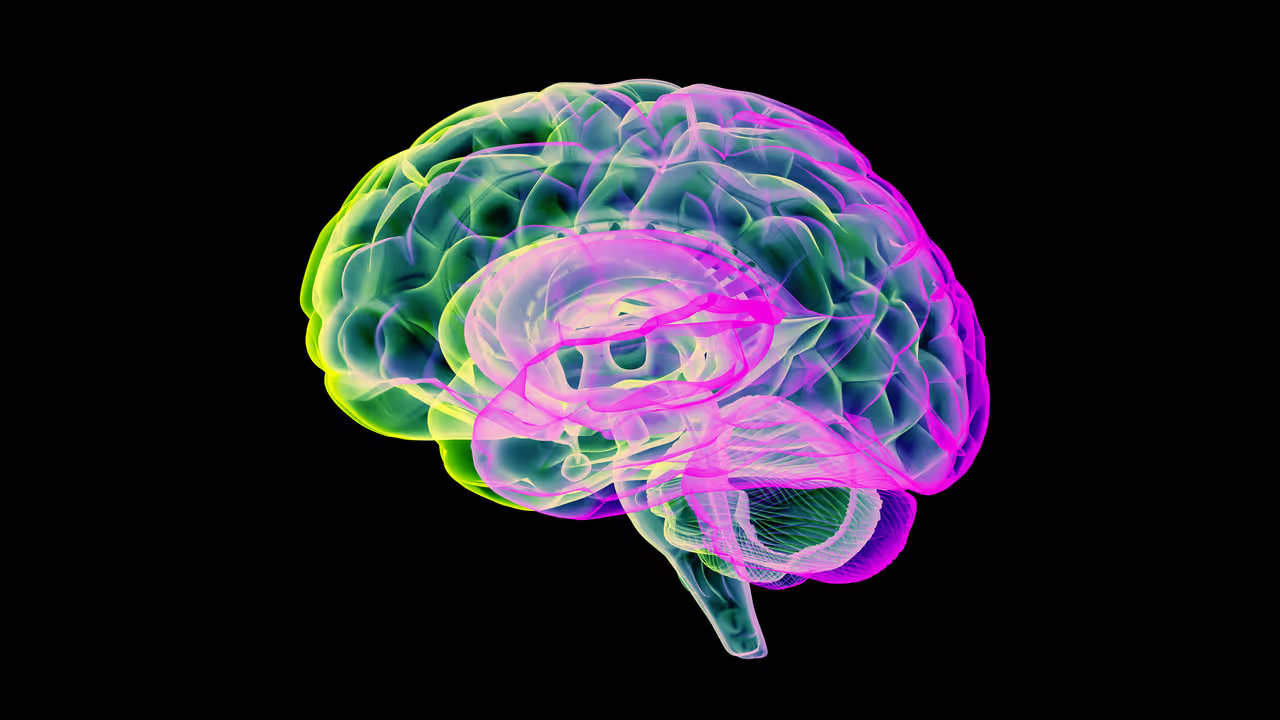
Japanese scientists have created miniature human brain circuits by joining lab-grown thalamus and cortex models from stem cells. This breakthrough offers a new platform for studying brain development and neurological disorders.
Japanese scientists have successfully created miniature human brain circuits in the laboratory using small lab-grown brain models known as assembloids. These assembloids are made from stem cells that have been reprogrammed to become any cell type, called induced pluripotent stem (iPS) cells. These structures are designed to closely resemble how different areas of the human brain connect and communicate.
Through these models, the scientists found that the thalamus, a significant part of the brain, plays a major role in forming neural circuits in the cerebral cortex, which is the brain's outer layer responsible for thinking, perception, and decision-making. The study was published in the journal Proceedings of the National Academy of Sciences.
Why Brain Circuits Matter
The cerebral cortex is made up of various types of neurons that need to communicate effectively with each other and with other areas of the brain. These connections are crucial for basic functions such as understanding the world, learning, memory, and reasoning. In people with conditions like autism, these cortical circuits often develop in different ways or function abnormally. Therefore, studying how these circuits form and mature is essential for understanding the biology behind these conditions and for developing better treatments.
Related Articles

The Thalamus: Brain’s Organiser
The thalamus has been shown in previous studies in animals to play a key role in organizing cortical circuits. However, how the thalamus interacts with the cortex in humans has not been well understood, largely because studying live human brain tissue is both difficult and ethically challenging. To address this, scientists have started using organoids which are small, three-dimensional structures grown from stem cells that resemble real organs.
From Organoids to Assembloids
Although organoids are useful, they cannot show interactions between different parts of the brain. To study these interactions more realistically, researchers use assembloids, which are made by combining two or more organoids. A team at Nagoya University, led by Professor Fumitaka Osakada and graduate student Masatoshi Nishimura, created assembloids that model the interaction between the thalamus and the cortex. They first grew separate cortical and thalamic organoids from human iPS cells and then joined them together, allowing the two brain regions to connect and develop as a single unit.
Mini Brain Circuits Behaving Like the Real Thing
The researchers observed that nerve fibres from the thalamus grew towards the cortex, while cortical fibres extended back towards the thalamus. These fibres formed synapses, which are the connections that allow neurons to communicate, similar to those found in the human brain. When comparing the cortical part of the assembloid with a standalone cortical organoid, they found that the cortical tissue linked to the thalamus showed signs of greater maturity. This suggests that signals from the thalamus help promote the growth and development of the cortex.
Thalamic Signals Synchronise Brain Activity
The researchers also studied how signals travel through the assembloids. Neural activity spread from the thalamus into the cortex in wave-like patterns, which helped to synchronize networks of cortical neurons. They examined three main types of cortical excitatory neurons: intratelencephalic (IT), pyramidal tract (PT), and corticothalamic (CT). Synchronized activity was observed in PT and CT neurons, which send information back to the thalamus. IT neurons, which do not connect to the thalamus, did not show this synchronization. This indicates that signals from the thalamus selectively strengthen certain neurons, helping them form coordinated and functional networks.
By recreating human neural circuits in the lab, the researchers have created a new platform for studying how brain circuits develop, function, and differ between cell types. This work could speed up research into neurological and psychiatric disorders and lead to the development of new therapies.