Discover how gut bacteria sense their world. New research on Clostridia reveals specific sensors for nutrients, driving a cooperative and healthy gut microbiome.
Gut bacteria are much more aware of their environment than we previously believed, and this awareness plays a key role in human health. The gut microbiome consists of trillions of microorganisms that continuously interact with each other and with the body. These interactions happen through chemical signals, so for the system to function properly, gut bacteria need to be able to detect what's happening around them. Until recently, scientists had only a limited understanding of which signals are most important for these helpful microbes.
Most studies on how bacteria sense their surroundings have focused on harmful, disease-causing species. In contrast, much less attention has been given to the beneficial bacteria that naturally live in the human gut. This has created a significant gap in knowledge about how friendly microbes gather information and respond to their environment. The research was published in the Proceedings of the National Academy of Sciences.
Studying Clostridia
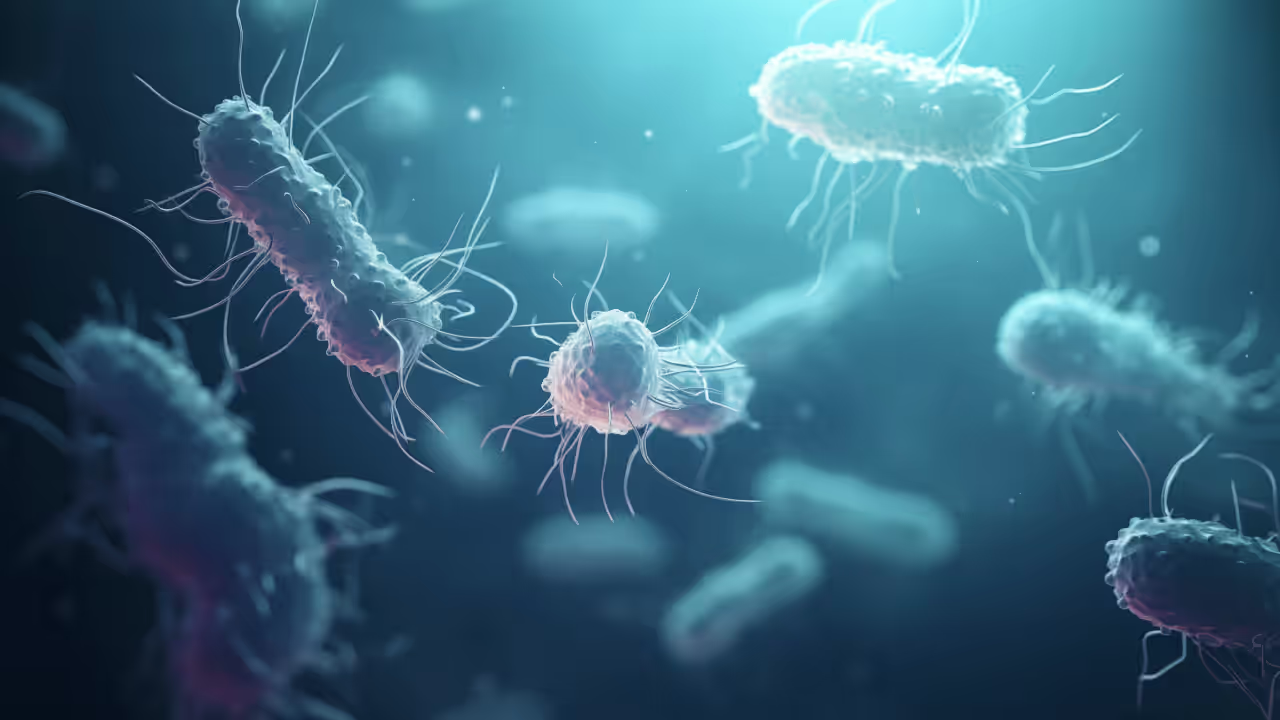
To fill this gap, an international team of researchers studied Clostridia, a large group of mobile bacteria commonly found in the gut and known to support digestive health. Their research showed that gut bacteria can detect a wide variety of nutrients produced when carbohydrates, fats, proteins, and even DNA are broken down. Importantly, different bacterial sensors are specifically tuned to certain chemicals, showing that these microbes respond in an organized and selective way rather than randomly.
Related Articles

Nutrient Detection
The study also found that bacterial movement is mainly driven by the search for food. Certain receptors help bacteria move toward valuable nutrients, with lactate and formate standing out as especially important signals. These substances are often found in the gut and are likely to be key energy sources.
Bacterial Cooperation
Interestingly, some bacteria produce lactate and formate themselves, which other species then use as a food source. This exchange of resources, known as cross-feeding, helps maintain balance and stability in the gut ecosystem.
The researchers also identified several new types of sensory receptors that detect substances such as short-chain fatty acids and components of RNA. By examining their structure and evolution, they found that these sensors can change over time. This adaptability allows gut bacteria to respond to new conditions, helping to maintain a healthy and resilient microbiome.