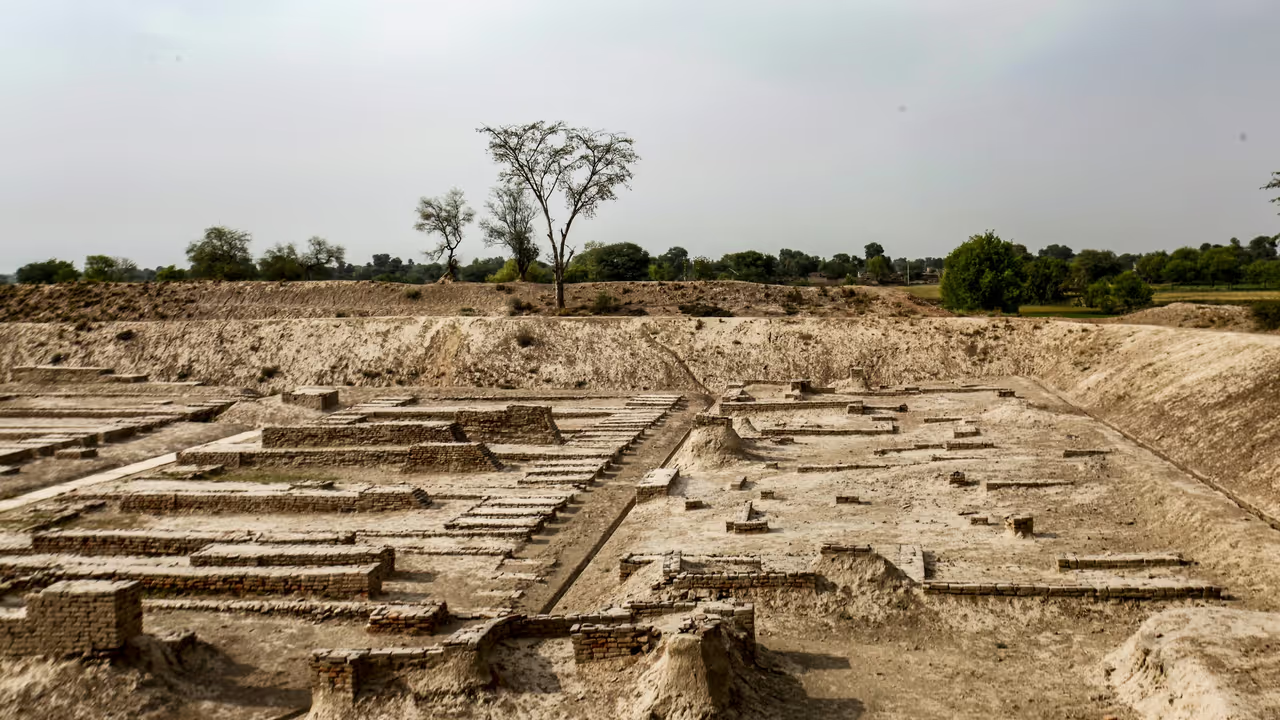
Research shows the Indus Valley Civilization declined due to repeated century-long droughts that reduced rainfall, strained resources, and pushed communities toward the Indus River, causing a slow, climate-driven fading rather than a sudden collapse.
For over a century, historians and archaeologists have debated why the Indus Valley Civilization one of the world’s earliest and most sophisticated urban cultures gradually declined. A new climate study published in Communications Earth & Environment provides the clearest answer yet: not war, invasion, or disease, but relentless droughts lasting decades to over a century each. These repeated dry spells strained water systems, reshaped settlement patterns, and eventually pushed one of humanity’s great civilizations into a long, uneven decline.
Century-Scale Droughts Reshaped a Flourishing Society
The research team reconstructed climate conditions between 5,000 and 3,000 years ago using climate models, cave mineral deposits, and lake records across northwest India. Their findings reveal a steady 0.5°C temperature rise and a significant drop—up to 20%—in annual rainfall. More strikingly, they identified four droughts that each lasted more than 85 years, affecting up to 91% of the Indus region.
At its height, the Indus civilization boasted advanced city planning, drainage systems, and water management across settlements such as Harappa and Mohenjodaro. But no amount of engineering could fully withstand generations long drying. As rains weakened, agricultural yields would have diminished, water storage systems strained, and urban centers become harder to sustain.
Related Articles

People Moved Toward the Indus River as Cities Shrunk
Before 4,500 years ago, many communities thrived in rain fed regions. But as drought cycles intensified, populations shifted steadily toward the Indus River one of the few remaining reliable water sources. This migration coincides with archaeological evidence of shrinking cities, abandoned settlements, and the rise of smaller, rural communities.
The longest of these droughts lasting 113 years matches the period when large cities across the region began to empty out. Instead of a dramatic collapse, the Indus Valley Civilization appears to have slowly unraveled as environmental pressures mounted over centuries.
A Climate Warning From the Ancient Past
The findings suggest that even the most sophisticated societies can be vulnerable to long-term climate shifts. For the Indus people, resilience meant adaptation, migration, and decentralization not sudden extinction, but a quiet transformation shaped by nature’s persistence. Their story offers a cautionary reminder as modern societies face their own climate challenges.