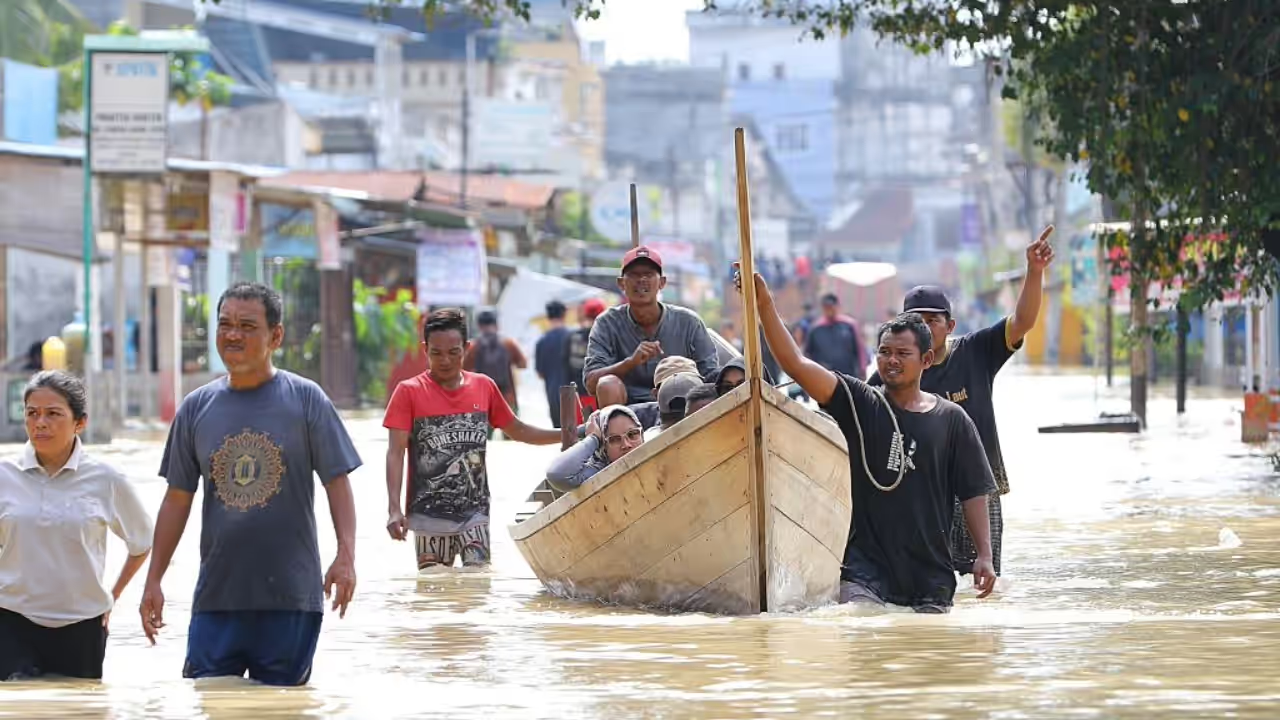
Southeast Asia is battling unprecedented deadly floods. Learn how the climate crisis is fueling these extreme weather events and what it means for the future of the region.
Southeast Asia has faced unusually severe floods this year. Heavy rainfall, delayed storms, and continuous downpours have hit one country after another, leaving many communities unprepared. In Indonesia, Sri Lanka, and Thailand, over 1,400 people have died, and more than 1,000 are still missing due to floods and landslides.
In Indonesia, entire villages have been cut off as roads and bridges were washed away. In Sri Lanka, thousands are now without clean drinking water. Even Thailand’s prime minister has said the government’s response was not enough.
Malaysia is still dealing with the aftermath of one of its worst floods in recent years, which killed three people and forced thousands to leave their homes. Vietnam and the Philippines have dealt with months of storms and flooding, causing hundreds of deaths and leaving many homeless and without jobs.
Related Articles

To people affected, these events feel shocking and unexpected. But climate scientists say this is exactly what they have warned about for years: a new reality with stronger storms, more destructive floods, and greater damage.
Asia Experiencing Full Impact of the Climate Crisis
The extreme weather in 2025 did not just happen on its own. Climate conditions from the previous year played a role in setting the stage. In 2024, levels of carbon dioxide in the atmosphere rose more than ever before. The UN’s World Meteorological Organization said this accelerated the global climate system, leading to more intense and unpredictable weather.
Asia is warming almost twice as fast as the global average, making the region especially at risk. Scientists agree that extreme weather is becoming more frequent and intense.
Benjamin Horton, an earth science professor at City University of Hong Kong, explained that warmer oceans hold more energy, which makes storms stronger and brings more rain. Rising sea levels also push storm surges further inland, making floods worse.
Another worrying trend is that storms are coming later in the year, one after another. Climate change is changing air and ocean currents, including systems like El Niño, which keeps ocean temperatures higher and extends the typhoon season. With more moisture in the air and shifting wind patterns, storms can form quickly.
Governments Unprepared
The growing unpredictability of these events has overwhelmed governments across Southeast Asia. According to Aslam Perwaiz of the Asian Disaster Preparedness Center, many governments still focus on responding to disasters rather than preparing for them.
Sri Lanka is a clear example. In the country’s most affected areas, conditions have not improved much since the 2004 Indian Ocean tsunami, which killed 230,000 people. Sarala Emmanuel, a human rights researcher, says the poorest and most marginalized groups, like tea plantation workers living on unstable hillsides, are always the hardest hit.
Uncontrolled development has also made the situation worse. Sandun Thudugala of the Law and Society Trust argues that Sri Lanka needs to rethink how it builds homes and infrastructure, planning for a future with frequent extreme weather.
In Indonesia, videos showing large logs rushing down swollen rivers have raised concerns that deforestation is worsening the floods. Forests absorb water and stabilize soil, and without them, rainwater has nowhere to go. Since 2000, the hardest-hit provinces in Indonesia have lost an area of forest larger than the US state of New Jersey. Officials deny widespread illegal logging, but environmental groups are skeptical.
Limited Climate Funding
The economic damage from these events is huge. Vietnam says it lost over $3 billion in the first 11 months of this year due to floods, landslides, and storms. In Thailand, southern floods in November caused around $781 million in damage, while Indonesia usually loses more than $1.3 billion each year from natural disasters.
For countries like Sri Lanka, the financial burden is particularly heavy. It contributes very little to global carbon emissions but faces some of the worst climate effects. Much of its national budget is used to repay foreign loans. Thudugala says vulnerable countries urgently need compensation for the “loss and damage” caused by global warming.
At the COP30 climate conference in Brazil last month, countries agreed to triple funding for climate adaptation and make $1.3 trillion available each year by 2035. But this is still much less than what developing nations say they need.
If urgent action is not taken, the consequences of the climate change will only worsen. These floods are not random, but a reminder that nations need to act quickly when it comes to climate crisis.