
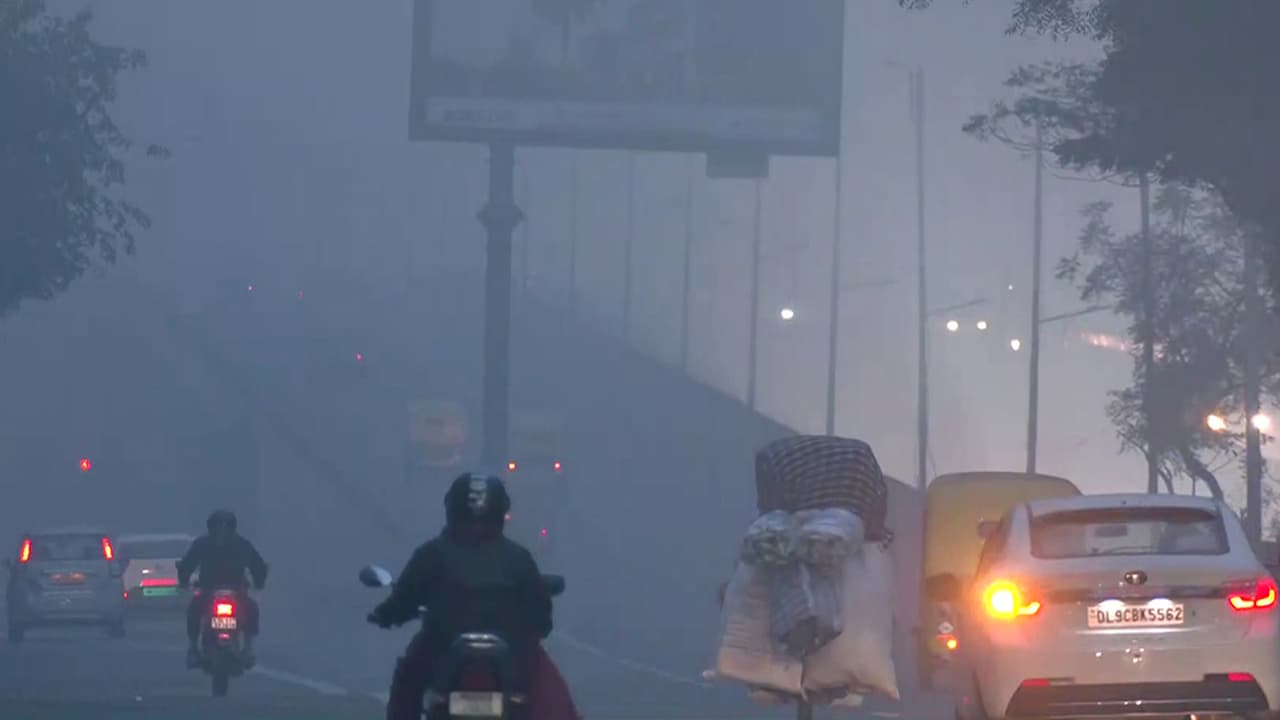
CPCB’s September 21 bulletin lists Greater Noida, Gurugram and others in ‘poor’ air as Delhi and Noida stay ‘moderate’. CREA’s Manoj Kumar cites sparse monitors, local emissions and patchy rain; AQI likely to rise once late-September rains fade and October begins.
Winter is still weeks away, yet the National Capital Region is already seeing the familiar climb in pollution numbers. This season, though, the early readings show a twist: Delhi and Noida remain in the “moderate” band while several satellite cities have tipped into “poor”.
According to the Central Pollution Control Board’s daily AQI bulletin for September 21, Greater Noida posted an AQI of 276, Baraut in Baghpat 286, Manesar 245 and Khora 254 - all “poor”. Gurugram stood at 218, also “poor”.
By contrast, Noida’s AQI was 189 and Delhi’s 169, both “moderate”. That reversal has surprised residents used to Delhi leading the pollution tables, but specialists say the gap is as much about measurement as it is about the air itself.
Why Fewer Monitors Can Skew A City’s AQI
Manoj Kumar, an analyst at the Centre for Research on Energy and Clean Air (CREA), said the disparity partly reflects the density of monitoring stations. Delhi has 46 air quality stations spread across the city, while Gurugram has only four and Noida five or six.
A citywide average in Delhi is smoothed across dozens of sensors, including relatively cleaner pockets. In places with only a handful of monitors, one or two units in high-emission zones can drag the whole city’s number down.
For like-for-like comparisons at the Delhi-Gurugram or Delhi–Noida borders, Kumar advised looking at individual station feeds on the government’s Sameer app rather than relying solely on a city average.
Local Sources And Rainfall Shape The Current Split
Beyond monitoring density, Kumar pointed to two other drivers: highly localized emission sources and uneven rainfall. Parts of Uttar Pradesh and Punjab received showers in recent weeks that helped wash out pollutants, but Gurugram largely missed out, leaving concentrations higher than Delhi’s.
He noted similar contrasts elsewhere. In Mumbai, the Bandra-Kurla Complex station routinely ranks among the city’s worst even when the overall average is “good” or “satisfactory” across roughly 30 stations. In Chennai, Thiruvanmiyur typically stays “satisfactory”, while industrial Gummidipundi has figured among the country’s most polluted locations in recent months.
What To Expect As Monsoon Fades
Kumar cautioned that Delhi and Noida’s “moderate” tags are largely a monsoon effect, not a clean-air milestone. Once the rainfall season ends - typically by late September - and October begins, AQI levels across the region are expected to rise as pollutants that rain helps disperse start to accumulate again. The headline numbers may shift, but station-level readings will remain essential to gauge real neighborhood exposure.
