
The Voice of Buddhist Ladakh (VBL) has been formed in the UT, citing underrepresentation in the MHA's High-Powered Committee. This new body aims to be a key stakeholder in negotiations over land protection and cultural preservation in the region.
A new socio-political body called the Voice of Buddhist Ladakh (VBL) has recently been formed in the Union Territory, which will now play a key role in the ongoing negotiations between Ladakh's representatives and the Ministry of Home Affairs (MHA.
To address issues such as protection of land and environment and the preservation of cultural identity the MHA had formed a High-Powered Committee (HPC).
Formation Amidst MHA-Ladakh Dialogue
The aim was to facilitate structured dialogue between Ladakh's representatives and the MHA. Within a certain section of the Buddhist community there was a perception of being under represented in the HPC which has now resulted in the formation of the VBL.
While the Leh Apex Body (LAB) and the Kargil Democratic Alliance (KDA) have thus far been recognised as the primary interlocutors with the Centre, the VBL positions itself as a community-specific platform meant to ensure that Buddhist concerns are not diluted in broader consensus-driven frameworks.
VBL's Proactive Steps and Future Influence
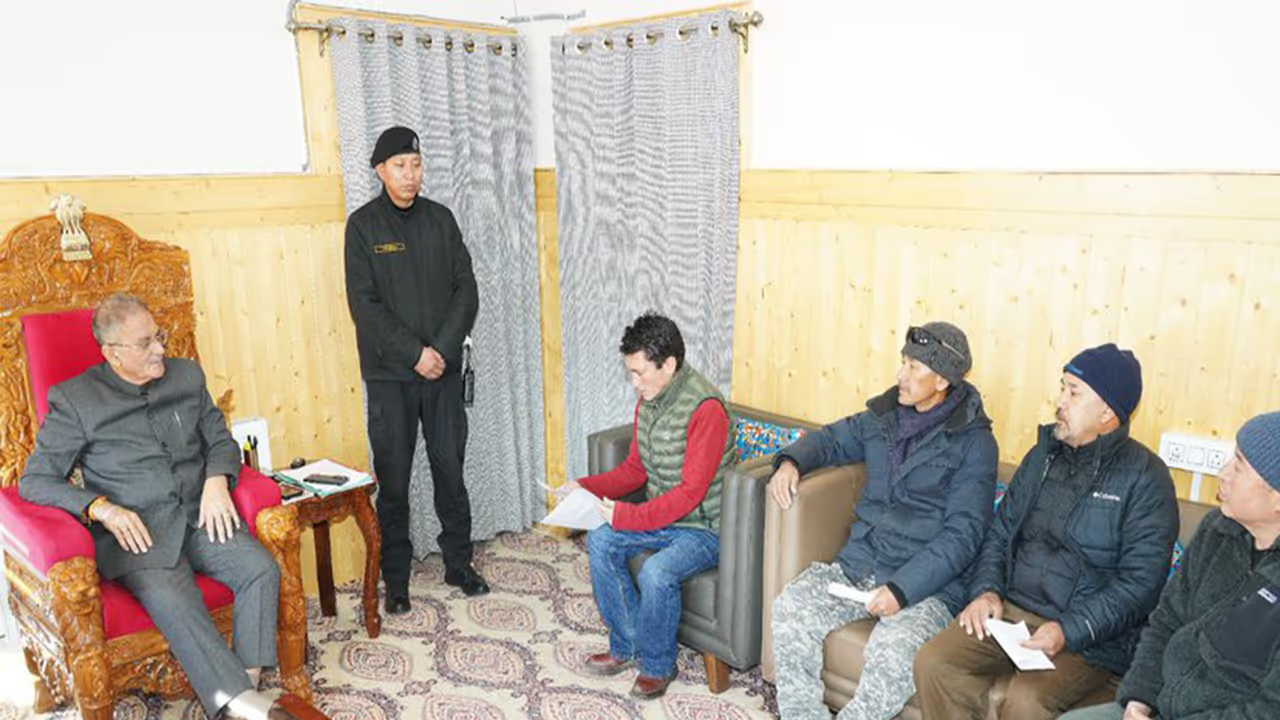
A day after its formal formation, the Convenor of VBL, Skarma Namtak, along with other members of the newly constituted body, called on the Lieutenant Governor of Ladakh on Friday and formally placed their demands before him.
The early outreach to the LG signals VBL's intent to position itself as an active stakeholder in the ongoing policy discourse.
The unanimous election of Skarma Namtak as Convenor, with a mandate to liaise with the Ladakh Buddhist Association (LBA), Leh Apex Body, HPC, UT Ladakh administration and the MHA, positions VBL as an institutional.
If effectively integrated into the dialogue process, VBL could emerge as a key stakeholder influencing decisions on land safeguards, cultural preservation, demographic protection, and employment policies.
What remains clear, however, is that with the advent of the Voice of Buddhist Ladakh, the ongoing talks with the MHA are no longer a two-pole dialogue between the Centre and Ladakh's Apex bodies. The negotiating table has expanded.
(Except for the headline, this story has not been edited by Asianet Newsable English staff and is published from a syndicated feed.)