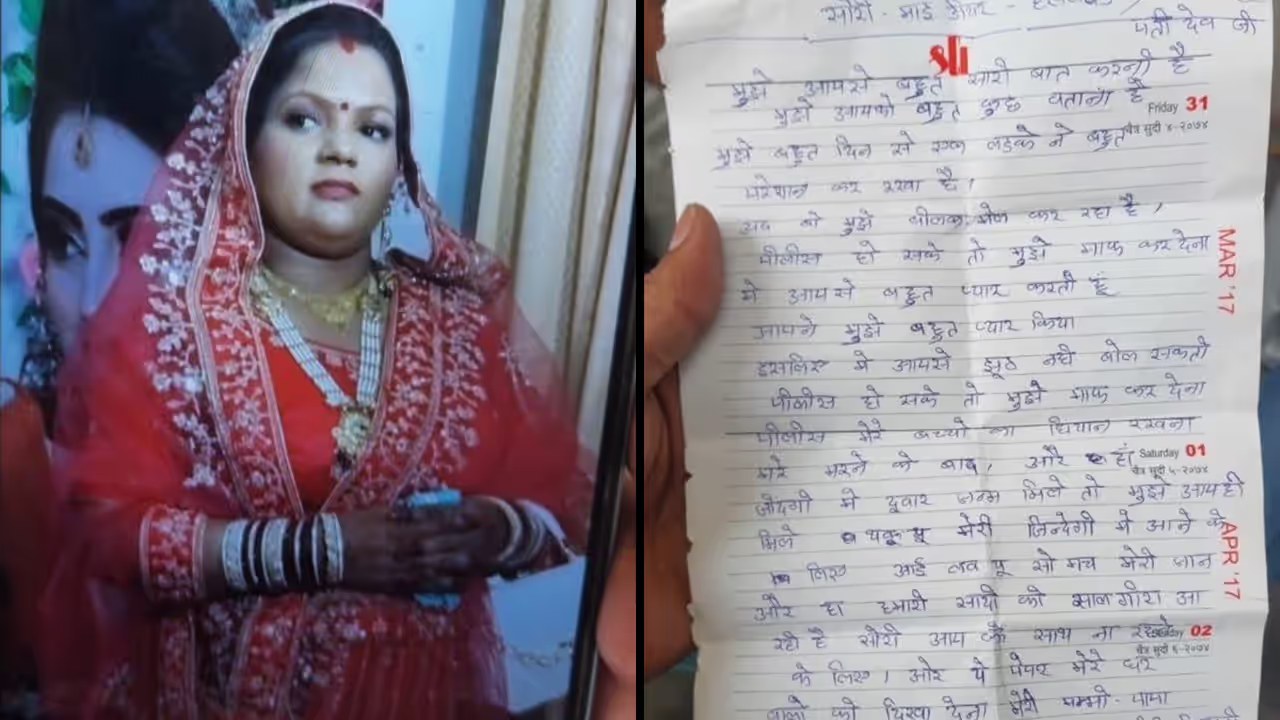
A 28-year-old woman from Bijnor, UP, allegedly died by suicide after being harassed by cyber fraudsters posing as Crime Branch officers. She left behind a suicide note blaming a blackmailer. Her family later found multiple threatening WhatsApp calls and messages. Even after her death, the callers allegedly continued threatening the family.
A shocking case from Uttar Pradesh's Bijnor has highlighted the dangerous rise of cybercrime in India. A 28-year-old woman allegedly died by suicide after being harassed and blackmailed by fraudsters posing as police officers. Monika, wife of Randhir, was found hanging in her room at her home. At the time, her two daughters, Jiya, aged eight and Nandani, aged eleven, were sleeping nearby. The children discovered their mother's body the next morning.
The incident has left the family and the local community in deep shock.
Family first remained silent
At first, Monika's family did not inform the police. They were worried about social stigma and decided to perform her last rites quietly, according to a report by India Today.
Related Articles

However, everything changed when they found a suicide note written by Monika. In the letter, she revealed that an unknown man had been blackmailing her for a long time.
The note clearly showed the intense mental pressure she had been facing.
Monika's emotional final words
One of the most heartbreaking lines in the note was addressed to her younger daughter.
"Sorry Jiya, mummy ko marna hi padega," she wrote.
She also wrote a message for her husband, Randhir. Monika said a man had been threatening and pressuring her for quite some time.
She apologised to her family and asked for forgiveness.
Family uncovers disturbing evidence
After reading the note, Monika's family checked her mobile phone. What they found was deeply disturbing. There were several WhatsApp calls, voice notes and messages from at least five different numbers.
The callers allegedly pretended to be Crime Branch officers. They accused Monika of serious crimes, including human trafficking, in an apparent attempt to frighten her.
Police believe this was part of a "digital arrest" scam.
What is a digital arrest scam?
In this type of fraud, criminals pretend to be police, CBI officers or other officials. They tell victims that they are involved in a criminal case. The aim is to create panic and force victims to obey their instructions.
Fraudsters often demand money, personal details or complete control over the victim's actions. Experts say the fear created by these scams can be overwhelming.
Suspicion grew during cremation
The family became suspicious even before finding the suicide note. During Monika's cremation, her phone kept ringing. Her nephew, Sanyog, answered one of the calls.
He was shocked to see a man on video call, dressed in what appeared to be a police uniform.
The caller claimed to be a Crime Branch officer and asked to speak with Monika.
When Sanyog informed him that she had died, the man allegedly threatened legal action.
Threats continued after her death
Even after Monika's death, the calls reportedly did not stop. According to the family, the accused continued calling until Wednesday. They demanded to speak to Monika.
When family members refused, they allegedly threatened to send her husband to jail and harm the entire family.
This further strengthened suspicions that Monika had been targeted by cyber criminals.
Police register case
Following a complaint by Monika's husband, Randhir, police registered a case at Kotwali City police station. The FIR has been filed under Section 108 of the Bharatiya Nyaya Sanhita.
Investigators are now examining Monika's suicide note, mobile phone, call records and messages.
Police are working to identify the people behind the scam.
(Suicide is never a solution. Seek help from mental-health professionals. If you ever experience such thoughts, please call the ‘DISHA’ helpline. Toll-free helpline numbers: 1056, 0471-2552056)