
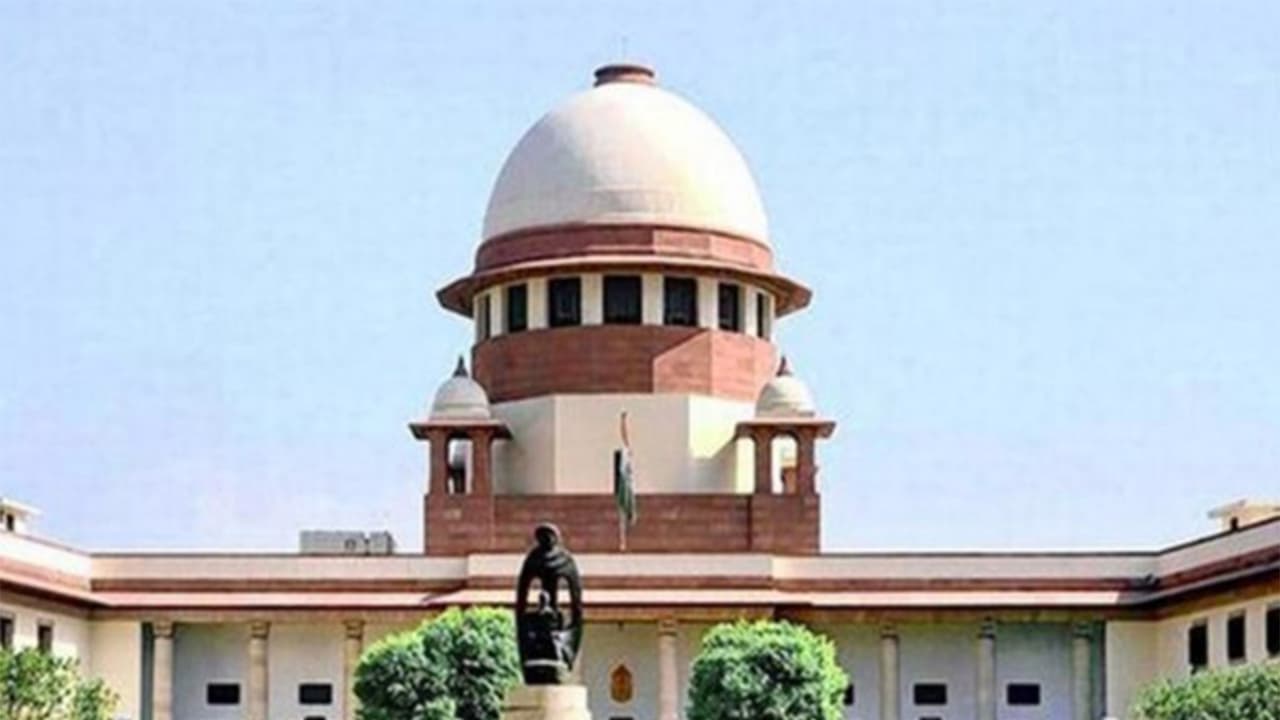
The Supreme Court set aside the Delhi High Court's order that suspended the life sentence of ex-UP MLA Kuldeep Singh Sengar in the 2017 Unnao rape case. The apex court has asked the HC to reconsider the plea or decide the main appeal expeditiously.
The Supreme Court on Friday set aside the Delhi High Court's order suspending the life sentence of former Uttar Pradesh MLA Kuldeep Singh Sengar in the 2017 Unnao rape case.
The apex court directed the High Court to either expeditiously decide his pending criminal appeal against the life sentence awarded to Senger or to reconsider the suspension of sentence plea afresh after hearing all parties, including the victim.
Court Proceedings and Arguments
A Bench of Justice Surya Kant and Justice Joymalya Bagchi observed during the hearing that apart from issues already prima facie touched upon by the High Court in its decision to suspend the sentence, several other issues would also require consideration even at the stage of deciding suspension of sentence.
"Without expressing any opinion, we allow this appeal in part and set aside the order," the Bench stated, while clarifying that the High Court's fresh consideration would not be influenced by the Supreme Court's intervention having set aside the order.
Appearing for Sengar, Senior Advocate N. Hariharan argued that the victim in the case was not a minor at the time of the incident and referred to AIIMS findings allegedly indicating that she was above 18 years of age. Solicitor General of India (SGI) Tushar Mehta, appearing for the CBI, opposed the suspension of sentence.
During the hearing, the Court remarked that practical aspects also had to be kept in mind, noting that since the High Court had already suspended the sentence and the Supreme Court had stayed that order, the High Court might now be reluctant to proceed with the main appeal. The Court thereafter proposed two courses to the High Court: either decide the criminal appeal itself at the earliest, especially since arguments had already been heard at length, or, if the appeal was not likely to be heard expeditiously, pass a fresh order on the suspension of sentence application after hearing all parties, including the victim/complainant. The Bench requested the High Court to endeavour to pass an appropriate order before the commencement of the summer vacations.
High Court Order and CBI's Challenge
The Delhi High Court had, on December 23 last year, suspended Sengar's sentence after prima facie observing that the offence of aggravated penetrative sexual assault under Section 5(c) of the POCSO Act may not be made out against him on the ground that he was not a "public servant" within the meaning of the provision. However, Sengar continued to remain in custody as he was not granted bail in the separate custodial death case relating to the victim's father.
Challenging the High Court order before the Supreme Court, the CBI argued that the High Court erred in holding that Section 5(c) of the POCSO Act was inapplicable. According to the probe agency, a sitting MLA occupies a constitutional position of trust and authority and performs public duties in which the State and the community at large have a vital interest.
Section 5 of the POCSO Act treats penetrative sexual assault as "aggravated" when committed by specified categories of persons, including public servants, police personnel and members of armed or security forces. The offence carries a minimum punishment of 20 years' imprisonment and can extend to imprisonment for the remainder of natural life.
In 2019, a Delhi trial court convicted Sengar under provisions of the IPC and the POCSO Act and sentenced him to imprisonment for the remainder of his natural life. The trial court had held that Sengar fell within the definition of a "public servant" for the purposes of the aggravated offence provision under the POCSO Act. (ANI)
(Except for the headline, this story has not been edited by Asianet Newsable English staff and is published from a syndicated feed.)