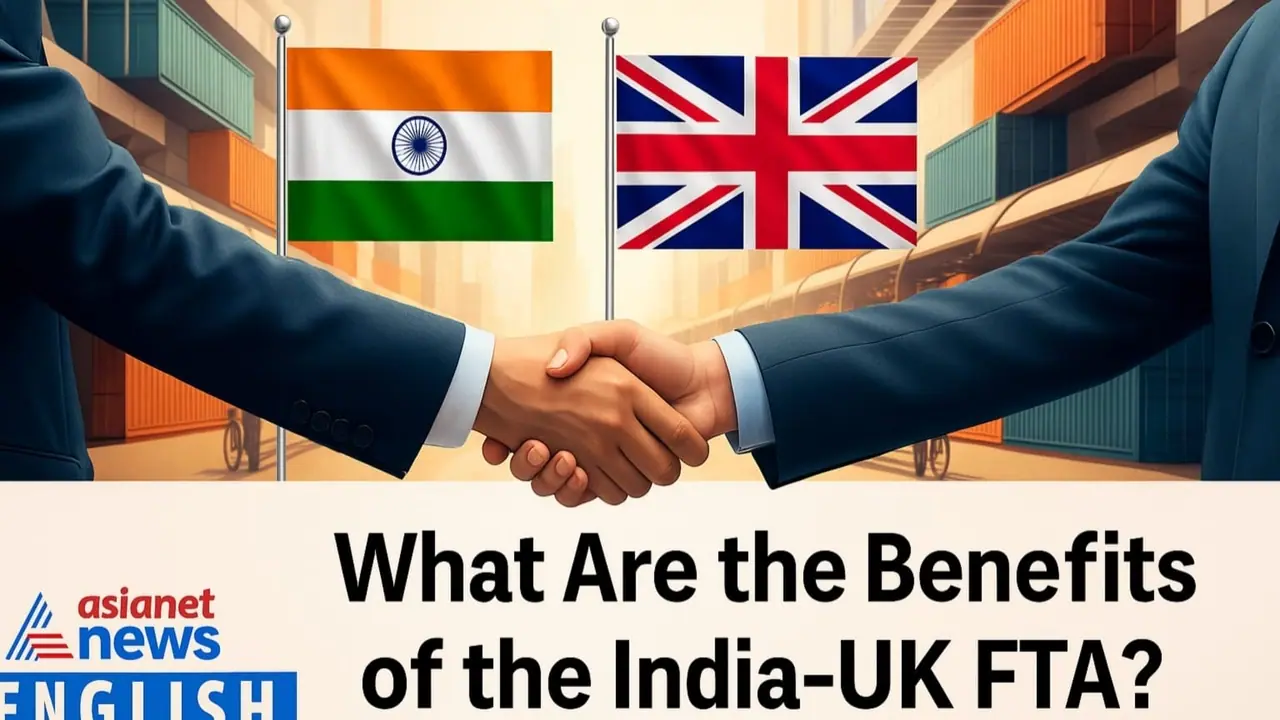
India and the UK are set to sign a landmark Free Trade Agreement during PM Modi’s visit to London. The deal, covering goods, services, tariffs, and professional mobility, aims to boost bilateral trade significantly.
Two months after concluding negotiations, India and the United Kingdom are ready to sign a major Free Trade Agreement (FTA). The deal is expected to be signed in London during Prime Minister Narendra Modi's official visit to the UK. PM Modi left for UK visit on Thursday.
Ahead of his visit, the Union Cabinet gave its final approval to the trade deal on Tuesday. The agreement, officially called the Comprehensive Economic and Trade Agreement (CEPA), will be signed in the presence of PM Modi and British Prime Minister Keir Starmer.
Commerce and Industry Minister Piyush Goyal will also be in London to attend the signing ceremony.
Related Articles

The two countries had concluded negotiations on May 6, but the final legal checks were pending before signing the deal.
"The FTA ensures comprehensive market access for goods, across all sectors, covering all of India's export interests. India will gain from tariff elimination on about 99% of the tariff lines covering almost 100% of the trade value offering huge opportunities for increase in the bilateral trade between India and the UK," Commerce and Industry Ministry had said in its release.
What the trade deal aims to achieve
The India-UK FTA focuses on removing or reducing import duties and tariffs on goods and services traded between the two countries. The goal is to make trade smoother, cheaper, and faster for businesses on both sides.
India and the UK want to increase their total trade to $120 billion by 2030.
Indian industries that will benefit
Many sectors in India are expected to gain from this agreement. Some key ones are:
Textiles and garments: Clothes and fabrics made in India will now be cheaper for UK buyers.
Jewellery: Export of gold and gemstone jewellery will grow as taxes are removed.
Agriculture and food items: Processed foods, tea, and rice will become more competitive in the UK.
Leather goods and footwear: Indian-made shoes, belts, and bags may see more demand in British markets.
Better access to UK services market
The FTA will also help Indian service providers. Professionals in IT, finance, law, and education will find it easier to work with or in UK-based companies. Some visa and work permit rules are also being relaxed for Indian professionals.
What UK gets in return
In exchange, India has agreed to reduce some tariffs on British goods. This includes items like:
- British-made cars and machinery
- Wines and spirits
- Advanced medical equipment
The aim is to create a balanced trade flow. India gets better access to UK markets and the UK can sell more to India too.
Expected impact on trade and economy
Trade experts say this deal is set to:
- Help Indian businesses sell more abroad
- Create lakhs of jobs, especially in small and medium companies
- Bring in more foreign investment
- Strengthen India's position in global trade
Currently, trade between India and the UK is worth around $20 billion each year. With this deal, that number is expected to rise sharply.
The India-UK FTA is also seen as an important step in India's long-term plan to become a global manufacturing and services hub. It builds on India's recent trade deals with Australia and the UAE, and shows its growing role in global trade partnerships.
UK and Indian officials have both called this a 'historic' and 'balanced' agreement. British businesses are also excited, as it gives them easier access to India’s large and growing market.
(With ANI inputs)