
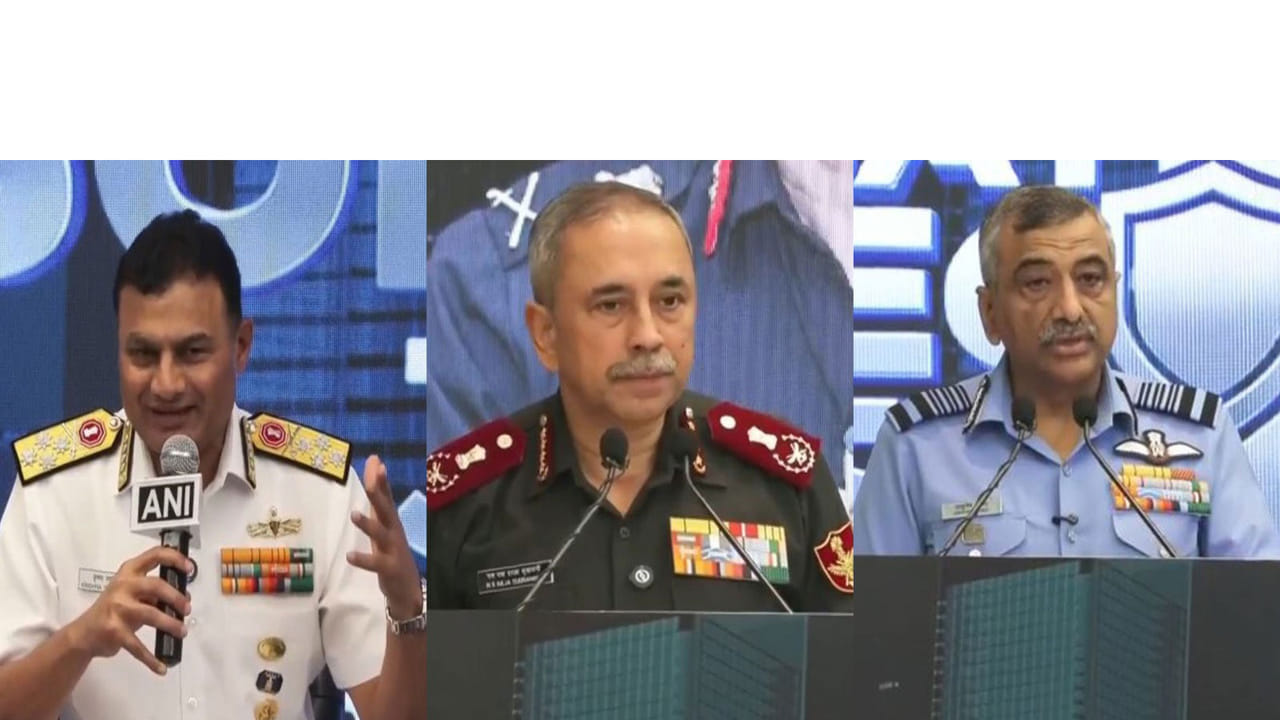
India's defense chiefs emphasize Aatmanirbharta as vital for future war readiness, focusing on indigenous manufacturing, supply chain control, and operational autonomy for the Army, Navy, and Air Force to ensure strategic sovereignty.
India's Defense Leadership Prioritizes Self-Reliance for Future Readiness
New Delhi [India], November 16 (ANI): India's top defence leadership on Monday underscored the importance of Aatmanirbharta (self-reliance) in strengthening the country's preparedness for future wars, with the chiefs of the Army, Navy and Air Force highlighting indigenous manufacturing, control over critical technologies, resilient supply chains and integrated military capabilities.
Navy Chief Admiral Krishna Swaminathan asserted that the Indian Navy had transitioned from a "buyers' navy" to a "builders' navy" many years ago, with around 49 ships currently on order, all of which are being constructed indigenously in Indian shipyards. Speaking at the ANI National Security Summit 3.0 in New Delhi, he said the Navy had commissioned its 100th indigenously designed and constructed ship a few months ago and currently operates more than 100 indigenous vessels.
"Firstly, the Indian Navy has stopped relying on any foreign country for building its own ships many, many, many, many years back... We have commissioned our 100th ship that we have designed and constructed in this country a few months back. So we have more than a hundred indigenous ships now. All the ships of the line that we operate today are indigenous. We have about 49 ships on order as we speak. All of them are being constructed indigenously in Indian shipyards. So we have stopped being a buyers' navy many, many years back. We are a builders' navy; we build ourselves," he said.
Chief of Defence Staff (CDS) General NS Raja Subramani, meanwhile, described Aatmanirbharta in national security as the freedom to make strategic choices, the capability to act and the capacity to endure, stressing that self-reliance did not mean strategic isolation or manufacturing everything domestically. Addressing a session titled 'Preparing India's Armed Forces & Future Wars', he said India needed control over critical technologies and supply chains while maintaining reliable partnerships.
Chief of the Air Staff, Air Chief Marshal Ashutosh Dixit, stressed that Aatmanirbharta was not merely an industrial objective but an operational requirement for the Indian Air Force (IAF), particularly in future conflicts where dependence on foreign powers for source code, spares, munitions and engines could affect combat readiness. Speaking on 'Aatmanirbharta and its place in India's preparedness for future wars', he outlined the IAF's strategic doctrine under the VAYU framework and identified three key parameters for assessing combat readiness.








