
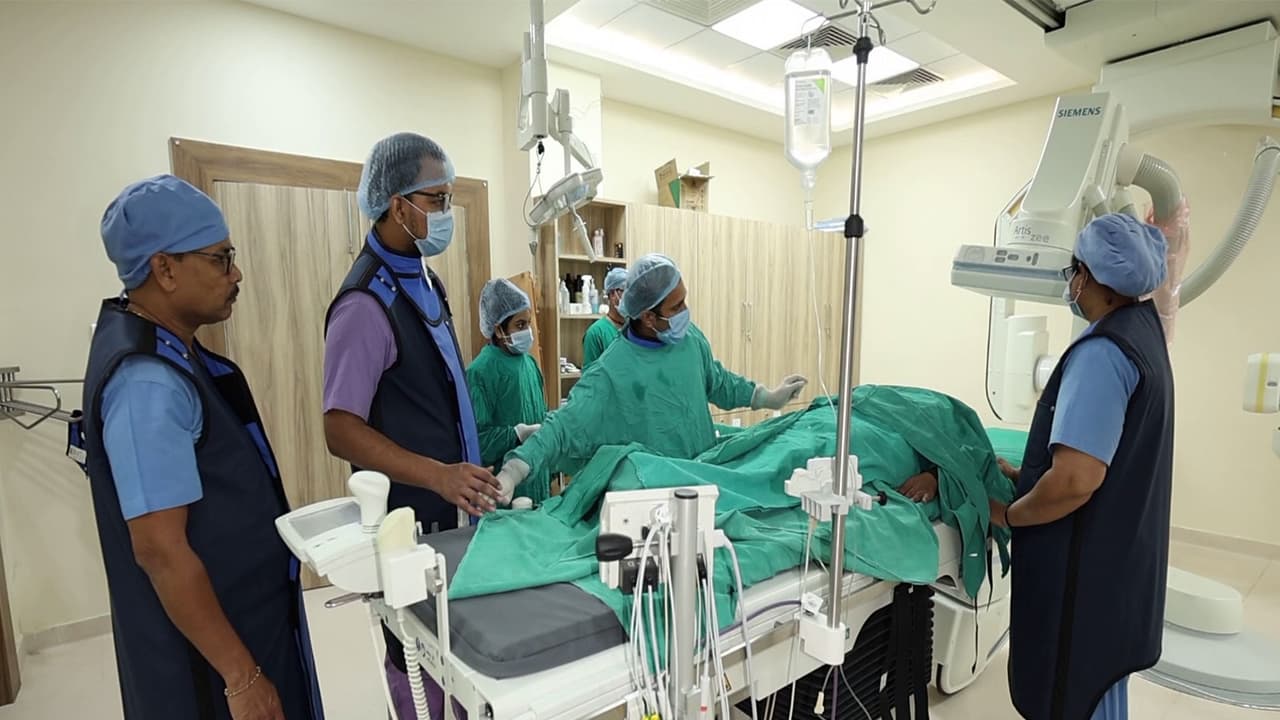
Surat New Civil Hospital in Gujarat launched the state's first advanced Biplane Cath Lab. The Rs 12 crore facility will offer free cardiac, neurological, and vascular treatments, including emergency stroke care, to patients.
In a major boost to public healthcare, Surat New Civil Hospital in Gujarat has launched the state's first advanced Biplane Cath Lab under the Super Speciality Project, officials said.
Built for Rs 12 crore, the facility will provide free cardiac, neurological and vascular treatments, including angiography, angioplasty, pacemaker implantation and emergency stroke care. Hospital authorities said procedures that usually cost up to Rs 50,000 in private hospitals will now be available free of cost for patients at the government-run facility.
Focus on Stroke Care
Medical Superintendent of New Civil Hospital, Dr Dharitri Parmar, said the advanced system would help doctors quickly identify and treat stroke cases.
"When a stroke occurs, a nerve in the brain gets obstructed. As the nerve gets obstructed, the peripheral part of the body stops functioning. MRI can identify it, or the Cath Lab machine can identify the site and treat it. These services usually cost around Rs 50,000 in the market. Today, in New Civil Hospital, we have made it available for free through the Tertiary Care Hospital," Parmar told ANI.
Advanced Minimally Invasive Procedures
Doctors said the advanced biplane imaging system improves precision, reduces complications and supports minimally invasive procedures.
Interventional Radiologist Dr Hiren Rathod said the machine enables treatment of several vascular conditions without the need for open surgery. "This is a very advanced machine. In cases of heart problems, we perform angioplasty and stenting procedures. Certain conditions can now be treated without open-heart surgery. Through minimally invasive, percutaneous procedures, we can access the nerves and blood vessels through the skin," Rathod said.
"If there is any issue in the blood vessels of the legs, hands, or other parts of the body, we can reach those areas internally. In cases where there is a rupture or bleeding in the vessels, we can stop the bleeding. If the vessels are blocked, we can perform balloon angioplasty or place stents to restore blood flow," he added.
Officials said initial procedures have already begun under the Neurology and Radiology departments. (ANI)
(Except for the headline, this story has not been edited by Asianet Newsable English staff and is published from a syndicated feed.)