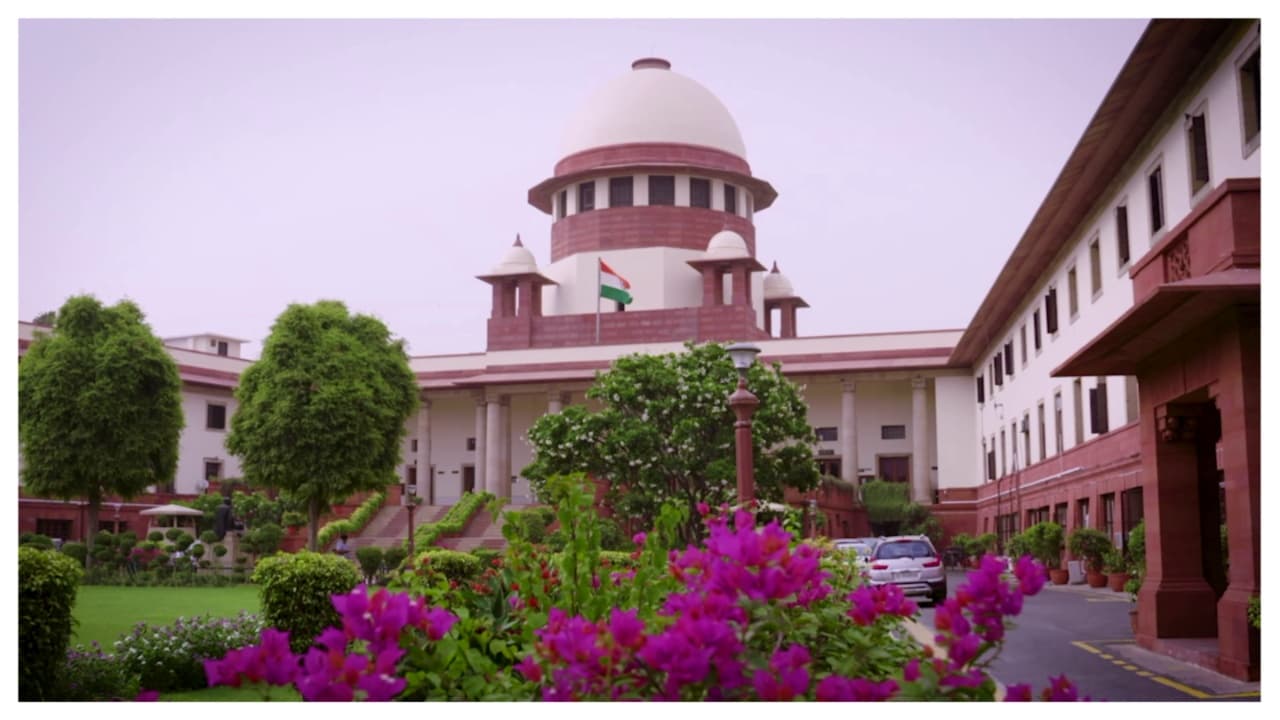
Supreme Court has said that repeatedly challenging religious practices in constitutional courts could lead to endless legal disputes and weaken India’s social fabric. Hearing petitions linked to the Sabarimala case and Dawoodi Bohra excommunication issue, judges stressed that religion remains deeply connected to Indian civilisation.
Supreme Court on Thursday expressed concern over increasing legal challenges to religious practices, saying constant questioning of matters of faith before constitutional courts could create endless disputes and even weaken religions and India’s civilisational identity. The remarks came during hearings before a nine-judge Constitution bench dealing with important questions related to religious freedom, women’s rights at places of worship and the limits of constitutional protection for religious practices. The bench is hearing matters linked to the Sabarimala temple issue in Kerala and petitions involving the Dawoodi Bohra community.
What is the case about?
The Constitution bench is examining how far courts can interfere in religious practices under Articles 25 and 26 of the Indian Constitution.
Article 25 guarantees freedom of religion to individuals, while Article 26 gives religious groups the right to manage their own religious affairs.
Related Articles

One of the matters before the court involves the Dawoodi Bohra community and the issue of excommunication.
The Central Board of Dawoodi Bohra Community had filed a petition in 1986 seeking reconsideration of a 1962 Supreme Court judgment.
That earlier judgment had struck down the Bombay Prevention of Excommunication Act, 1949, which had made excommunication illegal.
The 1962 ruling held that the power of excommunication exercised by the religious head of the Dawoodi Bohra community was part of managing religious affairs and therefore protected under Article 26(b) of the Constitution.
Reformist group argues against protection
Senior advocate Raju Ramachandran, appearing for a group of reformist Dawoodi Bohras, argued that practices linked to social or secular behaviour should not automatically receive constitutional protection as religious matters.
He told the court that if a religious practice harms fundamental rights, then it cannot remain fully protected under Articles 25 and 26.
According to him, courts cannot avoid examining such issues simply because they are connected to religion.
Ramachandran also argued that India functions as a constitutional civilisation and practices that go against constitutional values should not continue unchecked.
Judges express concern over wider impact
During the hearing, Justice B. V. Nagarathna raised concerns about the larger impact of repeatedly challenging religious practices in court.
She said if every religious custom starts getting questioned before constitutional courts, then there could be “hundreds of petitions” involving temple rituals, religious traditions and faith-based practices.
Justice Nagarathna observed that religion remains deeply connected to Indian society and culture.
“What happens to this civilisation where religion is so intimately connected with Indian society?” she asked during the hearing.
She also said India’s diversity and plurality are among its greatest strengths and religion continues to play an important role in the lives of people across communities.
According to her, the court is concerned about how religious practices should be questioned, who should question them and whether reform should come from within religious groups themselves instead of through court intervention.
'Every religion will break'
Justice M. M. Sundresh also shared similar concerns.
He warned that if courts start allowing every internal religious disagreement to become a constitutional issue, then every religious practice may eventually face challenges.
“Every religion will break and every constitutional court will have to be closed,” Justice Sundresh remarked.
He said there could be situations where one member of a religious group disagrees with another, leading to continuous litigation over faith-related practices.
The judge questioned how far courts should go in interfering in such matters in a diverse and progressive country like India.
Debate between faith and constitutional rights
The hearing highlighted the ongoing debate between religious freedom and constitutional rights.
On one side are those who believe courts must protect equality, dignity and fundamental rights even if it means examining old religious practices.
On the other side are concerns that excessive judicial interference in religious matters could disturb social harmony and weaken traditional institutions.
Justice Nagarathna said the court was deeply conscious that whatever principles it lays down could affect India’s civilisational structure for years to come.
She stressed that India must continue progressing while also preserving the social and cultural constants that hold the country together.
The outcome of these hearings could have a major impact on future cases involving religion, temple entry, community rights and constitutional protections.
It may also define how Indian courts balance religious freedom with equality and individual rights under the Constitution.
The Constitution bench is expected to continue hearing arguments from different sides before giving its final judgment.
(With inputs from agencies)