
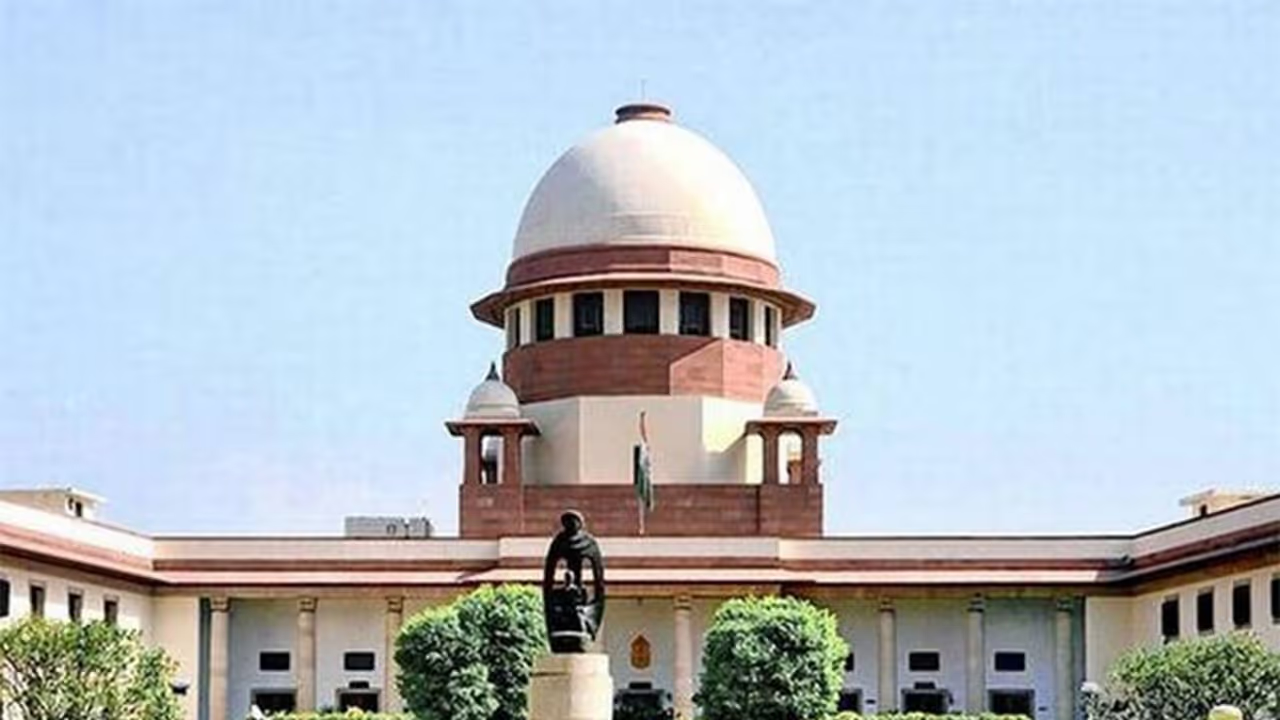
The Supreme Court dismissed the Centre's plea to implement the OBC creamy layer ruling prospectively, affirming that parental income alone doesn't determine status. Existing appointments remain protected while the executive formulates policy.
Supreme Court Rejects Centre's Plea on OBC Creamy Layer
The Supreme Court on Friday declined to make its March 11 judgment on the OBC creamy layer applicable only prospectively, rejecting the Centre’s plea that retrospective implementation could disrupt past and ongoing recruitment processes. A bench of Justices PS Narasimha and R Mahadevan said there was “no convincing or reasonable justification” to defer the ruling’s implementation, which held that the salary or income of a parent employed in a public sector undertaking (PSU) or the private sector cannot, by itself, determine whether a candidate belongs to the creamy layer.
Clarification on Scope and Appointments
Clarifying the scope of its earlier verdict, the apex court said the judgment determined the rights of the candidates who were parties to the proceedings and recognised their entitlement to OBC non-creamy layer reservation. “The judgment dated March 11, 2026 determines the rights of the parties before this court. It holds that the respondent candidates fall within the non-creamy layer of the OBC category and are entitled to the benefit of reservation together with consequential placement and allotment of posts in the selection processes in which they participated,” the bench observed.
However, the top court protected existing appointments and service positions, clarifying that the benefit granted to the candidates would not affect the seniority of others or reopen completed selections and appointments. It also said settled seniority and promotions would remain undisturbed.
Addressing Similar Claims
On claims by other candidates who consider themselves similarly placed, the apex court said their cases could be examined independently by the respective courts, tribunals or competent authorities. “The claims of persons asserting that they are similarly placed, whose cases are pending before any court, tribunal or other competent forum or authority may be considered on their own merits by the concerned adjudicating body or authority,” it said.
The bench clarified that it was not expressing any opinion on the merits of such claims, but the authorities concerned could take into account the interpretation of the 1993 Office Memorandum and a 2004 communication laid down in the March judgment.
Government Discretion in Policy Formulation
The apex court granted the Centre an additional two months to implement the ruling, extending the original six-month deadline. It also left it open to the government to formulate its reservation and creamy layer policy in accordance with constitutional principles and the law laid down by the court. Declining to prescribe a timeline for the exercise, the bench said: “This court is not inclined to prescribe any timeline for establishing equivalence between posts or consulting stakeholders in the formulation of the creamy layer policy, as these matters fall within the domain of the executive and the legislature.”
The Centre had invoked Article 142 of the Constitution, seeking prospective application of the March 11 judgment. It argued that extending the ruling to past and ongoing recruitment exercises could have “harsh and unjust unintended consequences” for employees and appointees who were not parties to the litigation and result in “complete administrative chaos”.
In its March judgment, the apex court held that determining whether an OBC candidate falls within the creamy layer requires consideration of the status and category of the parent's post, alongside the prescribed income or wealth criteria under the 1993 Office Memorandum. The salary or income of parents working in PSUs or the private sector cannot be treated as the sole determining factor. (ANI)
(Except for the headline, this story has not been edited by Asianetnews Editorial staff and is published from a syndicated feed.)








