
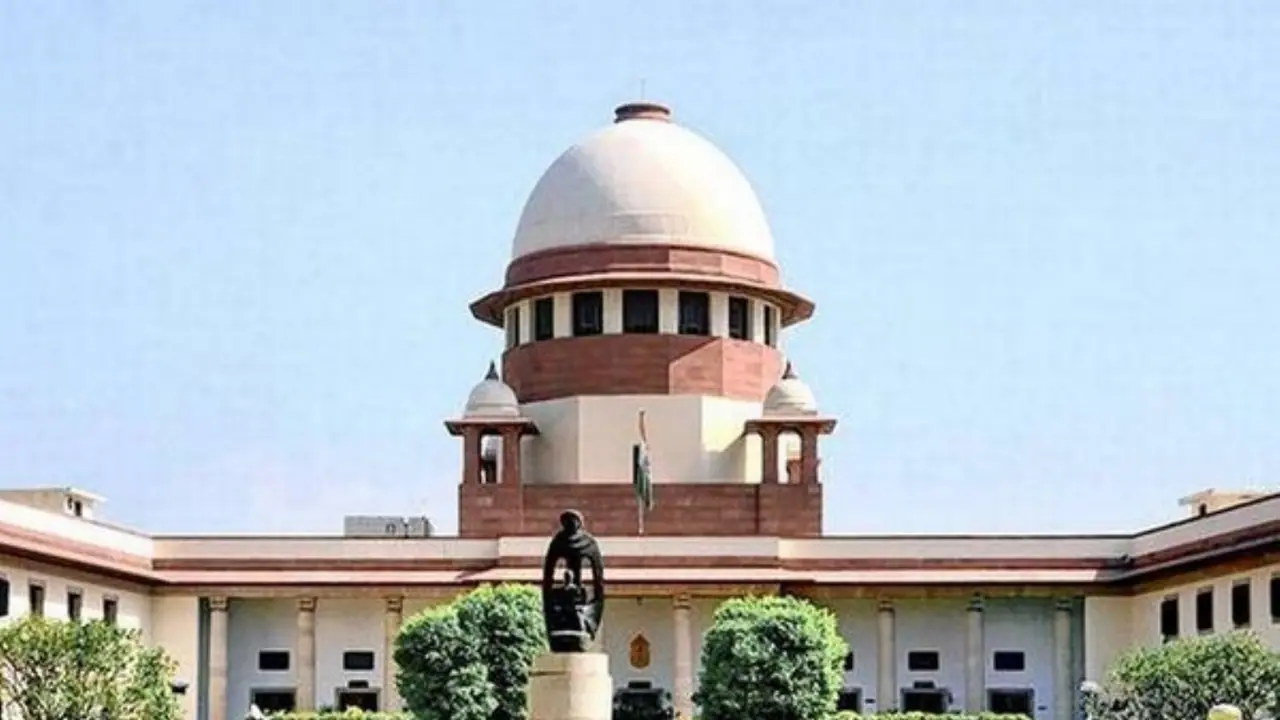
The Supreme Court directed the Centre to identify a central authority to ensure footpaths on all roads. It asked the government to select five towns for a pilot project, following its June ruling that the right to walk is a fundamental right.
The Supreme Court on Monday directed the Centre to identify a central authority that can ensure the provision of footpaths wherever roads exist across the country and asked it to select five towns for implementing the directions on a pilot basis.
A bench of Justice PS Narasimha and Justice Alok Aradhe sought instructions from Additional Solicitor General KM Nataraj on identifying the proposed authority and asked him to submit a report at the next hearing.
Implementation of 'Right to Walk'
The bench was monitoring compliance with its June judgment holding that the right to walk on a footpath is a fundamental right and that roads must have demarcated footpaths.
The apex court said the authority entrusted with the task must have adequate infrastructure, space, manpower and funds to make the initiative workable.
“First of all, there needs to be a centralised authority which will do the planning. Number two, identifying and implementing it as a pilot project,” Justice Narasimha said.
The bench directed the Centre to identify an existing authority or consider creating one if no suitable statutory mechanism was available. It also asked the government to identify five towns where footpaths could initially be provided wherever roads exist.
The matter has been posted after three weeks for further consideration.
Recap of June 19 Judgement
The apex court in its June 19 judgement had recognised the right to walk on properly demarcated footpaths as a fundamental right and issued a series of directions.
It had held that the right to walk on a demarcated footpath is a fundamental right under Article 19(1)(d) of the Constitution, which includes the right to access safe and well-demarcated footpaths.
The top court held that this right is primary and takes precedence over the movement of motorised vehicles.
It had said that urban development authorities, municipal corporations, municipalities and even panchayats are constitutionally obligated to create, maintain and safeguard pedestrian infrastructure wherever roads exist.
The apex court had further held that violation of the right to walk on demarcated footpaths would entitle citizens to seek constitutional and civil remedies, including restitution and compensation, against authorities responsible for the breach. (ANI)
(Except for the headline, this story has not been edited by Asianet Newsable English staff and is published from a syndicated feed.)