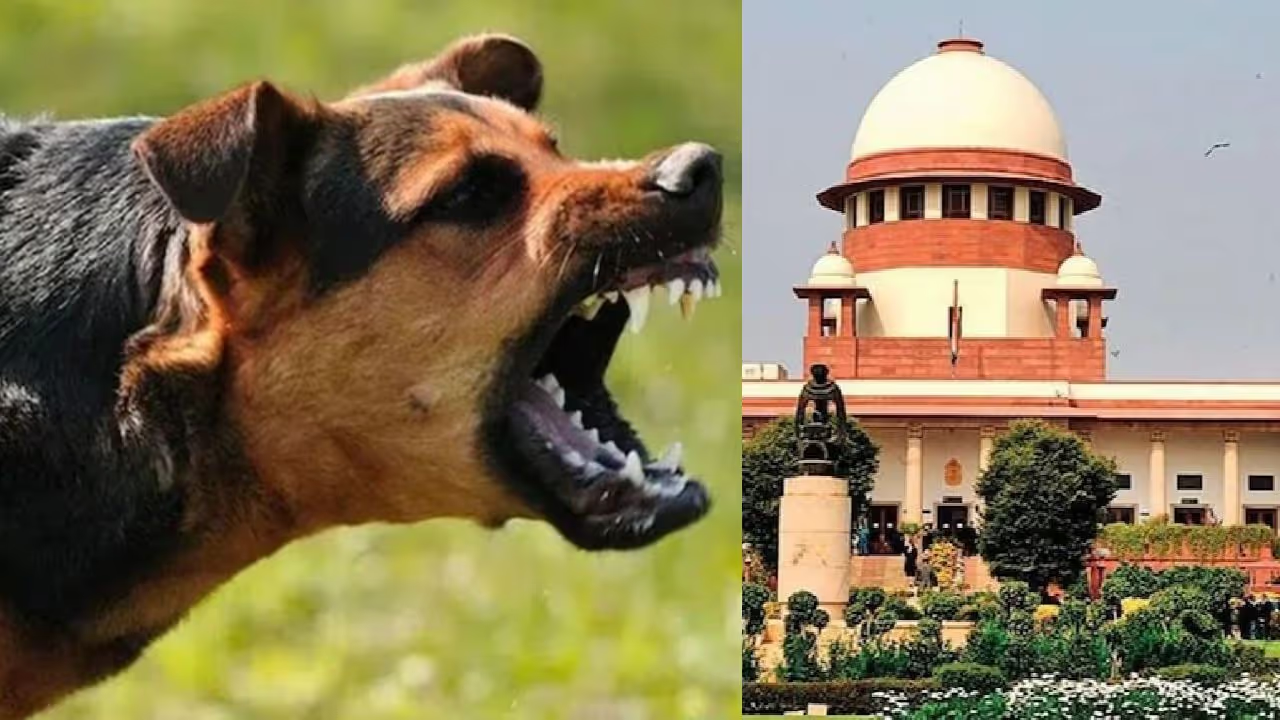
The Supreme Court has permitted authorities to euthanise rabid, incurably ill and aggressive stray dogs, stressing that human life and public safety must take priority amid rising dog attack and bite cases across India.
In a significant ruling amid growing concerns over stray dog attacks across the country, the Supreme Court on Tuesday permitted authorities to euthanise stray dogs that are rabid, suffering from incurable diseases, or found to be extremely aggressive. The court observed that the rising number of dog bite incidents and attacks in public spaces has become a serious public safety issue that requires urgent attention.
The verdict is being seen as a major development in the ongoing debate over animal control and public safety, with the court stressing that protecting human life must remain the top priority.
Human Safety Must Come First
A bench comprising Justices Vikram Nath, Sandeep Mehta and NV Anjaria stated that human life and public safety are more important than animal rights when dealing with dangerous stray dogs.
Related Articles

The court described the growing presence of stray dogs in public spaces as “alarming” and expressed concern over increasing attacks on children, elderly citizens and pedestrians.
“Human life and safety are more important than animal rights,” the bench observed during the hearing.
Key Directions Issued by the Supreme Court
The Supreme Court issued several important directions aimed at controlling the stray dog menace and improving public safety.
Permission to Euthanise Aggressive or Rabid Dogs
The court stated that under the Animal Birth Control (ABC) Rules and other prescribed protocols, stray dogs that are rabid, incurably ill or highly aggressive can legally be euthanised by authorities.
Removal of Dogs From Public Spaces
Authorities have been directed to immediately remove stray dogs from sensitive public areas such as hospitals, parks, railway stations and similar crowded locations. The dogs must be shifted to designated shelters.
No Release Back Into Public Areas
The court further stated that dogs captured from public places should not be released back into the same areas after sterilisation procedures.
Restrictions on Feeding Stray Dogs
Feeding stray dogs in public places has also been restricted. The court observed that feeding should only be allowed at specifically designated locations.
Supreme Court Criticises State Governments
The bench also expressed dissatisfaction with several state governments for failing to effectively implement earlier directions related to stray dog control.
The court dismissed multiple petitions filed by NGOs and animal welfare groups seeking modifications to previous orders on stray dog management.
According to the court, the sharp increase in stray dog populations in several cities has created fear among the public. The bench observed that sterilisation alone has not been sufficient to control the problem and that euthanising aggressive dogs has become necessary in certain situations.
The ruling is expected to provide greater authority to municipal bodies and local administrations struggling to manage the growing stray dog issue across urban and rural areas.