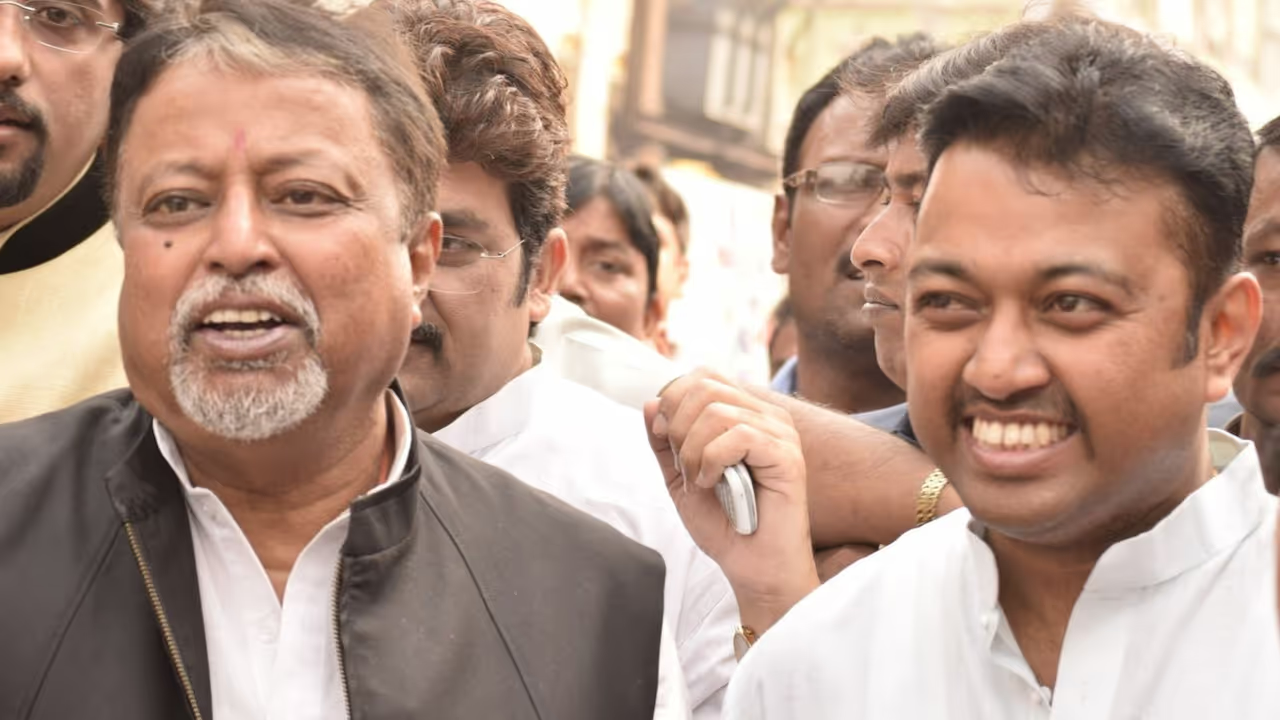
Following the death of his father, Mukul Roy, Subhranshu Roy's political future is under scrutiny. A second-generation leader, Subhranshu has followed his father's political path, including switching parties before returning to the TMC.
The death of veteran West Bengal politician Mukul Roy on February 23, 2026, has brought renewed attention to his son, Subhranshu Roy, and his role in state politics. As a second-generation leader, Subhranshu Roy has long been associated with his father’s political legacy, but his independent journey remains a topic of public interest.
Subhranshu Roy’s political future & public rule
Subhranshu Roy entered politics under the guidance of his father, who was a key strategist in West Bengal’s political landscape and a founding figure in the Trinamool Congress (TMC). Over the years, Subhranshu aligned himself with the party and became active in organisational and electoral roles. His political career has seen shifts similar to his father’s, including a phase when both joined the Bharatiya Janata Party (BJP) before eventually returning to the TMC in 2021.
Despite his lineage, Subhranshu Roy has maintained a relatively low-profile political presence compared to his father. He has focused more on regional politics and party activities rather than occupying high-profile national roles. His return to the TMC alongside Mukul Roy signalled loyalty to the party’s leadership and an attempt to rebuild political standing after earlier shifts.
Related Articles

Following Mukul Roy’s death, Subhranshu Roy’s role is expected to evolve significantly. As the only direct political heir, he may inherit not just his father’s support base but also the expectations of party workers and constituents who were closely associated with Mukul Roy. However, stepping into such a legacy comes with challenges, including establishing independent credibility and navigating West Bengal’s highly competitive political environment.
At present, Subhranshu Roy continues to be involved in political activities, though there is no clear indication of a major leadership role immediately after his father’s passing. His future trajectory will likely depend on how the TMC leadership positions him within the party structure and whether he can consolidate his father’s influence at the grassroots level.
Mukul Roy’s death marks the end of an era in West Bengal politics, but it also opens a new chapter for Subhranshu Roy. Whether he rises to prominence or remains a supporting figure will depend on his political strategy, public engagement, and the evolving dynamics within the state.
In the coming months, all eyes will be on Subhranshu Roy as he navigates personal loss while potentially stepping into a larger political role shaped by his father’s enduring legacy.