
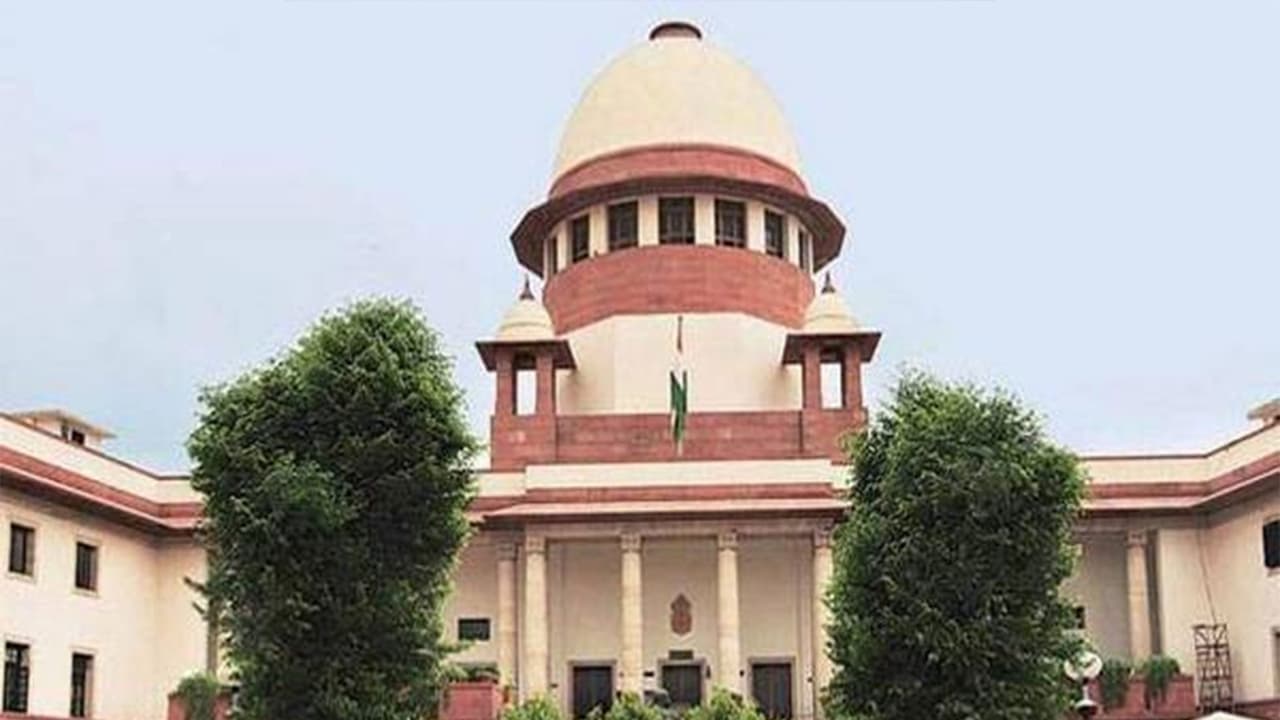
The Supreme Court rejected a plea to change the cut-off year for Sikkim's electoral roll revision from 2002 to 1993. The court upheld the ECI's decision, questioning the petitioner's locus and noting no political parties had objected.
The Supreme Court on Monday refused to interfere with the ECI's (Election Commission of India) decision to use 2002 as the cut-off year for the Special Intensive Revision (SIR) of electoral rolls in Sikkim.
Petitioner's Plea and Court's Scrutiny
The Court was hearing a plea by Sikkimese Mulniwasi Surakcha Sangh seeking 1993 to be treated as the base year instead, claiming that the 2002 revision had resulted in the inclusion of migrant populations in the electoral rolls. A bench of the Chief Justice of India (CJI) Surya Kant and Justices Joymalya Bagchi and V Mohana questioned the locus of the petitioner organisation and noted that no political party or other stakeholder from Sikkim had approached the Court against the use of 2002 as the cut-off year.
During the hearing, counsel for the petitioner organisation argued that the demographic composition of Sikkim and its electoral rolls was different from that of other States. He submitted that the uniform adoption of 2002 as the base year for SIR was therefore an issue for Sikkim, particularly in view of the influx of people from neighbouring areas and the composition of its small communities.
Counsel suggested that the 1993 electoral roll should instead be considered, although he said he was not certain whether 1993 would be the appropriate year. He maintained that there was a mismatch between demographic data and electoral rolls after the 2002 revision.
ECI Defends Uniform Cut-off
The Election Commission opposed the suggestion, submitting that the 2002 electoral roll had undergone more modifications and that the Commission had adopted 2002 as a uniform cut-off year across the country. It also argued that changing the base year at this stage would effectively require the entire process to restart.
Supreme Court's Observations and Verdict
The Court questioned why the petitioner organisation, which was based in Sikkim, had approached the Supreme Court instead of taking up the issue with the State government. It also questioned the locus of a petitioner sitting in Delhi to claim that it was acting in the interests of the people of Sikkim.
The Court also pointed out that Sikkim had already become a State by 2002 and rejected the suggestion that the State could simply be treated differently from the other States in the SIR exercise.
The bench observed that no political party from Sikkim had deemed it appropriate to approach the Court on the issue. "None of the political parties has come forward. None of the stakeholders has come forward. It is acceptable to everyone. How two we know that you people sitting in Delhi are well-wishers of the State?", the CJI asked.
The court said political parties could have a reason to challenge an electoral exercise as it may benefit one party over another, but questioned the petitioner's basis for approaching the Court.
The Court further noted that the SIR had been undertaken on a uniform basis with 2002 as the cut-off year and that the choice of the cut-off was essentially an electoral decision. "We have heard you. We do not find any ground to interfere with the cut-off year", it said
The Court declined to interfere with the 2002 cut-off for Sikkim. It, however, granted liberty to the petitioner organisation to approach the State government with its concerns. (ANI)
(Except for the headline, this story has not been edited by Asianetnews Editorial staff and is published from a syndicated feed.)