
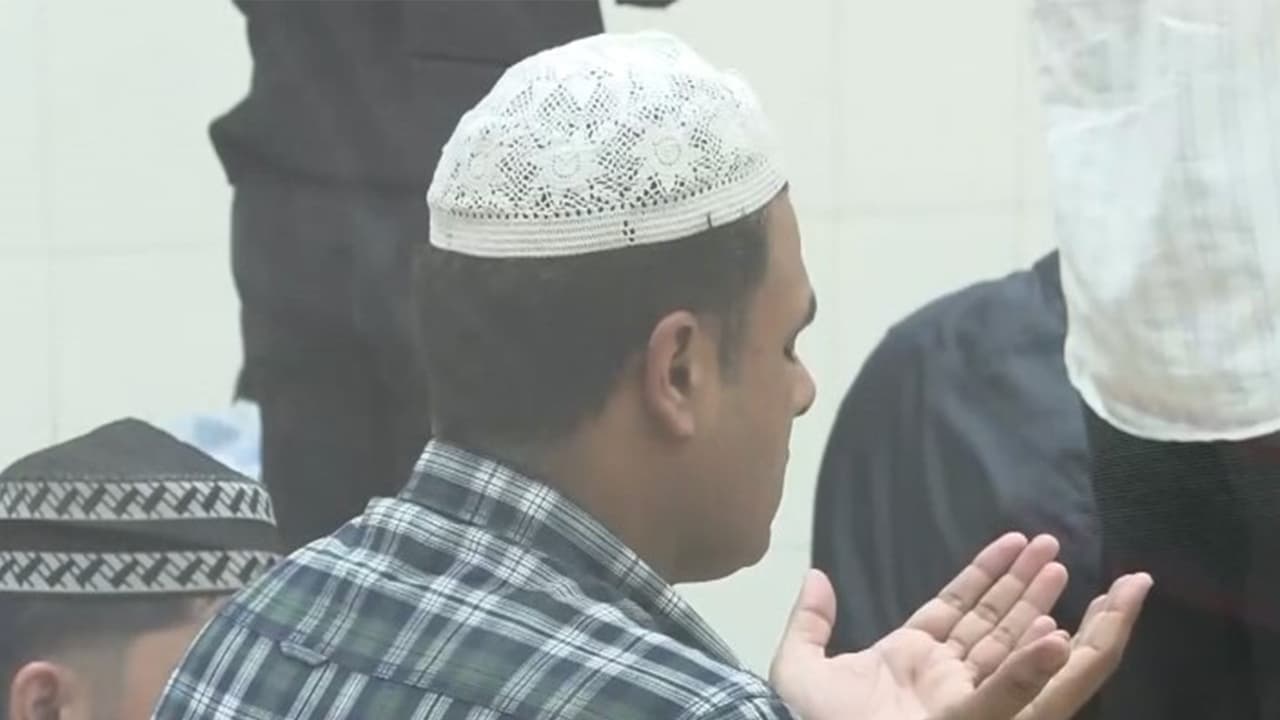
Muslims in Coimbatore observed Shab-e-Barat, the 'Night of Forgiveness', on Tuesday. Devotees gathered at mosques for special prayers, seeking forgiveness for past sins and Allah's blessings ahead of the holy month of Ramadan.
Shab-e-Barat was observed at Jammathul Shalihiheen Mosque in Coimbatore on Tuesday as many Muslims prayed for blessings and mercy.
Significance of the 'Night of Forgiveness'
Shab-e-Barat, one of the significant spiritual nights in Islam, is observed on the night of the 15th day of the Islamic month of Sha'ban. The retired joint director of Medical Services spoke to ANI about the significance of the night: "Shab-e-Barat is the day Allah forgives people who totally surrender and beg for forgiveness." The night is widely known as the "Night of Forgiveness" or the "Night of Salvation" and holds great religious importance ahead of the holy month of Ramadan.
Rituals and Other Names
On this occasion, Muslims engage in special prayers, seek forgiveness for past sins and pray for Allah's mercy and blessings. The night is believed to be a time when Allah forgives the sins of believers and bestows His grace upon them. Shab-e-Barat is also referred to by various names, such as Nisfu Sha'ban, Laylatul Bara'at, and Laylatul Mubarakah (Blessed Night). In Tamil, it is commonly known as "Bara'at Night". As part of the observance, devotees spend the night in worship, recitation of the Holy Qur'an, meditation and remembrance of Allah. Many visit the graves of their ancestors to offer prayers. Shab-e-Barat is regarded as an important spiritual occasion that encourages self-reflection, repentance, and preparation for the upcoming month of Ramadan.
Etymology and Global Observance
The word 'Shab' has Persian origins, meaning 'night', while 'Barat' is an Arabic word that stands for 'salvation' and 'forgiveness'. On the night of Shab-e-Barat, Muslims worldwide ask for forgiveness for their sins from Allah. This festival is marked with great enthusiasm across South Asia, including countries like India, Pakistan, Bangladesh, Sri Lanka, Azerbaijan, Turkey, and Central Asian countries such as Uzbekistan, Tajikistan, Kazakhstan, Turkmenistan, and Kyrgyzstan.
Mosques are decorated, and many of them have periodic recitations and announcements throughout the day before preparing for the main events of the night. After sundown, Muslim devotees start their prayers with 'Isha Ki Namaz' and continue the prayer session throughout the night till the next day before eating Sehri, a pre-dawn meal before the fast for Shab-e-Barat. (ANI)
(Except for the headline, this story has not been edited by Asianet Newsable English staff and is published from a syndicated feed.)