
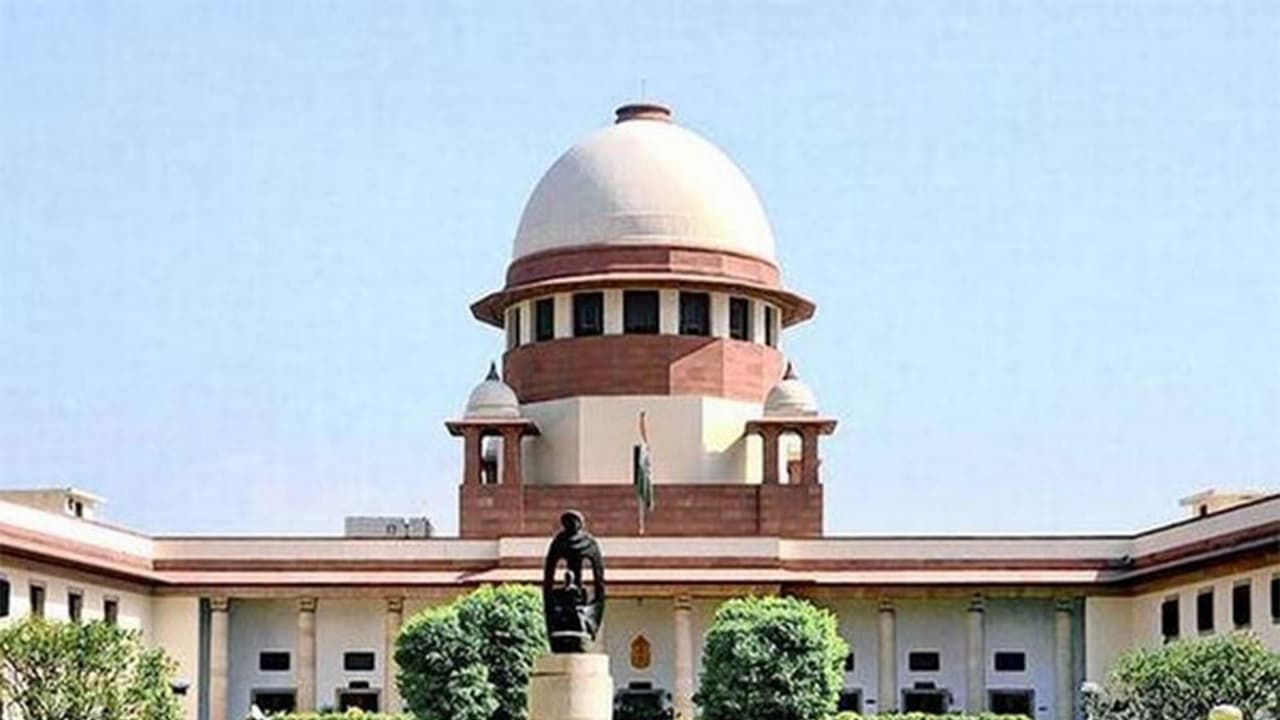
The Supreme Court of India has emphasized that restrictions alone cannot curb Delhi-NCR's air pollution, calling for greater public responsibility during festivals as the city faces 'very poor' and 'severe' air quality index levels.
Supreme Court on Air Pollution Crisis
The Supreme Court on Friday said imposing restrictions alone would not address the air pollution problem in Delhi-NCR and called for greater public awareness and responsible celebrations during festivals, particularly Diwali. A bench led by Chief Justice of India (CJI) Surya Kant, hearing the suo motu case on air pollution in Delhi-NCR, emphasised the need to revisit traditional customs and practices during festivals. “Why don’t we revert to our original customs?” the CJI asked, stressing that celebrations should be accompanied by a sense of responsibility towards the environment. Justice Joymalya Bagchi observed that the issue was also linked to the commercialisation of festivals.
Restrictions and Behavioral Change
The observations came during a discussion on rising pollution levels around Diwali. The Centre’s counsel pointed out that pollution had increased further due to the festival and the movement of people on roads. The bench said that imposing additional restrictions and passing more orders would not necessarily resolve the problem. “No restriction is going to work. The more orders we pass, the more violations will multiply,” the Court observed, underlining the need for behavioural change and greater awareness about pollution.
The CJI also cautioned against blaming economically weaker sections for the pollution crisis, observing that Diwali was an important period for people dependent on seasonal work and festivities for their livelihood. “Poor people do not generate any pollution. They are the sufferers. It is those who can afford it and those who can contribute to it,” the CJI remarked.
Current Air Quality Status in Delhi
Meanwhile, Delhi continues to grapple with hazardous air pollution, with the Air Quality Index (AQI) recorded at 389 for the entire city, categorised as 'Very Poor', as per the Central Pollution Control Board (CPCB) on Friday. Several areas in the national capital recorded air quality in the 'severe' category. IIT Delhi and Rohini both recorded the AQI at 474, followed by Punjabi Bagh at 465, RK Puram at 443, ITO at 422, Firoz Shah Road at 420, and India Gate at 403, as per the CPCB data.
The Municipal authorities deploy truck-mounted water sprinklers to undertake water sprinkling operations as per the Stage-II Graded Response Action Plan (GRAP-II) enforced across India Gate. Furthermore, the AQI in the area around Anand Vihar and Akshardham is recorded at 359, in the 'very poor' category. At IGI Airport Terminal 3, it is recorded at 385. In Aya Nagar, the AQI touched 393, and 391 at Chandni Chowk.
Political Criticism Over Air Quality
Earlier today, Congress MP Shashi Tharoor on Friday lambasted the government over rising air pollution in the national capital, stating that the 'severe' air quality levels were a matter of "national disgrace". He said the failure of authorities to summon political will to resolve the pollution issue was "really shocking".
"Delhi's air quality is a national disgrace. I've been talking about it. Personally, at my own expense, I conducted a roundtable on air pollution for 10 years in Delhi before giving up any hope that this government is going to implement it. It is a really, really disgraceful situation," Tharoor told ANI. (ANI)
(Except for the headline, this story has not been edited by Asianet Newsable English staff and is published from a syndicated feed.)




