
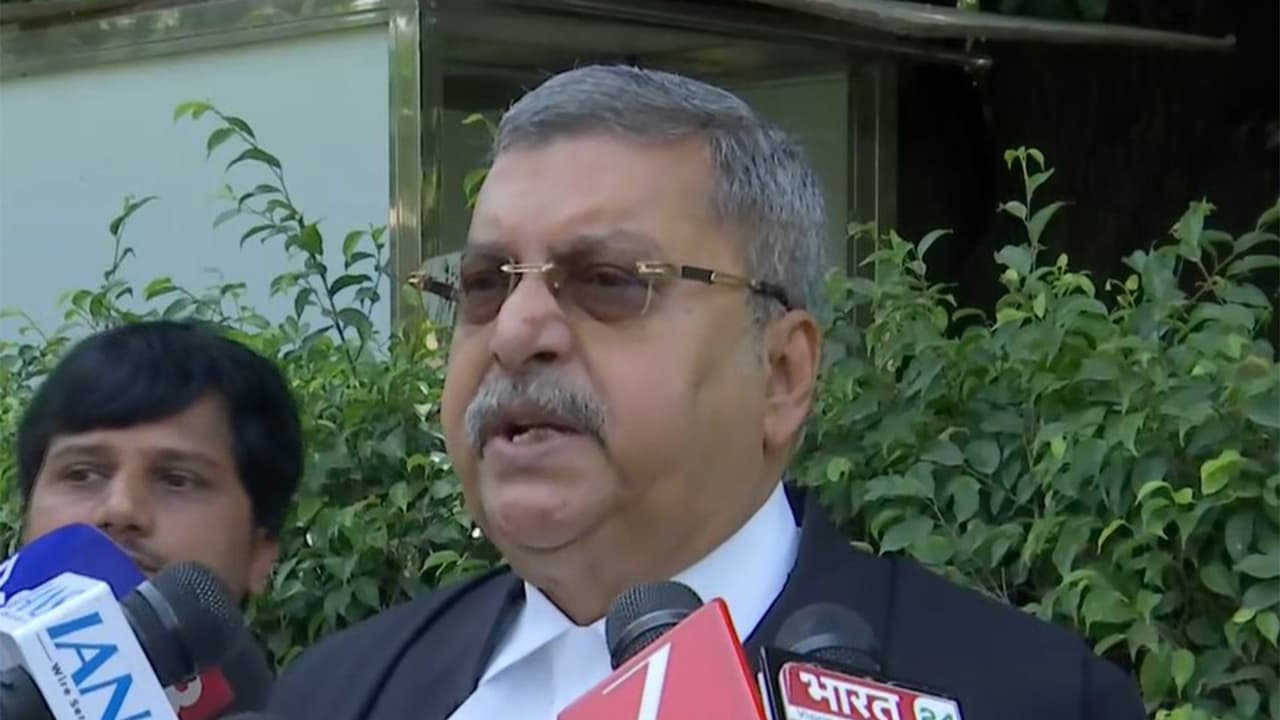
TMC MP Kalyan Banerjee said the SC, upholding Bihar's SIR, ruled the ECI cannot decide citizenship and must refer such cases to the proper authority. He noted the ruling is specific to Bihar and not for the entire country.
TMC MP's Take on SC Ruling
Advocate and TMC MP Kalyan Banerjee on Wednesday said that the Supreme Court, while upholding the Special Intensive Revision (SIR) of electoral rolls in Bihar, gave directions in the "procedural safeguards." Speaking with the media, the advocate said that the apex court noted that the Election Commission of India cannot decide the citizenship of a person, adding that the ECI should refer to the appropriate authority regarding the deletion of names on the grounds of citizenship. He further said that the SC directed the ECI to include the names of people who are deemed citizens by the competent authority under the Citizenship Act.
He further made note of the SC ruling stating that it is applicable for Bihar SIR and not for the rest of the country, separating the case of West Bengal SIR. He alleged "logical discrepancy and procedural lapses" by the EC in West Bengal. "The justice which has been delivered in the SIR matter is applicable in case of Bihar. That is not all-India. In this judgment, safeguard which has been provided by the EC, it was sufficient and it has been held. But one interesting thing has been said that if EC has no authority to decide who is a citizen and who is not and if the EC has deleted any name on the ground of citizenship, then they should refer the matter to the appropriate authority under the Citizenship Act. That authority will decide whether the persons are citizens or non-citizens. If yes, then their names should be included. We had been saying for long, that the Centre/Police has no power to decide this," he said. "Bengal's case is different. Bengal's case is - logical discrepancy has been made by the EC. So, our case is different. There were so many procedural lapses. But in principle, the Supreme Court has held that the SIR is constitutional but the SC has given so many directions in the procedural safeguards," he added.
Petitioner Welcomes SC Decision
Earlier, following the Supreme Court's decision upholding the Special Intensive Revision (SIR) of electoral rolls conducted by the Election Commission of India (ECI) in Bihar last year, petitioner and advocate Ashwini Upadhyay said the apex court had accepted the submissions made by both the Election Commission and petitioners supporting the exercise. Speaking to ANI, Upadhyay said the court emphasised that ensuring the accuracy of electoral rolls is essential for free and fair elections, and that no ineligible person should be included in the voters' list. "For free and fair elections, it is imperative that the name of no ineligible individual appears in the voter list. The Supreme Court has affirmed that the list of 11 specified documents remains entirely valid," he said.
Referring to Aadhaar, he said the court observed that its earlier acceptance as the twelfth recognised document was appropriate, while future decisions on the matter would be taken by the Election Commission. "Regarding Aadhaar, it stated that its acceptance at that time as the twelfth recognised document was appropriate; however, the Election Commission will determine the course of action moving forward," said Upadhyay.
Supreme Court's Verdict
This comes after the Supreme Court upheld the Election Commission of India's (ECI) Special Intensive Revision (SIR) of electoral rolls, which was first undertaken in Bihar, holding that the exercise is constitutional, legally tenable and cannot be struck down merely because it differs from the ordinary process of voter-roll revision. A bench of Surya Kant and Joymalya Bagchi held that the SIR exercise cannot be declared 'ultra vires' solely on the ground that it adopts a process distinct from the routine revision of electoral rolls contemplated under the statutory framework.
The Court further clarified that the ECI's powers in the process remain limited to determining eligibility for inclusion in electoral rolls and do not extend to ascertaining citizenship status. It held that the deletion of a person's name from the voter list does not divest that individual of citizenship, since citizenship can only be determined by the competent authority under law. (ANI)
(Except for the headline, this story has not been edited by Asianet Newsable English staff and is published from a syndicated feed.)