
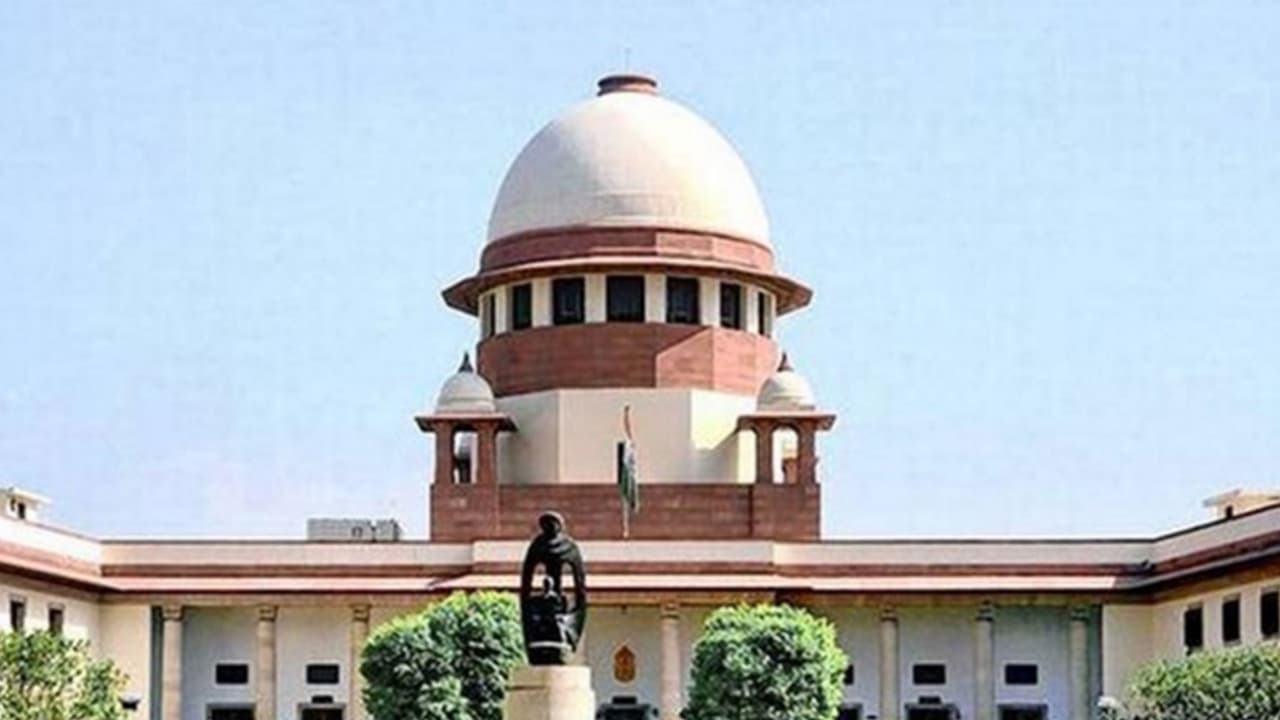
The Supreme Court directed the MEA to appoint a nodal officer to assist families of Indians killed/injured in the Russia-Ukraine war. The court also ordered DNA identification of mortal remains, free legal aid, and help with compensation claims.
Supreme Court's Directives to MEA
The Supreme Court on Friday directed the Ministry of External Affairs (MEA) to appoint a nodal officer to assist the families of Indian nationals who were allegedly duped by travel agents into joining the Russian armed forces and were killed or injured in the ongoing Russia-Ukraine war. The Court also directed the Centre to facilitate DNA identification of mortal remains, provide free legal aid and translate documents relating to compensation claims and repatriation.
DNA Testing and Compensation
A bench led by Chief Justice of India (CJI) Surya Kant directed the MEA to share the said nodal officer's contact details with the families of deceased and injured Indian nationals. It further directed the Ministry to arrange DNA testing of mortal remains with family members for identification and hand over the bodies after DNA verification.
The Court also directed the MEA to prepare a consolidated docket, translated into vernacular languages, explaining the procedure to affected families for filing compensation claims before the Russian authorities. It clarified that compensation claims would be routed through the MEA, but their pendency should not delay the return of mortal remains or the performance of last rites. The Court further directed the Member Secretaries of the State Legal Services Authorities to provide free legal aid to the affected families for filing compensation claims and facilitating DNA testing. The MEA was also asked to provide translated versions of documents received from the Russian authorities relating to repatriation of mortal remains and compensation claims.
Background of the Case
In its order, the Court noted that in 2024 and 2025, several Indian youths travelled to Russia on different visas after being promised employment in the construction, hospitality and service sectors. However, upon their arrival, their passports and identity documents were confiscated, and they were enrolled in the Russian armed forces before being sent to the frontlines of the conflict. Observing that many young Indians had lost their lives and that their mortal remains had not been repatriated in several cases despite verification, the Court issued a series of directions to streamline the process for their families.
Arguments in Court
Petitioners' Allegations
During the hearing, counsel for the petitioners, Advocate Ritwik Bhanot, alleged that despite repeated representations, the MEA had not been responsive to the concerns of the affected families. He submitted that the bodies being returned from Russia were often in a highly decomposed state, with only bones and decomposed flesh remaining, making it impossible for families to identify their loved ones without DNA testing. He said many of the affected families were economically distressed and sought only a limited direction that the MEA convene a meeting with the petitioners and facilitate DNA testing.
Bhanot also pointed out that the status report detailing the compensation process had been filed only a day earlier and sought time to obtain instructions from the families.
Government's Response
Appearing for the Union Government, Additional Solicitor General (ASG) Aishwarya Bhati submitted that the Centre had already put in place a structured mechanism and had filed a consolidated status report explaining the procedure for repatriation and compensation. She told the Court that the Russian authorities were not handing over mortal remains without DNA matching and that the MEA had been corresponding directly with the families over the past several months.
Bhati said the Government was interacting with the families themselves and not through counsel, and maintained that no mortal remains were brought back unless requested by the family and after DNA samples were matched. She further contended that the pendency of the proceedings was unnecessarily delaying the process and alleged that the families were being misled. Bhati also objected to the petitioners' counsel making public comments on the matter, submitting that despite interactions with the Government, he continued to suggest before the Court that no steps were being taken, after which clips of the hearings were circulated on social media. On the petitioners' counsel acknowledging having spoken publicly about the case and admitting that he sometimes got carried away as the case is quite emotionally draining, Justice Joymalya Bagchi cautioned that a lawyer representing bereaved families must maintain professional restraint and focus on a clinical approach rather than activism.
Details of the Petitions
The petitions were filed by families of 26 Indian nationals who alleged that their relatives had been lured to Russia on the false promise of jobs or educational opportunities but were instead coerced into joining the Russian military after their passports were confiscated. They sought urgent diplomatic and consular intervention to ascertain the whereabouts of the affected persons, secure the return of those still stranded, repatriate the mortal remains of those killed and facilitate compensation.
During an earlier hearing in April, the Centre informed the Supreme Court that 10 of the 26 Indian nationals had died in the conflict, one person was facing criminal proceedings in Russia, and another had voluntarily chosen to continue under a military contract. The Government had also stated that while some Indians had been duped by agents, others had knowingly entered into contracts, and that diplomatic efforts were underway to secure the return of affected Indian nationals.
Friday's directions are aimed at ensuring institutional support to the families and expediting the processes of identification, repatriation and compensation. (ANI)
(Except for the headline, this story has not been edited by Asianetnews Editorial staff and is published from a syndicated feed.)