
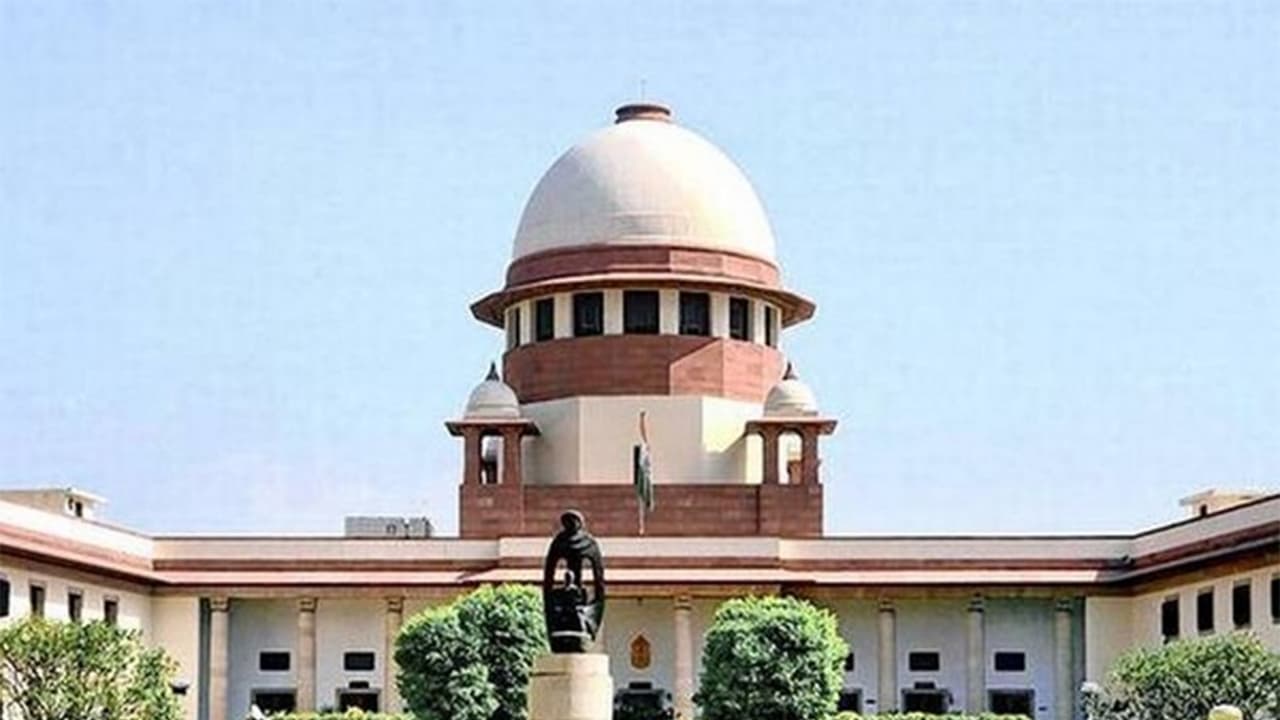
The Supreme Court Collegium has recommended five names for appointment as judges to the apex court. The list includes four Chief Justices of High Courts and senior advocate V Mohana, whose elevation is set to boost women's representation.
SC Collegium Recommends Five for Apex Court
The Supreme Court Collegium has recommended five names to the Centre for appointment as judges of the apex Court. The Collegium recommended Justice Sheel Nagu, Chief Justice of Punjab and Haryana High Court, Justice Shree Chandrashekhar, Chief Justice of Bombay High Court, Justice Sanjeev Sachdeva, Chief Justice of Madhya Pradesh High Court, Justice Arun Palli, Chief Justice of Jammu & Kashmir and Ladakh High Court, and senior advocate V Mohana.
The recommendation was made at the Collegium meetings held on May 22 and 27. The elevation of senior advocate Mohana is expected to strengthen women's representation in the Supreme Court, which currently has only one woman judge, Justice BV Nagarathna. No woman has been appointed to the apex court since August 2021.
The sanctioned strength of the Supreme Court was recently increased by four, taking the total number of judges, including the Chief Justice of India, to 38. At present, the Supreme Court is functioning with 32 judges, while two more vacancies will arise in June following the retirement of Justice JK Maheshwari and Justice Pankaj Mithal.
Understanding the Collegium System
The Supreme Court Collegium deals with the appointment and transfer of judges to the Supreme Court and the various High Courts. The system evolved through a series of landmark verdicts collectively known as the "Three Judges Cases."
Collegium Composition
Under the current structure, the Supreme Court Collegium consists of the CJI and the four senior-most judges, while a High Court Collegium is headed by the incumbent Chief Justice of that court along with its two senior-most judges.
The Appointment Procedure
The process of appointment or transfer is initiated by the respective Collegium. Following the initiation, the proposals for High Court appointments are reviewed by the Supreme Court Collegium and the CJI. Following the review, these recommendations are sent to the Union Law Minister.
The Minister then presents these recommendations to the Prime Minister and the President for final approval. If the central government returns a recommendation for reconsideration, and the Collegium unanimously reiterates its initial decision, the government is constitutionally bound to approve the appointment.
(Except for the headline, this story has not been edited by Asianet Newsable English staff and is published from a syndicated feed.)