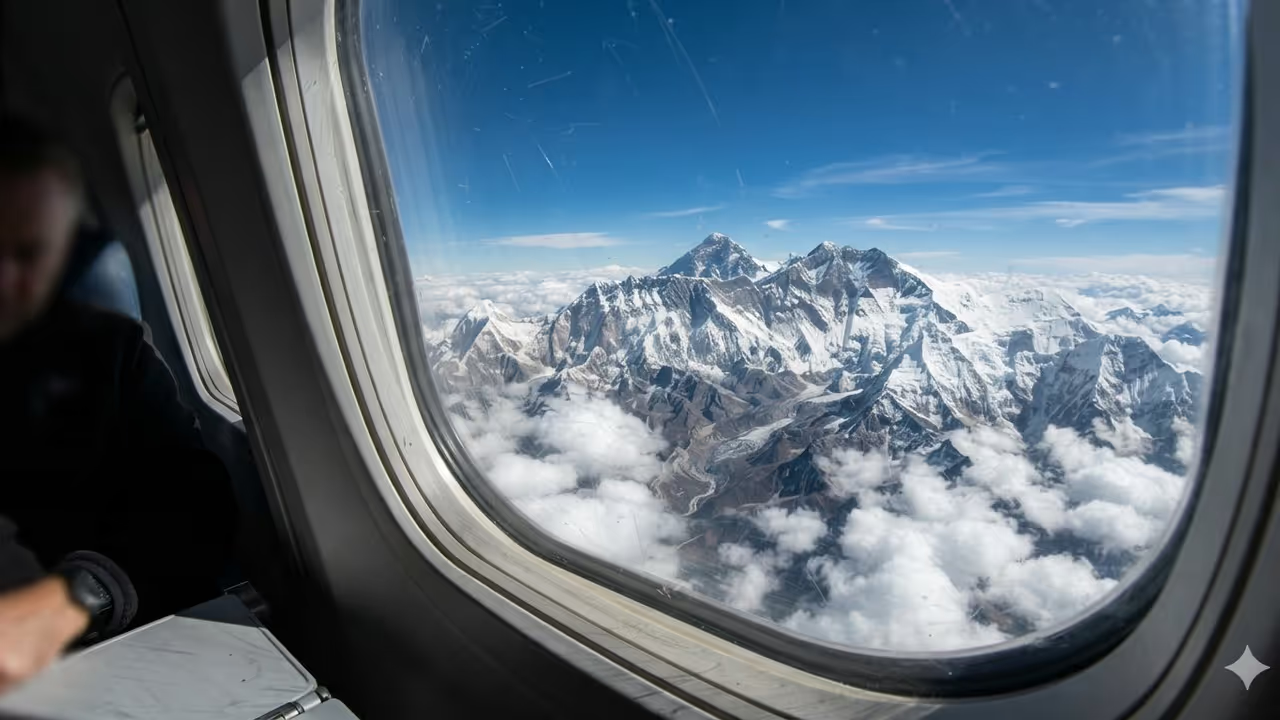
A video shared on Instagram by an account purporting to show climbers on Mount Everest from a commercial flight, has been debunked as digitally altered. Experts and fact-checkers confirmed that the footage, which garnered significant social media attention, was likely AI-generated.
A video shared widely on Instagram, which is now going viral, claiming to depict climbers scaling Mount Everest from a commercial aircraft window, has been conclusively identified as digitally manipulated. The footage, amassing millions of views and shares within hours of its upload, generated widespread discussion about its authenticity across global platforms.
The original post described the image as a 'breathtaking moment' and a 'rare image' captured from thousands of feet above the ground, showcasing 'tiny human figures navigating the world's highest peak.' Social media users praised the passenger's quick thinking, calling it a 'once-in-a-lifetime moment.' However, the post itself carried a disclaimer noting its unconfirmed authenticity and potential digital alteration.
Experts Debunk Implausible Sighting
Fact-checking conducted by TechPana Factcheck Desk confirmed the viral video as false. The Civil Aviation Authority of Nepal (CAAN) reinforced this finding, stating the impossibility of clearly observing climbers from cruising aircraft altitudes. CAAN spokesperson Gyanendra Bhul highlighted that the video showed signs of editing and that visual flight operations are not feasible under the cloud-covered conditions depicted.
Related Articles

Aviation Realities Above the Himalayas
The extreme rarity—indeed, near impossibility—of such a sighting is definitively attributed to a confluence of challenging factors inherent to the region. Commercial flights typically avoid the high-altitude Himalayan range due to extreme winds, turbulence, and stringent flight path limitations. These factors, alongside the immense altitude at which commercial planes fly (typically 30,000 to 40,000 feet, far above Everest's 29,032-foot peak), make a clear, close-up view of climbers from an aircraft window virtually impossible. The harsh weather conditions prevalent in the Everest region, including persistent cloud cover, blizzards, and the powerful jet stream, further obscure visibility, contributing to the improbability of capturing such a scene naturally.
Evidence of Digital Manipulation
Technical analysis using the Hive Moderation tool further supported the findings, indicating a high probability of artificial intelligence generation. The human face featured in the video showed over a 73% likelihood of being AI-generated, while the visual of the climbers had a 98.6% chance of being AI-generated.
The overall video registered a 68.4% probability of being AI-generated or digitally manipulated. Inconsistencies included abrupt changes in lighting, unnatural layering, and masking effects. Additionally, the audio of an aircraft cabin announcement, typically heard during landing, was inconsistent with a plane at cruising altitude.
The Ethics of Viral Content and Creator Rights
This incident is not isolated; instances of digitally altered or fake images and videos claiming extraordinary Everest feats have surfaced previously. Such occurrences highlight the challenges in verifying viral content on social media, especially when claims lack corroboration from credible sources.