
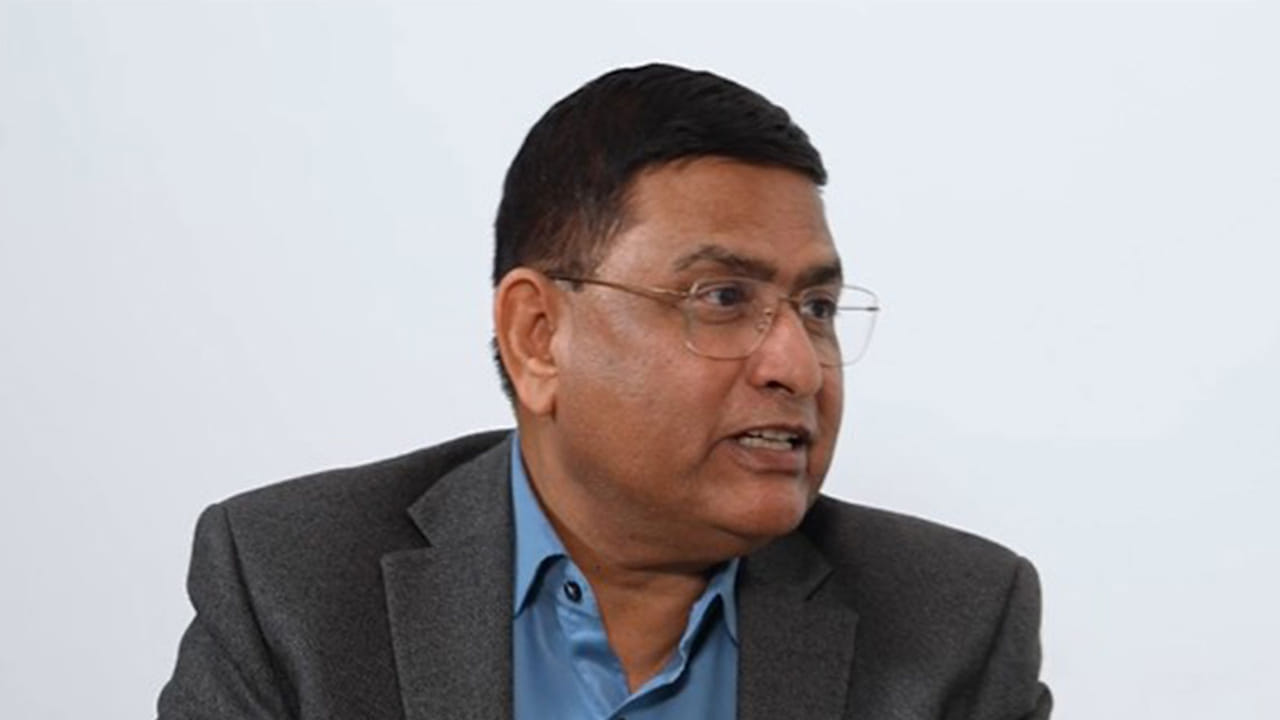
Former CBI special director Rakesh Asthana claims he received full cooperation and specific assistance from then-CM Narendra Modi, including Muslim officers for the Godhra probe, ensuring a fair and independent investigation into the tragedy.
Rakesh Asthana Claims Modi Provided Muslim Officers for Godhra Probe
Rakesh Asthana, former Special Director of the CBI, who investigated the 2002 Godhra train burning, on Saturday asserted that Prime Minister Narendra Modi, who was Gujarat Chief Minister at that time, gave him Muslim police officers for the probe.
In an interview with ANI, Asthana said, "There was no pressure. On the contrary, I would like to say that in the initial investigation, I saw that the area in which the incident took place was totally inhabited by the Muslims. So to conduct an investigation in the Muslim area, you need Muslim officers, practically speaking, professionally speaking. I requested him to give me a few Muslim officers to be attached in the investigation team," he said, adding that they played a very crucial role in the probe.
In one instance, he said, two Muslim constables worked undercover for about a month and a half, posing as bangle and sari sellers, to trace an accused who later fled to Pakistan. "For a month and a half, they did this very diligently, honestly and sincerely. Undercover. And we could locate. The second thing is that the day we raided, he slipped. Mob assault was done on the police. But this work was done by the Muslim officers. And any restriction, be it the Chief Minister or Home Minister or Gujarat government, I was given the free hand to investigate," he said.
He said he was free to choose the advocates and to hire "the most costly lawyer" to argue the state's case in the Supreme Court, since winning convictions mattered as much as filing chargesheets. He said not a single accused was released on bail by the Supreme Court in the early years. Asthana said that if the evidence were not sound, the courts would have found fault with the police. He argued that the court outcomes show "there was no interference, there was fairness."
In 2011, a special court convicted 31 people in connection with the Godhra train burning incident. In October 2017, the Gujarat High Court commuted the death sentences of 11 convicts to life imprisonment while upholding the life sentences of 20 others. The convicts' appeals have been pending in the Supreme Court since 2018. The Supreme Court of India resumed final hearings in May 2025.
Describing the scale of tragedy in the incident, he said, "A total of 59 people died in the incident, including 27 women, 10 children and 22 men. They died inside the coach because they could not get out... The investigation stated that some people had managed to jump out of the coach. The mob chased them, killing or injuring them and attempting to kill them. Therefore, the claim that it was an accidental fire and that there was no mob violence is not supported by the investigation"
Asked about which evidence was most compelling in securing the conviction, he pointed to forensic reports as being the most helpful during the probe. "As an investigator, I can say that mostly the forensic reports, the forensic examination of the burnt coach and the surrounding areas, have contributed mostly to securing the conviction," he said.
Asthana said the investigation found that the petrol came from near Aman Guest House, where a core group met the night before, and that records of petrol dispensed into cans were seized. "Some links with a terrorist organisation also emerged at the time, but we could not find prosecutable evidence, so we did not prosecute them. However, there was a conspiracy, planning, preparation, and execution. The execution was in accordance with what they had planned," he said.








