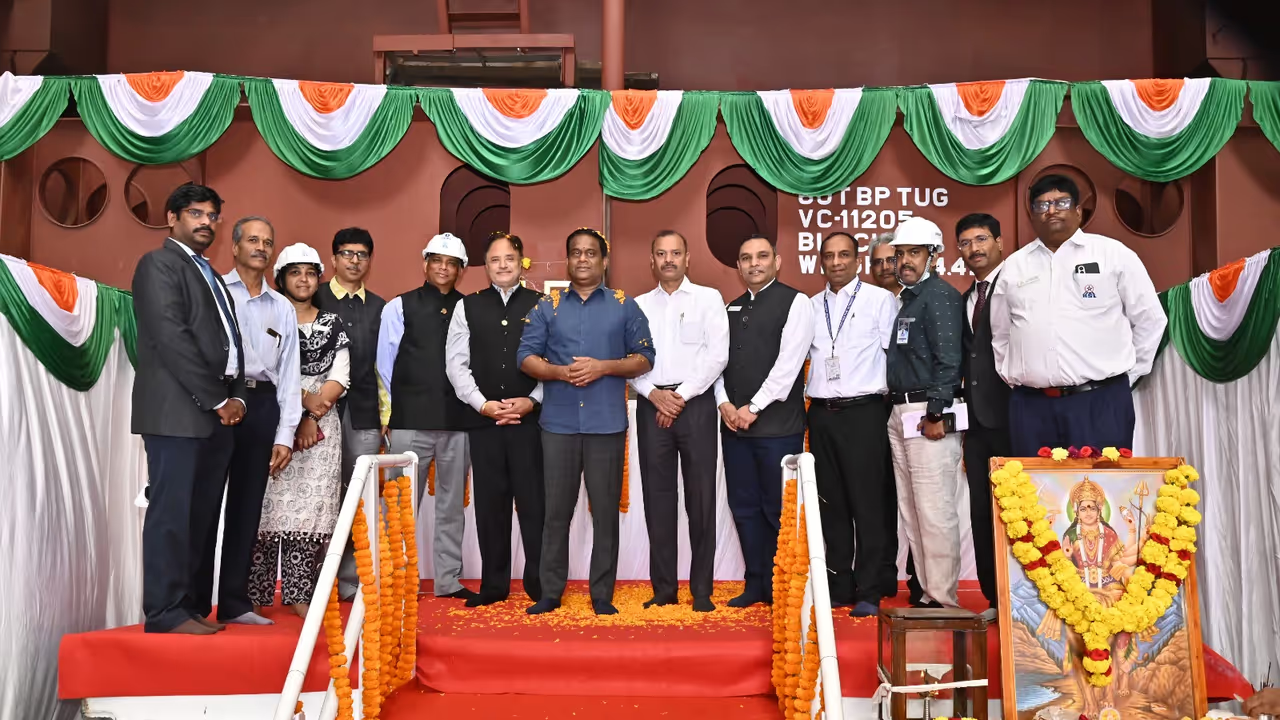
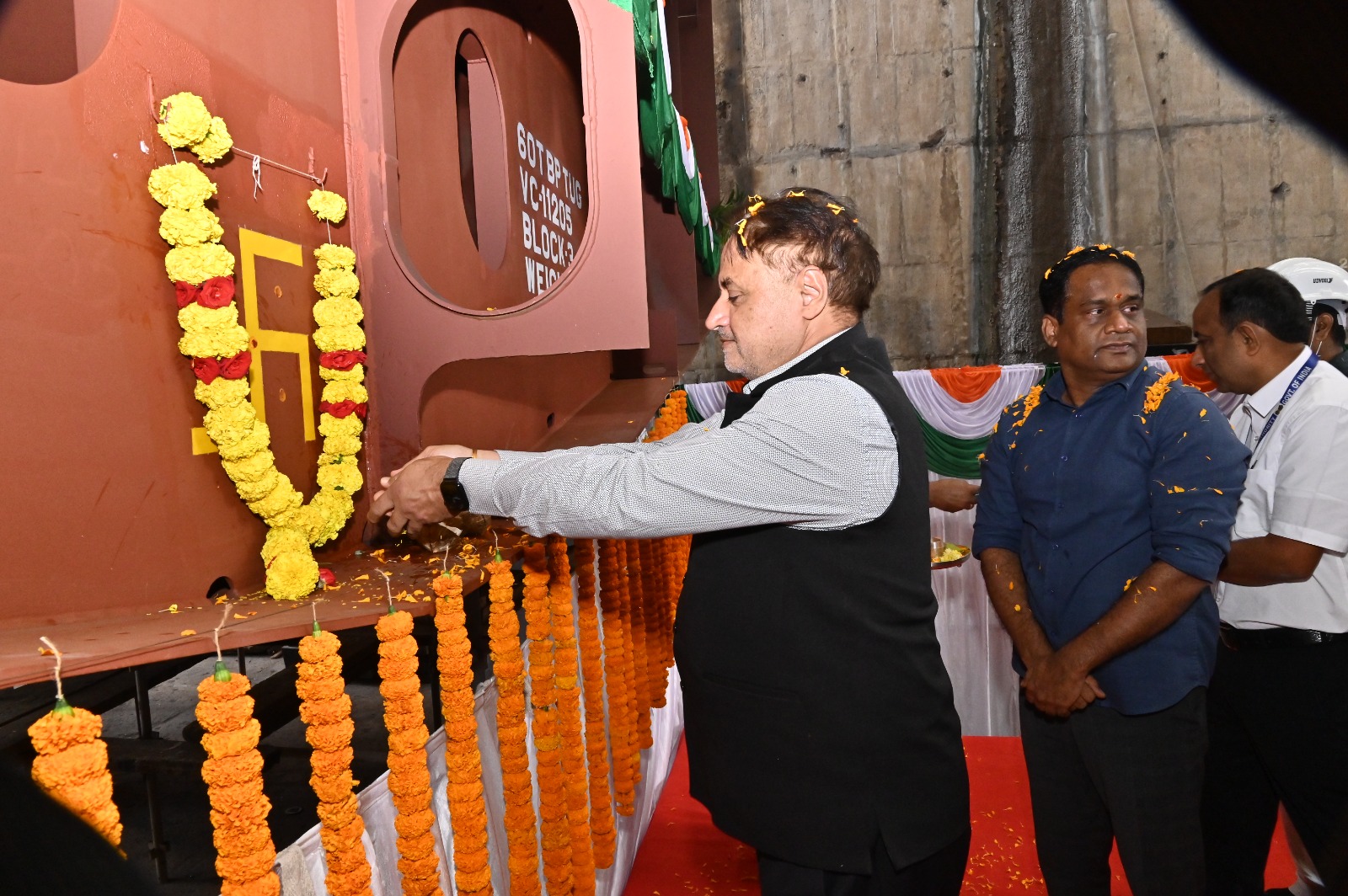
Visakhapatnam Port Authority marked two milestones on Monday with the keel laying of a 60-tonne bollard pull tug and a contract for a second vessel. Built by Hindustan Shipyard Limited, tugs will help handle larger ships more safely and efficiently.
New Delhi: In a busy port, some of the most critical assets are also the least visible. Tugboats, operating largely out of public sight, quietly determine how efficiently large vessels enter, leave, and manoeuvre within harbour limits. It is this layer of port operations that came into focus on Monday at Visakhapatnam, Andhra Pradesh.
A state-owned Mini-Ratna defence public sector undertaking marked two milestones in a tug construction programme for the Visakhapatnam Port Authority, with the keel laying of the first 60-ton Bollard Pull (BP) tug and the signing of a contract for a second vessel of the same class.
The two tugs are being designed and built locally by Hindustan Shipyard Limited, continuing a long-standing working relationship between the port authority and the Visakhapatnam-based shipyard.
Related Articles

While port expansion is often discussed in terms of terminals, connectivity, and cargo-handling equipment, officials familiar with marine operations point out that support vessels increasingly shape day-to-day performance. As commercial ships become larger and schedules tighter, the margin for error during berthing and unberthing has narrowed.
The 60T BP tug, measuring 32.5 metres in length, has been designed for demanding harbour duties, including assisting large vessels, towing operations, and emergency response within port limits. Higher bollard pull allows a tug to exert greater force, giving pilots better control over ship movement in confined waters or during unfavourable weather.
For Visakhapatnam Port, which handles a mix of bulk cargo, containers, and industrial shipments, such capabilities are closely tied to operational safety and turnaround time. Delays at berth often have cascading effects, impacting yard operations, vessel schedules, and downstream logistics.
Visakhapatnam Port Authority on cargo volumes
Addressing the gathering, Visakhapatnam Port Authority Chairperson Dr Madhaiyaan Angamuthu said that timely execution and quality workmanship were essential to sustaining institutional trust. He noted that with cargo volumes expected to grow, ports would need to invest steadily in marine assets that support safe and efficient operations.
From the shipbuilding side, harbour craft projects also serve an important role. Unlike large naval platforms, such programmes provide continuity of work, support skilled employment, and sustain networks of ancillary suppliers and MSMEs. They also reduce dependence on imported designs in a segment that is operationally critical but often overlooked.
Hindustan Shipyard Limited Chairman and Managing Director Commodore Girideep Singh said the twin milestones reflected the shipyard’s technical capability and project management systems. He also acknowledged the contribution of technology partners Vedam and Solas Marine to the programme.
The tug construction programme is being undertaken in the context of broader efforts to modernise India’s port ecosystem under Maritime India Vision 2030, alongside the wider push for domestic capability development under Aatmanirbhar Bharat.
Beyond immediate operational needs, the project is expected to support local employment and reinforce Visakhapatnam’s position as a centre for shipbuilding and maritime services on India’s eastern coast.