
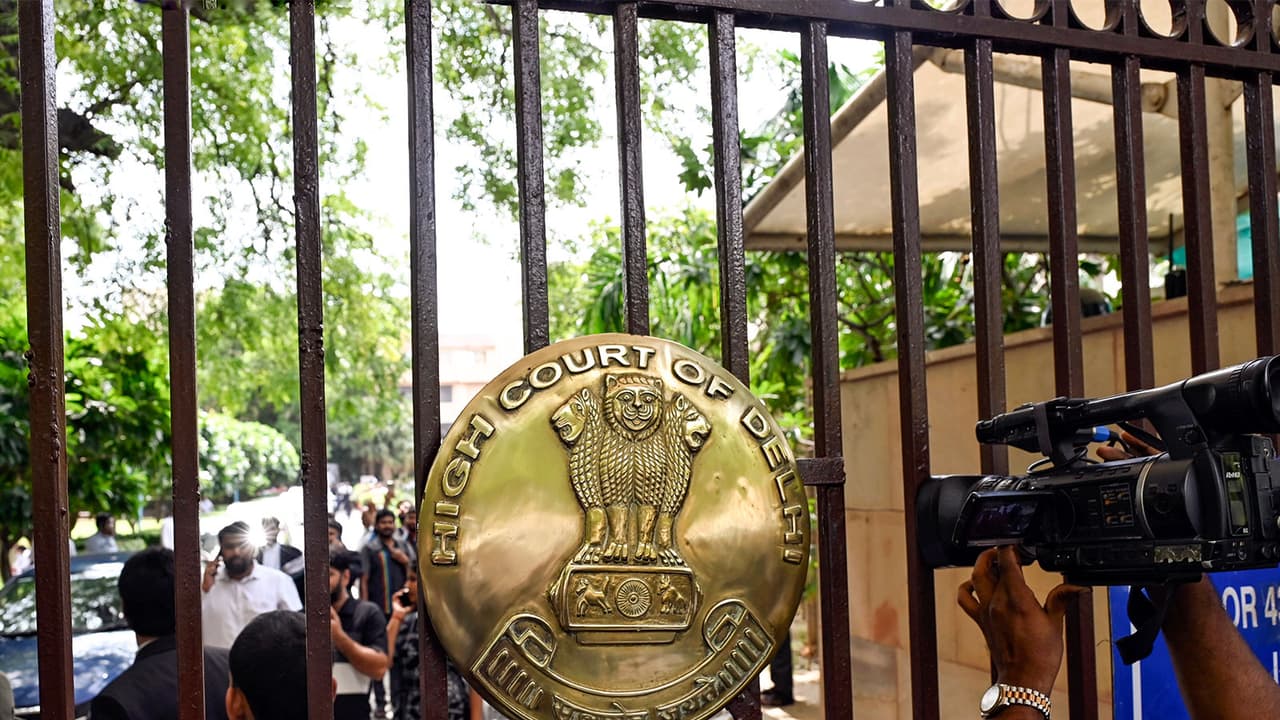
The Delhi High Court has sought responses from the Centre, Delhi government, and police on a PIL concerning the handling of missing-person cases in the Delhi-NCR region, which calls for stricter enforcement of investigative protocols.
The Delhi High Court on Wednesday sought responses from multiple authorities in a Public Interest Litigation (PIL) raising serious concerns about the handling of missing-person cases in the Delhi-NCR region and calling for stronger enforcement of investigative protocols. The court sought responses from the Central Government, Delhi Government, the Delhi Police, and the National Crime Records Bureau (NCRB), directing them to file their replies in the matter. During the hearing, the bench also asked whether any similar matter on the issue of missing persons is currently pending before the Supreme Court. The case has now been listed for further consideration on February 18.
PIL Seeks 'Right to be Found' as Fundamental Right
The PIL has been filed by a registered non-governmental organisation working in the field of civil liberties and child rights. It seeks the issuance of a writ of mandamus and other appropriate directions for the protection and effective enforcement of what it describes as the "right to be found," claiming that it is an integral part of the right to life under Article 21 of the Constitution.
Systemic Failures and Non-Compliance Alleged
According to the petition, the grievance arises from an alleged systemic failure and institutional inaction in implementing mandatory investigative protocols in missing persons cases. It refers to existing standing orders and standard operating procedures issued by authorities, but claims they are not being strictly followed on the ground.
The plea points to an alarming number of reported disappearances in the National Capital Territory of Delhi, stating that hundreds of persons have gone missing in a short span, highlighting what it terms a serious compliance gap.
The petitioner has relied on previous judicial precedents, including decisions relating to the protection of children and missing persons, to argue that established legal safeguards are being treated as a "dead letter."
Structural Reforms and Judicial Monitoring Demanded
The plea seeks structural reforms and continued judicial monitoring to ensure accountability in investigations.
Call for Strict Protocols and Accountability
Among the measures sought are the strict implementation of the "Golden Hour" protocol in tracing missing persons, prompt registration of Zero FIRs, and immediate activation of digital tracking alerts. The petition also calls for improved coordination and synchronisation of tracking portals, and for fixing responsibility on senior police officials for delays in investigations.
Further, the PIL has urged the court to consider appointing a court-monitored mechanism to oversee compliance, including a specialised monitoring framework to ensure that status reports filed by authorities are meaningful and not merely routine submissions.
Key Legal Questions for High Court's Consideration
The petition raises legal questions for the court's consideration, including whether the "right to be found" can be recognised as a fundamental right flowing from Article 21, whether failure to follow prescribed procedures amounts to state inaction warranting judicial intervention, and whether the High Court should exercise its extraordinary jurisdiction to monitor systemic lapses through continuing mandamus.
(Except for the headline, this story has not been edited by Asianet Newsable English staff and is published from a syndicated feed.)