
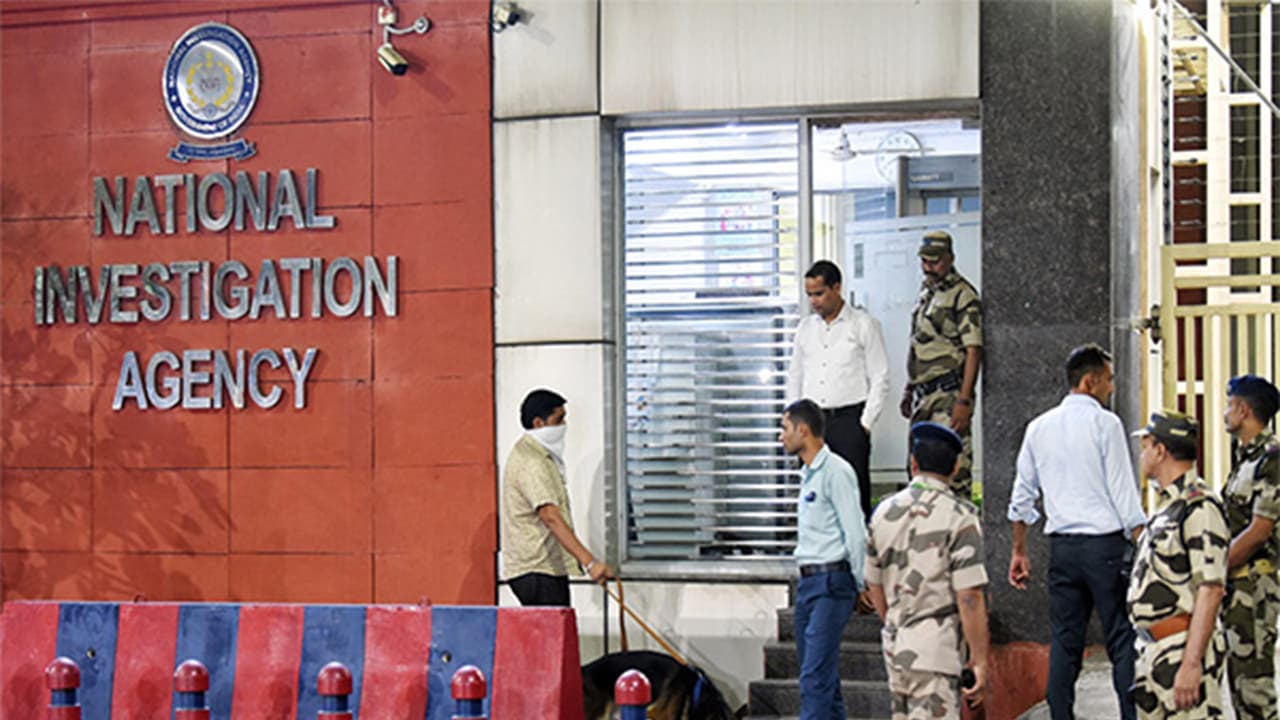
A key accused in a Pakistan-led espionage case, Altafhusen Ghanchibhai, was sentenced to 5.5 years by an NIA court. He was convicted for misusing SIM cards of Indian fishermen to help Pakistani spies access Indian WhatsApp numbers.
Accused in Pak-led Espionage Case Sentenced
A key accused in a Pakistan-led espionage conspiracy case was on Tuesday sentenced to two simple imprisonments for 5.5 years for his involvement in fraudulent use of mobile SIM cards and misuse of social media platforms.
A National Investigation Agency (NIA) special court at Vishakhapatnam announced the judgement naming the accused, Altafhusen Ghanchibhai alias Shakil. The accused has been sentenced to simple imprisonment for a period of 5 years and 6 months, with a fine of Rs 5,000, under Section 18 of the Unlawful Activities (Prevention) Act, and to simple imprisonment of 2.5 years, with a fine of Rs 5,000, under Section 66C of the Income Tax Act, 2000. The two sentences will run concurrently to a maximum term of 5.5 years.
NIA said in a statement that Shakil had pleaded guilty during the ongoing trial, during which 37 witnesses had already been examined by the prosecution. "Convicting the accused for misusing unique identification features, including SIM cards and OTPs, as well as social media, the special court pronounced its orders against him," said the NIA.
Modus Operandi of the Spy Ring
The cross-border conspiracy case RC-03/2021/NIA/HYD involved use of Indian SIM cards belonging to fishermen arrested by the Pakistan Navy during fishing on the high seas. The mobile phones and SIM cards of these fishermen were seized by the Pak Navy and later activated by the accused in India to facilitate espionage activities.
The NIA further said its investigation into the conspiracy had conclusively established that the accused had inserted Indian SIM cards into his mobile handset and generated One-Time Passwords (OTPs), which he had shared with Pakistani Intelligence Operatives (PIOs), enabling the operation of Indian WhatsApp numbers from Pakistan.
"The compromised Indian numbers were subsequently used by the PIOs to contact Indian defence establishment personnel under fake identities, with the intent to elicit sensitive and restricted defence-related information, thereby threatening the unity, integrity, security, and sovereignty of India," said the anti-terror agency.
NIA Vows to Counter Cross-Border Espionage
The NIA also added that it is continuing with its meticulous efforts to counter cyber-enabled and other cross-border terrorist and espionage activities, and bring all such offenders to book. (ANI)
(Except for the headline, this story has not been edited by Asianet Newsable English staff and is published from a syndicated feed.)